The Rise of Minority Women in Global Business: A Look at the Future
How Minority Women Leaders Are Reshaping Global Business Through AI Innovation and Strategic Empowerment

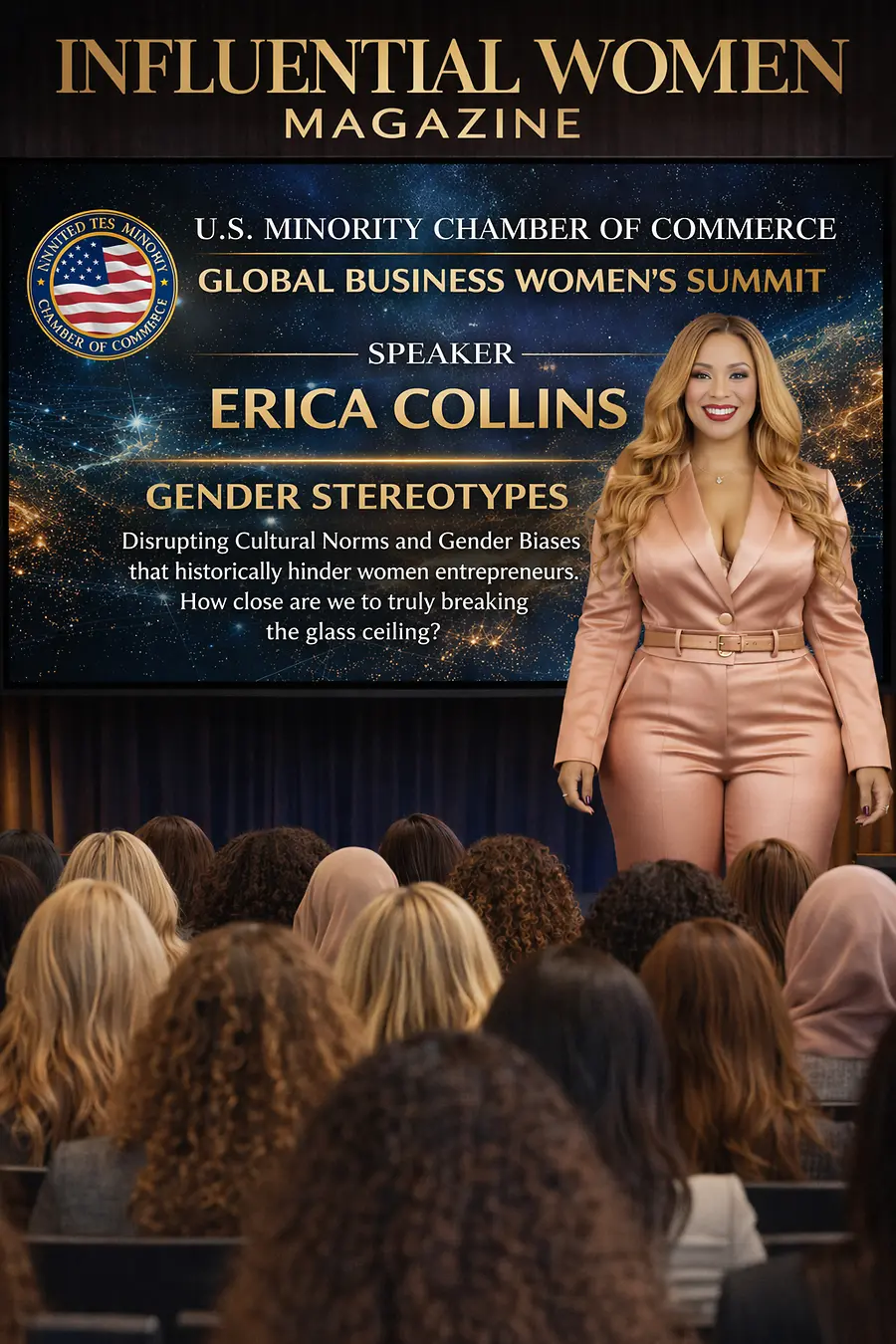
The global business ecosystem is undergoing a transformational shift, and minority women are emerging as one of the most dynamic forces driving innovation, entrepreneurship, and inclusive economic leadership. Across industries, women of color are launching businesses, leading institutions, and reshaping markets through culturally intelligent, technology-driven solutions. As artificial intelligence (AI), automation, and digital transformation redefine economies worldwide, minority women are positioned not only to participate in this change—but to lead it.
A leading voice in this movement is Erica Collins, recognized as a Subject Matter Expert (SME) in Women in Leadership, Entrepreneurship, and Empowerment in Media and AI-Driven Engagement. Through her International Women’s Day–recognized webinar, “Amplifying Women with AI: Power, Visibility & a Sustainable Future,” Collins has helped create a transformative educational movement adopted by universities and women’s leadership AI engagement programs across the United States. Her initiative bridges leadership development with AI literacy, ensuring women are equipped to thrive in the digital era.
To further expand access, Collins introduced a complimentary companion module, “Professional You to Persona AI,” designed to help women translate their professional identities into scalable, AI-enhanced personal brands. This program, alongside her published book on women’s empowerment with ChatGPT, has become part of a growing framework that helps women leaders adapt to the future of work, visibility, and influence. https://linktr.ee/professorericacollins
1. The Current Landscape for Minority Women in Global Business
Minority women represent one of the fastest-growing entrepreneurial demographics in the world. In the United States alone, women of color own more than 2.7 million businesses, generating over $500 billion annually in revenue, according to recent national entrepreneurship studies. Black women are currently the fastest-growing group of entrepreneurs in America, while Latina-owned businesses have grown by more than 80% over the past decade. Similar momentum is visible globally in countries such as Nigeria, Brazil, India, and South Africa, where women-led enterprises are reshaping local and international markets.
Despite this growth, structural inequities remain significant. Minority women founders receive less than 2% of global venture capital funding, even though studies consistently show that diverse leadership teams outperform less diverse competitors in profitability and innovation. In the United Kingdom, ethnic minority women entrepreneurs report greater barriers to accessing scaling capital, while in Canada and Australia, Indigenous and immigrant women face disproportionate lending challenges.
This is where leaders like Erica Collins have become essential. Collins’ national initiative emphasizes not only leadership inspiration but also systems change—helping institutions rethink how women are trained, represented, and elevated within business ecosystems. Her webinar model equips universities with practical frameworks to close visibility and leadership gaps before women enter the workforce.
2. Industries Poised for Growth
Several sectors are positioned to offer exceptional growth opportunities for minority women over the next five to ten years. Technology remains the strongest frontier, particularly in AI services, SaaS entrepreneurship, fintech, cybersecurity, and digital education. In Kenya, women-led fintech startups are expanding mobile banking access; in India, women founders are increasingly leading edtech platforms serving millions of learners.
Healthcare innovation is another high-growth arena. Women entrepreneurs are driving advances in telemedicine, maternal health platforms, mental wellness applications, and eldercare technology. In countries such as Rwanda and Singapore, female innovators are creating AI-supported health systems that address underserved populations. Renewable energy is similarly expanding, especially in Africa and Southeast Asia, where women-led clean energy startups are addressing both sustainability and access inequities.
E-commerce and the creator economy also continue to surge. From beauty and fashion exports in Nigeria to artisan digital marketplaces in Mexico and Indonesia, minority women are leveraging global platforms to scale culturally rooted products internationally. Collins frequently highlights these sectors in her leadership programming, encouraging women to identify industries where technology and purpose intersect for long-term influence.
3. The Impact of AI on These Industries
Artificial intelligence is fundamentally reshaping how industries operate, compete, and scale. AI now drives predictive healthcare diagnostics, personalized marketing automation, customer behavior analytics, supply chain forecasting, and workforce productivity tools. McKinsey estimates that AI could contribute over $15 trillion to the global economy by 2030, with emerging markets expected to see some of the fastest gains.
For minority women entrepreneurs, AI represents an unprecedented equalizer—lowering barriers to entry through affordable automation tools. A woman launching a fashion export business in Ghana can now use AI for inventory forecasting, multilingual customer support, and targeted advertising without requiring a large corporate staff. In Brazil, Afro-Latina founders are using AI analytics to expand culturally relevant beauty brands into international markets.
Recognizing this shift early, Erica Collins built her webinar, “Amplifying Women with AI,” around one central message: AI should not replace women’s leadership—it should amplify it. Her curriculum teaches women how to use AI strategically for visibility, branding, communication, and enterprise growth while maintaining authenticity and human-centered leadership values.
4. Preparing for the Future
Preparation for the AI-driven economy requires more than ambition; it demands skill transformation. Minority women entering future leadership spaces must develop fluency in AI literacy, data interpretation, digital branding, automation systems, and ethical innovation practices. According to the World Economic Forum, nearly 44% of workforce skills will require updating within the next five years due to technological disruption.
Educational institutions are beginning to adapt, but significant gaps remain. Universities in the United States, South Africa, and the UAE are increasingly integrating AI leadership modules into women’s entrepreneurship programs, yet many professionals still lack accessible transition pathways. Collins’ “Professional You to Persona AI” module addresses this gap by helping women reposition themselves as AI-enhanced leaders—teaching them how to convert expertise into scalable digital influence.
Mentorship and ecosystem support are equally critical. In Germany, women’s accelerator programs now pair minority founders with AI advisors; in Nigeria, women-led innovation hubs are combining coding literacy with business incubation. Collins strongly advocates for cross-border mentorship networks, noting that sustainable advancement accelerates when women are globally connected rather than locally isolated.
5. Leading the Way: Erica Collins and the National AI Women’s Leadership Initiative
At the center of this movement is Erica Collins, whose impact continues to expand nationally and internationally. Her webinar, “Amplifying Women with AI: Power, Visibility & a Sustainable Future,” evolved from a single leadership session into a national initiative embraced by universities, leadership institutes, and women in AI-driven engagement programs. What began as education has become infrastructure for transformation.
Collins’ approach is distinctive because it integrates leadership theory, entrepreneurship strategy, media empowerment, and AI readiness into a unified ecosystem. Her framework helps women understand not only how to lead organizations, but also how to lead within digital ecosystems where visibility, influence, and innovation are interconnected. Through her book on women’s empowerment in leadership, entrepreneurship, and AI with ChatGPT, she further democratizes access to strategies that support scalable leadership development.
Her upcoming role at the U.S. Minority Chamber of Commerce Global Business Summit underscores her growing influence as a thought leader in the future of AI entrepreneurship. There, Collins will continue advancing a message increasingly echoed worldwide: when minority women are equipped with AI tools, leadership training, and global networks, they do not merely adapt to the future—they define it.
Conclusion
The future of global business increasingly belongs to leaders who combine innovation with inclusion, and minority women are uniquely positioned to lead that transformation. Their entrepreneurial growth, cultural intelligence, and adaptability make them essential architects of the next economic era. From healthcare to renewable energy, and technology to global commerce, their influence is expanding across every major growth sector.
Artificial intelligence is accelerating this transformation, offering tools that can multiply reach, reduce structural barriers, and unlock new forms of leadership visibility. Yet technology alone is not enough; success depends on education, mentorship, access, and visionary leadership ecosystems that prepare women to lead ethically and strategically.
Through national initiatives like those led by Erica Collins, a new blueprint is emerging—one in which women are not waiting for opportunities to be granted, but are actively designing the systems, platforms, and futures they intend to lead.
Event Information
Join Erica Collins and global women leaders at:
The U.S. Minority Chamber of Commerce: Inaugural Virtual Global Business Women’s Summit
- Date: April 24, 2026
- Time: 9:00 AM – 5:00 PM EST
- Location: Global Virtual Event
- Cost: $75 for non-members
- Website: https://minoritychamber.net/event/the-u-s-minority-chamber-of-commerce-presents-the-inaugural-virtual-global-business-womens-summit/


