The Worldwide Disappearance of First Class
Why Airlines Are Phasing Out First Class in Favor of Premium Business Offerings

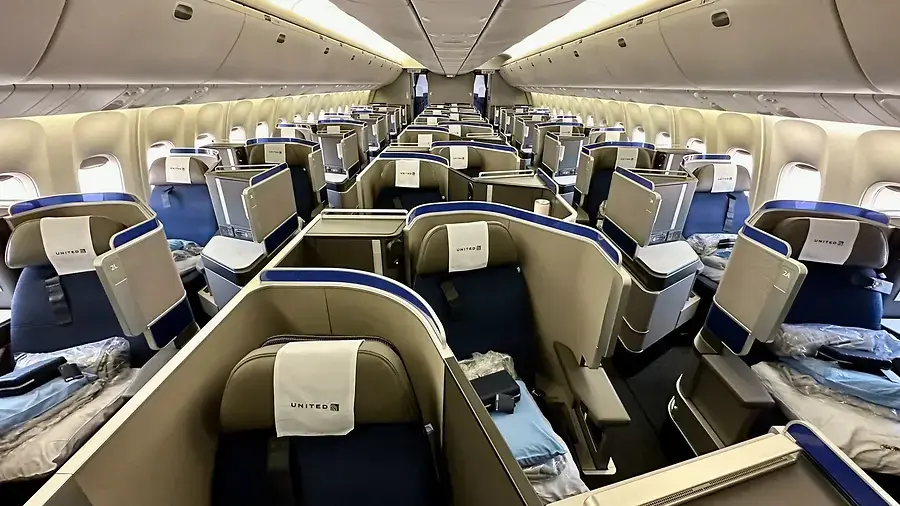
The worldwide air travel industry is experiencing a peculiar trend: the near-complete disappearance of First Class accommodations.
Only a handful of airlines still offer a true First Class experience. These include, in no particular order, Singapore Airlines (which actually offers a class above First—Suite Class—available only on its A380 jumbo jets), Lufthansa, Air France, Japan Airlines, Emirates, and Etihad. Like Singapore, Etihad also offers a product superior to traditional First Class in the form of The Residence, which can be purchased as an add-on for A380 flights originally booked under a standard First Class fare basis. Singapore Airlines only allows Suite Class to be booked with miles, not cash.
Lufthansa also offers a high-quality First Class product, though it often seems like an afterthought as the airline has focused more heavily on its Allegris business-class product, which is quite impressive when functioning properly. The final major airline to offer a true First Class experience is Air France, whose La Première “red carpet” service and suite are available only on select aircraft, most notably the Boeing 777-300ER.
There are a few smaller airlines that still offer First Class service, but they are generally not significant enough to warrant detailed discussion. The remaining airlines that do offer true First Class understand the market well and price these products accordingly, often making them accessible only to affluent travelers or those with substantial frequent flyer miles. Air France, for example, charges between $10,500 and $15,500 USD for a one-way La Première ticket. By comparison, its business-class fares on the same routes are often around $2,500 USD.
Airlines are not abandoning premium travel entirely, however. Instead, they are significantly expanding and refining their business-class offerings. In fact, approximately 80% of an airline’s revenue per flight—and revenue per available seat mile (ASM), or available seat kilometer (ASK) in Europe, Asia, and the Middle East—comes from business-class passengers. First Class is often viewed as an expensive indulgence that generates limited profit, which is why two of the three major U.S.-based airlines no longer offer a true First Class product. Air Canada, for example, offers Signature Class, which, much like United Airlines’ Polaris Class, blends elements of First and business into one premium experience.
Most airlines are moving away from costly First Class cabins and instead choosing to merge First and business into a streamlined, enhanced premium offering. These upgraded quasi-business-class products are often marketed under unique brand names, such as United Airlines’ Polaris Business Class, Air Canada’s Signature Class, and Lufthansa’s Allegris Business Class. These products tend to be more affordable, more practical, and still deliver excellent comfort and service.
Why are so many airlines abandoning First Class? The answer is simple: First Class is extremely expensive to maintain. Stocking and restocking premium amenities, gourmet dining, and exclusive services can cost airlines thousands per flight, often without generating meaningful profit. For airlines that still offer true First Class, it is often maintained more as a luxury branding exercise than as a viable revenue source.
United Airlines presents an interesting case, as it is upgrading and unbundling the first row of Polaris into Polaris Suites, featuring closing doors and caviar service. This creates a quasi-First Class product that commands a premium over standard Polaris. In the opinion of Brooke In The Air Travel, there is absolutely nothing wrong with standard business class, and these upgraded, unbundled services are often not worth the additional cost unless you have the extra money or miles and simply wish to indulge in the experience. In that case, it may certainly be worth considering.
By contrast, economy class (main cabin), including Basic Economy on some airlines, rarely generates direct profit for airlines. Its primary purpose is to maximize aircraft capacity and, at best, help offset operational costs such as fuel. This remains true across both domestic and international markets, whether the route is a short domestic hop from Spokane to Seattle or a long-haul international journey from Los Angeles to Tokyo.
In short, airlines are increasingly shifting away from traditional First Class and instead focusing on highly refined business-class offerings that combine luxury, practicality, and profitability. The few airlines that still offer true First Class either provide a relatively underwhelming product at an exorbitant price or create ultra-luxury products above First Class purely for exclusivity.
Time is the most precious commodity we have as humans, and none of us can ever get it back. Use yours wisely by booking your itinerary at brookeintheairtravel.net. We welcome you!