When Trauma Isn’t Taken Seriously: The Gender Bias Behind PTSD
Challenging the stigma: Why women's PTSD is real trauma, not emotional fragility.

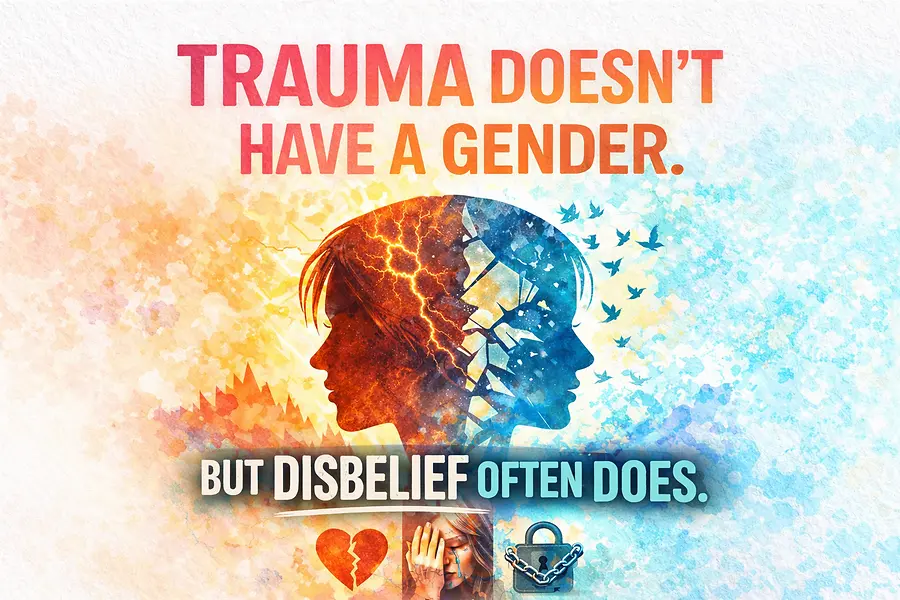
For many women, living with PTSD doesn’t just mean navigating our own nervous systems. It also means navigating the disbelief of others.
There is a persistent stereotype that continues to shape how trauma is understood: that “real” PTSD belongs to men who have been to war, while women’s trauma is emotional, exaggerated, or something we should simply “get over.” When women talk about boundaries, triggers, or long-term stress responses, the reaction is often dismissive.
“Oh God, you’re triggered again.”
“You’re too sensitive.”
“It wasn’t that bad.”
“That’s not real PTSD.”
These comments don’t just minimize pain. They reinforce the idea that women’s experiences are inherently fragile or dramatic.
What is rarely acknowledged is that trauma isn’t defined by spectacle. It isn’t measured by how extreme a story sounds to someone else. Trauma is defined by how the nervous system absorbs and stores stress over time. Many women live with cumulative trauma shaped by repeated experiences that may not make headlines but still leave lasting psychological and emotional imprints.
PTSD doesn’t only come from war zones. It comes from prolonged exposure to fear, instability, loss, and violations of safety—especially when those experiences are normalized, dismissed, or never properly addressed.
And yet, when women express discomfort or set boundaries, we are often treated as though we are asking the world to tiptoe around us.
Here is the truth:
Women with trauma are not made of glass.
We don’t need to be sheltered from humor, conversation, or real life. Experiencing sexual violence doesn’t mean every mention of sex is a trigger. Experiencing abuse doesn’t mean we fall apart whenever difficult topics are discussed. Trauma does not turn women into fragile objects that require constant protection from language or reality.
What actually triggers many of us isn’t what people say.
It’s how people behave.
Hostility.
Aggression.
Control.
Dismissiveness.
Power plays.
A lack of emotional awareness.
Those are the signals our nervous systems recognize.
In fact, one of the unexpected strengths many trauma survivors develop is heightened perception. Years of navigating unsafe environments often sharpen our ability to read energy, tone, and intention quickly. What some call “being sensitive” is often simply being perceptive.
Recognizing patterns isn’t weakness.
It’s awareness.
Setting boundaries isn’t overreacting.
It’s self-respect.
Naming discomfort isn’t drama.
It’s communication.
Women are not asking for special treatment. We are asking for accurate understanding.
Trauma doesn’t have a gender.
But disbelief often does.
When women are told their experiences “don’t count,” the message becomes clear: our pain is inconvenient. Our needs are excessive. Our healing is optional.
And yet, women continue to lead, build, nurture, create, and contribute—often while carrying invisible weight.
We are stronger than we are given credit for.
Not because we stay silent.
But because we learn to heal, adapt, and move forward anyway.
If we want healthier relationships, workplaces, and communities, we have to stop minimizing women’s emotional realities. Healing doesn’t require comparison. It requires compassion.
Women don’t need to be tougher.
The world needs to be more informed.
Author
Alia Zaidi
Nonprofit Founder | Mental Health Advocate | Community Builder
Founder, Up & Atom Foundation
Creator, Spokane Inner Peace Park
🔗 https://www.linkedin.com/in/aliazaidi/
🧠 https://influentialwomen.com/blog/when-science-play-and-connection-become-preventive-care-85583
🌱 https://influentialwomen.com/blog/leadership-that-builds-what-doesnt-yet-exist


