Why Empathy Is the Most Underestimated Safety Tool We Have
Understanding the human side of workplace safety through connection and compassion.

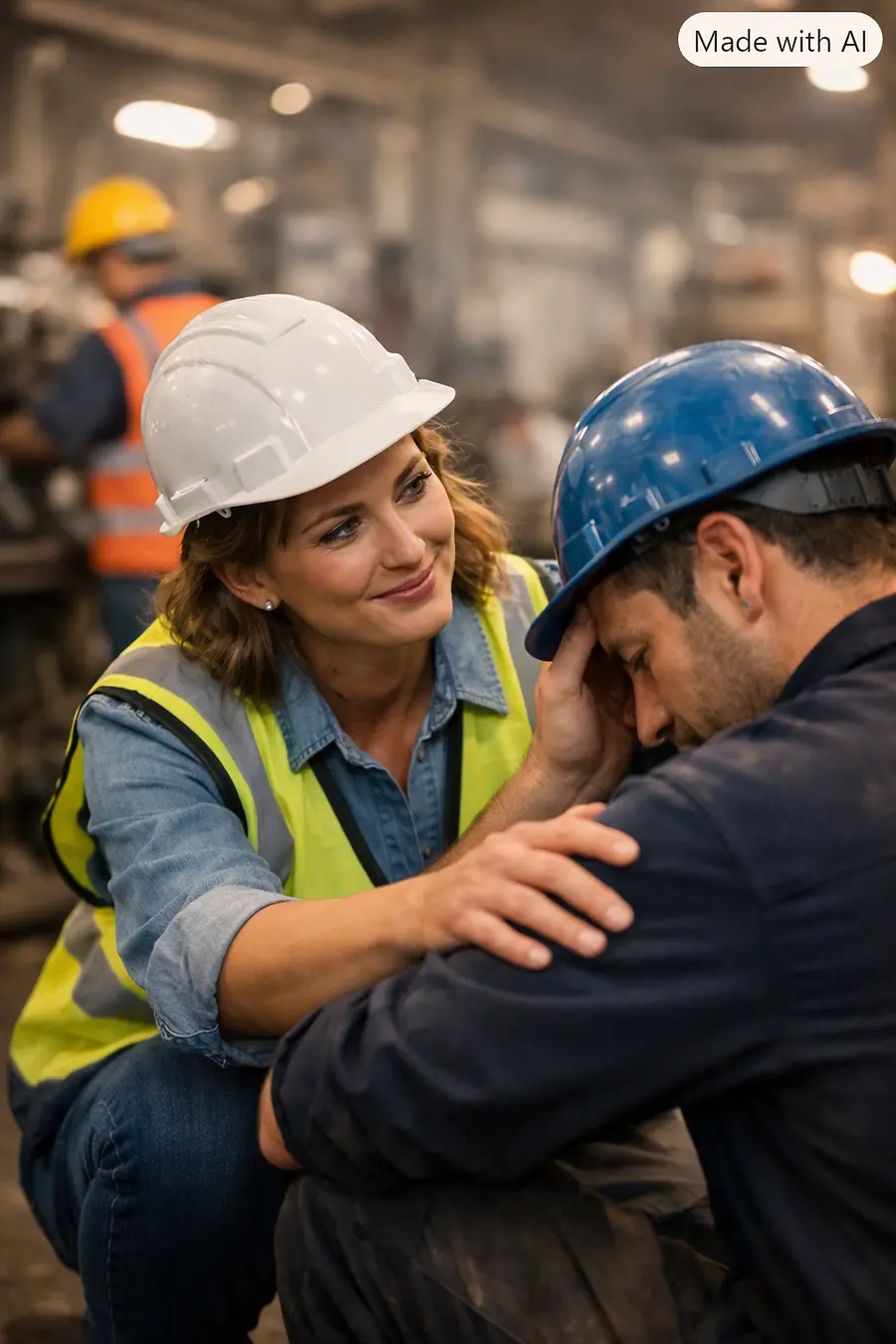
Empathy: The Quiet Force Behind Strong Safety Leadership
Safety is often described in technical terms—risk assessments, controls, compliance, and audits. But behind every procedure is a person, and behind every person is a story. In my years working in manufacturing safety, I've learned that the most powerful tool we have isn't found in a regulation or a checklist. It's found in our ability to understand one another.
Empathy is the quiet force that transforms workplaces.
It's the difference between a culture where people follow rules because they have to and a culture where people speak up because they feel valued.
I've met employees carrying invisible burdens—a sick parent, financial stress, exhaustion from being everything to everyone at home. I've seen how those pressures show up in their work: a missed step, a rushed decision, or a moment of distraction.
Not because they don't care about safety, but because life is heavy.
Technical expertise helps us identify hazards.
Empathy helps us understand the human conditions that make hazards more likely.
When leaders practice empathy, they start asking different questions:
- What's making this job harder than it needs to be?
- What's weighing on you today?
- How can we make this safer together?
These questions open doors. They build trust. They create psychological safety—the foundation of every strong safety culture. When people feel emotionally safe, they are far more likely to stay physically safe.
Empathy also changes how we respond to mistakes. Instead of blame, we offer curiosity. Instead of punishment, we offer partnership. We shift from "Who messed up?" to "What made this possible?"
And that shift is where real improvement begins.
The truth is simple:
People don't need perfect leaders. They need present ones.
Empathy doesn't replace our technical knowledge—it elevates it. It helps us design better systems, communicate more clearly, and build workplaces where safety isn't just a requirement but a shared commitment.
In a world that often celebrates efficiency over humanity, choosing empathy is a radical act of leadership. It's also one of the most effective safety strategies we have.
Because when people feel seen, they show up differently.
They engage more.
They collaborate more.
They protect themselves—and each other—more.
Empathy is not soft.
Empathy is strength.
And in safety leadership, it just might be our greatest advantage.