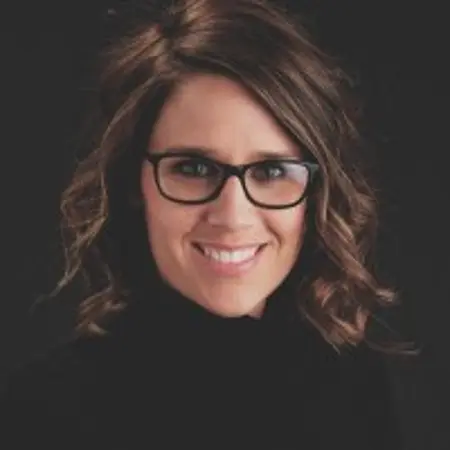
Her Story
About Abigail
My clinical background was trained in a trauma-informed lens, using various exposure techniques, and I've combined my clinical training and my theoretical groundings in meaning-making and constructivism to build interventions for people who have experienced adverse life events. My research program is really centered around helping folks make sense and meaning of those events and sort of move on into their lives, feeling that they're whole and have experienced post-traumatic growth. The majority of my research lives in serious illness care, so I do a lot with family caregivers. The methods that I've developed are rooted in meaning-making, and we use a variety of different storytelling techniques to help people make sense of their identities, their lived experience, and also to connect over a shared experience. I have a very personal connection to serious illness caregiving, informed through my own lens and lived experience as a sibling caregiver of my brother, who had a rare neurological condition. The role of sibling caregiving is not super well documented in the literature, and we're changing that. A lot of what I do is really to support bringing awareness and better understanding of family caregiving in general, but also for these unique caregiving dynamics. I've spent the last decade plus really honing my research program and have had success, and I've had to navigate really turbulent times. One of the things that I've learned through this whole experience is that hope dies last, and I really started to reflect on in what ways can I continue to make an impact in the world of social science research, particularly given everything that's happening around the world. I approach it through this 'lift while you rise' philosophy, asking how can I be a leader in this and help lift people while I rise, while also moving my work forward. A lot of the work I do is community-engaged, and I believe that, historically, we have not done the community-engaged work very well in harmony with community. It takes a significant amount of trust-building and humility to be able to do that well.
Her Interview
Ten minutes with Abigail
01What do you attribute your success to?
I attribute my success to staying true to my integrity and not compromising my values, even when it's scary and uncertain. I was faced with an opportunity recently where I had to make decisions about whether I was going to stand in my truth and stand in my integrity and hold true to that, or continue to sort of mold into this new thing. I was unwilling to compromise, and it was scary because I did not know what would happen and I did not know if I was gonna be able to have a job. But I was unwilling to compromise, and it worked out. It feels really good to know that in a time that felt really turbulent for me, with just a lot of unknowns, I was able to hold true to my integrity and my morals and my values, and it worked out for the better. I have a very solid true north, and that's how I'm able to navigate the really hard times in higher education right now, the really hard times that I have whenever I'm working with families directly, and the uncertainty I have as I'm stepping into a major leadership role. I know that I can do it because I have a very solid core, a solid true north. If I can be unwavering in that, I know that I can do it.
02What advice would you give to young women entering your industry?
Don't compromise your integrity. The moment that you start to do that, you start to lose hope, and you feel untethered to the mission of your work. I know it's hard, and I was faced with an opportunity recently where I had to make decisions about whether I was going to stand in my truth and stand in my integrity and hold true to that, or continue to sort of mold into this new thing. I was unwilling to do that, and it was scary because I did not know what would happen and I did not know if I was gonna be able to have a job, but I was unwilling to compromise. And it worked out, and it feels really good to know that in a time that felt really turbulent for me, with just a lot of unknowns, I was able to hold true to my integrity and my morals and my values, and it worked out for the better. So just do not lose hope, do not abandon the reason, your why. If people are feeling really like they're struggling with that in particular, maybe it's a time to turn inward and reflect on what is your true north, what's gonna guide you through this. Because we cannot sustain what's happening if we are unclear on that. Academia used to be a space to really live your true self and sort of step into your identity authentically, and your morals, and you had safety and protection to do that, and it's becoming increasingly less possible to do that. There's a delicate balance, and as academics, we are basically ingrained to go into the world as experts, but I firmly believe we're not experts in anything except our own lives. So there's this level of humility we have to have. We have to be able to say, I might not know the answer right now, but if we can work together, if you can trust me, then I will find the answer.
03What are the biggest challenges or opportunities in your field right now?
Academia is a rough place right now. It's a really hard place. It used to be that academia was a space to really live your true self and sort of step into your identity authentically, and your morals, and you had safety and protection to do that. And it's not really becoming, it's becoming increasingly less possible to do that. We're facing really turbulent times, and I've had to navigate really turbulent times. One of the things that I've sort of learned through this whole experience is that hope dies last, and I really started to reflect on in what ways can I continue to make an impact in the world of social science research, particularly given everything that's happening around the world. I started to get really creative, asking how can I be a leader in this and help lift people while I rise, while also moving my work forward. Historically, we have not done the community-engaged work very well in harmony with community. It takes a significant amount of trust-building and humility to be able to do that well.
04What values are most important to you in your work and personal life?
Trust, humility, integrity, and joy are the values that guide my true north. A lot of the work I do is community-engaged, and I believe that, historically, we have not done the community-engaged work very well in harmony with community. It takes a significant amount of trust-building and humility to be able to do that well. Holding space is also really important to me - holding space for people's vulnerability, holding space for your own vulnerability, holding space for joy, being curious, and approaching curiosity through the lens of integrity and humility. Motherhood is a really big part of my true north. I kept telling myself that I need to think about how would I want my daughters to handle something like this, and I need to model for them what it means to do this. I'm also a lesbian, and that's part of my core identity. When I had to make difficult decisions, I kept reflecting on my values and asking myself how I would want my daughters to see me handle these situations.
Join Influential Women and start making an impact. Register now.