Influential Woman · Leadership Development and Neurodiversity Consulting
Alexandra Robuste
Founder, Alexandra Robuste LLC | Kill Parkinson gemeinnützige UG
Venice, CA 90291
Her Story
About Alexandra
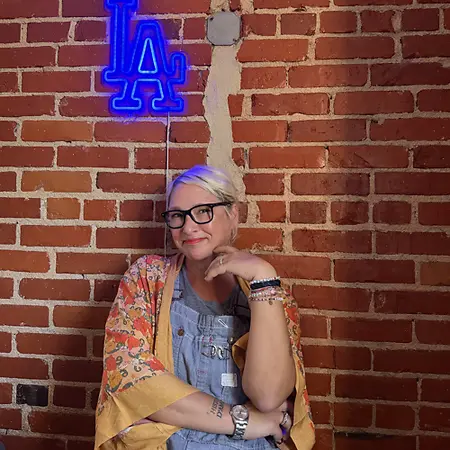
Alexandra Robuste is a researcher, certified coach, and neuroinclusive leadership architect based in Venice Beach, Los Angeles. She is the author of Gentle Leading & Neurodivergence, published by Routledge | Taylor & Francis in 2025 and recognized with the Literacy Titan Gold Award — a peer-reviewed translation of neuroscience into practical leadership and organizational design, already used across universities, executive programs, and global organizations.
Her work is built on a foundational insight that disrupts conventional leadership thinking: State → Access → Skill. Nervous system state governs whether a person can access their full capability — in the boardroom, in the classroom, and in the field. Alexandra didn’t arrive at this principle through theory. She arrived at it through practice: more than a decade as a Registered Nurse in ICU, Hospice, and Psychiatry, followed by over a decade in pharmaceutical and commercial leadership across some of the most complex, regulated, high-stakes environments in the world.
Her late-life diagnosis of AuDHD didn’t derail her career. It came through her son — and it was understanding that his wiring wasn’t personal that helped right there. That shift — from collision to connection — became the lens that reframed everything. It gave her the lived credibility to build something no one else had: SNIP™ (Systemic Neurocognitive Indexing Protocol), a six-domain neuroinclusive framework built on brain network research, encompassing 350+ evidence-based tools that map learning and leadership interventions to how different nervous systems actually work.
Gentle Leading™ is Alexandra’s own leadership philosophy — a needs-based approach grounded in emotional and nervous system regulation and the tension between autonomy and micromanagement. It is the practice of leading in a way that creates the conditions for people to access their full capability. All of her tools, frameworks, and methods are free and accessible for personal use. That’s not a marketing strategy. It’s a commitment: making a change by delivering supportive material to the people who need it most, regardless of what they can afford.
A SNIP™ working paper is currently under peer review at SAGE Publications. One of the founding figures of modern mentoring and coaching independently discovered Gentle Leading & Neurodivergence, featured it in his newsletter, and invited Alexandra to co-author a chapter in his forthcoming Routledge volume. She didn’t know who he was when he first reached out. She Googled him afterwards. That story has since become one of her favorites to tell.
Alexandra is also the co-founder of the Neurodivergence Coaching Academy (NCA), a U.S.-based professional certification program for coaches working with neurodivergent clients, built on the principle that state governs access to everything — skill, behavior, and quality of life. Four and a half years ago, with her three sons grown and the nest empty, Alexandra moved from Germany to Los Angeles — fulfilling one of her Big Five for Life. From there, a job loss became a career reinvention. What emerged was a body of work built at the intersection of neuroscience, human performance, and the radical idea that most leadership models were built for one type of brain — and have been leaving the rest behind ever since.
She co-hosts Vanice, a podcast and YouTube channel about reinvention, van life, and what happens when you actually follow the pull toward radical change. She believes — as a matter of spiritual conviction as much as professional practice — that what we think, feel, and then do shapes the life we build.
Her purpose is simple: bring more good leadership into the world. The effect of great leadership is tremendous. The cost of its absence is beyond humane.
Her Interview
Ten minutes with Alexandra
01What do you attribute your success to?
I attribute my success to curiosity — and to refusing to let the absence of a university degree define what I could contribute.
I never finished college in Germany. There is no PhD after my name. And yet my book Gentle Leading and Neurodivergence-Inclusive Leadership, published by Routledge, has opened doors I couldn't have imagined — including invitations to teach at universities and contribute to academic publications.
Imposter syndrome visits regularly. It whispers that someone will eventually find out I don't belong. But I've learned to notice it, name it, and keep going anyway.
The moment that crystallized this for me: a professor — one of the most influential figures in coaching and leadership since the 1970s — reached out on LinkedIn to praise my book and invite me to contribute a chapter to his new volume. I didn't know who he was in our first Zoom calls. I was relaxed, direct, myself. I got the chapter. When I later discovered the weight of his name in the field, I felt two things in quick succession: intimidated, then incredibly proud.
That's the ride I'm on. And I'm enjoying every bit of it.
02What’s the best career advice you’ve ever received?
The best advice I never received directly — but took anyway — came from Steve Jobs: always challenge the status quo.
Every system I've built starts from the same question: why are we doing it this way, and does it actually work for the humans inside it?
And then my own rule kicks in: no and impossible are not answers. There is always a solution. Sometimes it's a small tweak — one tiny adjustment to how a meeting runs, how feedback is delivered, how a deadline is communicated. And suddenly you see shoulders drop across the room.
That's the work. Small shifts. Big exhale.
03What advice would you give to young women entering your industry?
Don't let anyone speak for you (Mansplaining floating by — let it drift. It's not worth your current. Next.) Know who you are. Know your boundaries — and hold them like you mean it.
Stay regulated. Not just hydrated — regulated. A nervous system in its default state is your lightsaber. It's the difference between reacting and responding, between shrinking and standing your ground. Protect it like the asset it is.
And then: get out there. Make yourself visible. The world cannot champion what it cannot see. Show up, speak up, take up space — even when imposter syndrome might be knocking loud, even when you want to quit. Especially then.
May the force be with you.
04What are the biggest challenges or opportunities in your field right now?
The biggest opportunity in my field right now is reframing what neurodivergence actually means.
Most people still picture a noisy little boy who can't sit still. They don't see the hyperfocus that builds entire companies. They don't see the pattern recognition, the creativity, the capacity for deep systems thinking that comes with a differently wired brain.
That's not a burden. That's untapped competitive advantage.
The stigma isn't just unfair — it's expensive. Organizations are quietly losing their most innovative thinkers because their systems were never designed to include them.
Companies read the ROI data on neuroinclusive design. They nod. And then they go back to doing things exactly the way they've always done them.
But the conversation is growing. I see it every day — in the questions people are asking, in the leaders who are ready to move. That gives me real hope. We are not there yet. But we are closer than we were.
I'm here to close that gap. Not as an act of charity. As a business imperative.
05What values are most important to you in your work and personal life?
Meaning. That's the through line in everything I do.
My volunteer work with Kill Parkinson's is deeply personal. I worked as a nurse in Germany. I know what the severe stages of this disease look like up close. My grandfather had Parkinson's. And then a former colleague — diagnosed young, early onset — founded an NGO to fight it differently. When I found out, I didn't hesitate.
The mission is extraordinary: a gamified patient registry that keeps people engaged while gathering the data that research has been missing — where you grew up, what pesticides were used nearby, what your environment looked like. Combined with AI, this information could lead to better treatments. Maybe a cure. I get chills every time I talk about it.
That same value drives my work in neurodiversity. It's not enough to name the problem. You have to hand people something they can use — today, in their body, in their life. A small SOS toolbox. Practical, applicable, theirs.
And underneath all of it: nervous system regulation as a daily default. Not a luxury. Not a therapy intervention. A baseline. Because when your nervous system is settled, everything else becomes possible.
That's what I'm building toward. For every brain. In every room.
Join Influential Women and start making an impact. Register now.