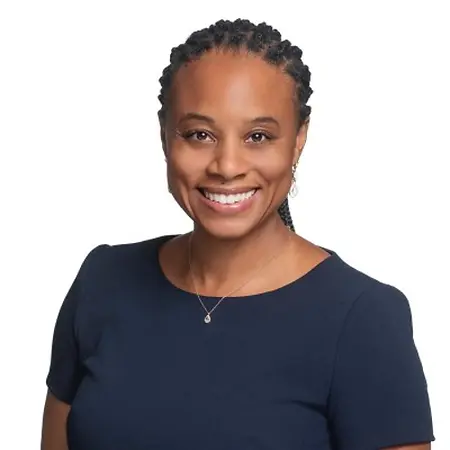
Her Story
About Andrea
I've always been interested in helping people, and I think in this field, you have the opportunity to help people realize their dreams, whether it's building hospitals or houses. We have an impact on cities and the urban footprint of a city, shaping environments and spaces that people interact with every day. That's rewarding - if it's good architecture, it's rewarding. I grew up in Germany because my dad was in the military, and it's a very urban-type, walkable city. The architecture there is just historic, it's been there for years. I think, intuitively, that kind of shaped me, not realizing that it was. Just being able to understand how people feel when you're in a park, you know, it felt good, and Germany just has all those parks and bike paths. Being able to experience that at a young age, I think inherently just kind of shaped me. It wasn't an easy path to get there - you go to architecture school, I took the professional degree route, and then you have to sit for your license exams. When I was doing it, it was 7 exams. I worked at several different firms before ending up at this particular firm, but I think just along the way, I had great mentors, great people that poured into me. I wouldn't be here today without them - it's literally by the grace of God where I'm at. My parents were big supporters of my journey. I think just being able to speak up for yourself and advocate for yourself when you're wanting to gain more experience in certain areas, and knowing when to stay and knowing when to leave when that's not happening - it was a windy road, but it got me here. I really enjoy what I do. I'm more so on the business development side of the business now, which I love, because I get the opportunity to meet new people and establish relationships and hear what their problems are, and try to help problem solve their problems and their issues, whether it's a retrofit or if it's something new that's built ground up. It's been a windy road, but I'm grateful for the road. It made me who I am today, it made me stronger. I didn't realize that when I was going through a lot of what I went through, through school, and the challenges of trying to make a path, forge your way in this whole society of professionalism - sometimes it was hard. The easier thing would have been to give up, but as my dad said, he didn't raise any children to give up easy. So I just stuck with it, and here I am, 21 years later.
Her Interview
Ten minutes with Andrea
01What do you attribute your success to?
I had great mentors along the way - great people that poured into me. I wouldn't be here today without them. It's literally by the grace of God where I'm at. My parents were big supporters of my journey, going from firm to firm. I think just being able to speak up for yourself and advocate for yourself when you're wanting to gain more experience in certain areas, and knowing when to stay and knowing when to leave when that's not happening - that's been important. The road made me who I am today, it made me stronger. I didn't realize that when I was going through a lot of what I went through, through school, and the challenges of trying to make a path and forge your way in this whole society of professionalism. Sometimes it was hard. The easier thing would have been to give up, but as my dad said, he didn't raise any children to give up easy. So I just stuck with it.
02What’s the best career advice you’ve ever received?
My dad told me when I was going through taking my exams and I had failed one, he said, 'Andrea, just because you have fell doesn't mean you're a failure.' That just kind of stuck with me. You're gonna have some valleys, you're gonna have some lows, but just because you've hit those stumbling blocks, that doesn't necessarily define who you are. He also would say if it was easy, everybody would do it. I've held on to those two throughout my career because he told me those when I was pretty young, probably when I was at Auburn, going through architecture school, and then when I got out and was sitting for the exams. Each time I hit a rough patch, or I hit something that's challenging, or if something just didn't quite go the way that I expected, or if I messed up and screwed it up, it's just because you messed up that time, that doesn't necessarily define who you are. You have to know who you are and really be grounded in the fact that this isn't going to define me. I also remember something from the owner of Herman Miller - she said you can visit Pity City, but you just can't camp there. Even though she didn't tell me that directly, I held on to that too. It's okay to go visit Pity City, be sad, but you gotta pick yourself up and keep going.
03What advice would you give to young women entering your industry?
I would let them know it's not a walk in the park, but surround yourself around people that you know truly care for you and that will encourage you along the way and that truly has your best interest in mind. If you can try to find someone in that field that's been in it a little bit longer than you have, that can really kind of guide you along the way. For me, that was one of the hardest things - being a black female in architecture. That was tough because it's not many. At the time when I was going through it, it wasn't many people in the room that looked like me, and that can be intimidating. If you can find someone that looks like you, that's been where you're going, reach out to that person, because most of the time we've been there. You'll be surprised - lots of us, even though we are working every day and busy, if somebody, a young black girl that's in architecture says, 'hey, do you have a second,' I immediately say yes. They too were there, and they want to help them. That's my advice - definitely try to find someone that you can talk to, because the worst thing you can do is try to go at it alone and not have a community behind you. I often recommend for a lot of black females that are interested in architecture to find a NOMA chapter in a local city, or come to the NOMA conference. The NOMA conference is probably the biggest family reunion I've ever been to. It's a conference like no other, because as Black people, we have a different struggle. It's intimidating to walk into a room and it's 100 people in the room and you're the only black person there. To be able to find your community and be like, 'hey, help me navigate this' - because when I got my license, I was the 3,129th black female in the United States to get their license. The fact that I know that number just goes to show you how low it is. I would encourage people to find your community that will be able to help you and show you how to navigate this field, because we all know it's all about who you know lots of times, and the architecture community is so small, the construction community is so tiny, and even the black community within that community is even smaller. So that would be my advice - just do not go at it by yourself. It's so many people out here that's willing and wanting to help.
Join Influential Women and start making an impact. Register now.