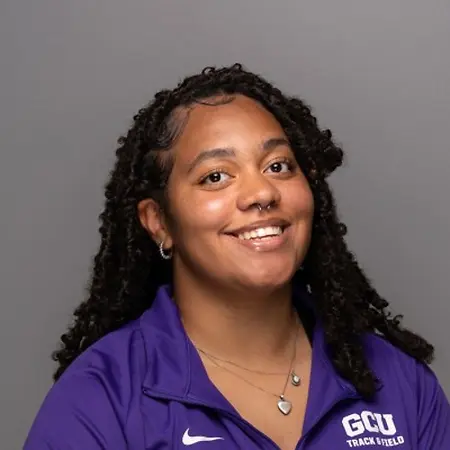
Her Story
About Ariana
My day-to-day work involves providing advocacy and support to victims and survivors of sexual assault. I serve all people - women, men, non-binary, and trans folks. My work includes reaching out to people who may have received referrals to see if they're interested in our services, accompanying survivors to court proceedings, and being present during hospital examinations. While I don't provide legal representation, I serve as a source of comfort and support, helping with practical needs like getting water or explaining legal terms commonly used in the court process. I also accompany survivors during PERC exams (also known as rape exams or rape kits) and inform them about the resources and rights they're entitled to, including the ability to pursue legal action against their perpetrators depending on their state. I entered this field after being assaulted myself, which opened my eyes to the significant gaps in support for marginalized communities. As an Afro-Latina Black woman in America, I saw how representation becomes less and less available as you move through different branches of minorities and intersectionality. I wanted to be the change I wished to see in the world and provide advocacy and representation for people who look like me. I believe strongly in showing that you don't need a conventional path to make a difference - my completed education is an associate's degree, and I'm working on my bachelor's, but I want to show people that there are non-conventional routes to getting into these positions if you work hard, study, and learn.
Her Interview
Ten minutes with Ariana
01What do you attribute your success to?
I attribute my success to being the change that I wish to see in this world. As a Black woman in America, I feel like we're constantly expected to be the moral example for people, to lead the charge when others focus on themselves. I saw that there needed to be more advocacy in certain fields, and there needed to be people who looked like me to advocate. Don't get me wrong, anybody can advocate for another person, but sometimes it's more comforting to see somebody who looks like you helping you. I think there was a huge need for it, and honestly, I don't think a lot of people even realize that victim advocates are a thing. I wanted to provide representation for multiple areas of my life, but especially for people who look like me. I also wanted to show that you don't need formal education to make a difference. My completed education is an associate's degree, and I'm working on my bachelor's, but I wanted to present that representation as well - if you work hard, if you study, if you learn, there are non-conventional routes to getting in these same positions. I never intended to be interviewing on any platform like this - I thought I'd be the hometown hero, maybe people in my hometown would know me, but I just wanted to try to provide some sort of representation for people who look like me.
02What advice would you give to young women entering your industry?
You are enough and you're doing enough. Working in nonprofit can get really hectic and weigh down on you heavy, regardless of if you're an advocate, if you just do social media, or if you're online. I feel like a lot of times when you enter into the nonprofit space, those folks who work in those places tend to constantly be looked at as if, well, what else are you doing? Well, you're not doing enough. There's always this constant push, be it society, or be it grant monitors, be it board of directors, higher-up people, that constantly lead people in this field to feel like you're not doing enough. But you are enough and you're doing enough. Sometimes I know we want to be the superhero, and especially as women, we're constantly looked at to be the nurturers, and especially as a Black woman in America who's Afro-Latina, there's this innate role that people expect from us to be the nurturers and go over and beyond, sometimes to the point, even if that means continuously depleting ourselves. On some days, it's hard to believe that you're enough and you're doing enough. But you can't help somebody unless you have helped yourself yet. You're running from an empty cup, and while you're doing your best, if you're running from an empty cup, that best that day may not be enough to be able to provide the help that you really want to. The expectation is always there for women to over-exert ourselves, and in nonprofit space, unfortunately, it is predominantly women-dominated, and we're expected to go above and beyond, even if our pay doesn't reflect that, even if our job description doesn't reflect that, even if our scope and our expertise show that we really can't go above where we're at.
Join Influential Women and start making an impact. Register now.