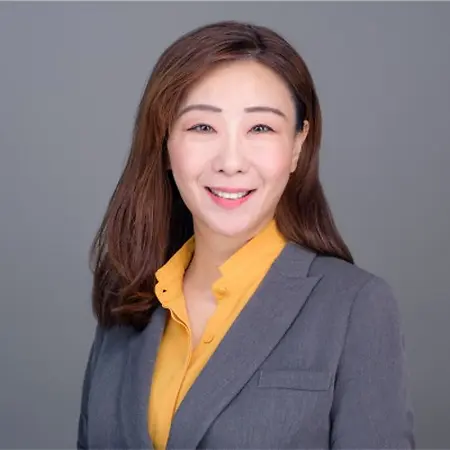
Her Story
About Cori
I have been in finance for 20 years, working as an executive and business leader focused on fraud and risk management for fintech and banks. My work centers on three critical areas. First, as a fraud risk domain expert, I grow and mentor teams of fraud and risk strategists who identify new trends and patterns and design the best strategies to keep the bank safe while optimizing customer user experience. Second, I serve as a data and AI technology leader. In modern fintech, everything is data-driven, so I lead teams of data scientists and machine learning engineers to harness unique insights through advanced analytics, data, machine learning, and AI to drive the best decisions for adoption, engagement, revenue, and fraud prevention. Third, I am an operations leader managing large groups of operations experts who figure out the best processes, procedures, and strategies to give customers top-notch service while keeping them safe. As an executive, I report to the CEO and board members on our KPIs, KRIs, expenses, fraud and risk playback and strategies, how we are doing today compared to best practices in the industry, and what optimal strategies will drive us forward to support and enable our revenue and growth goals. Looking ahead, I am focused on continuing to build my network in the fraud and risk domain around the fintech industry and becoming deeply rooted in the innovation community so I can be an innovator and driver to the fintech industry, ultimately becoming an authoritative industrial leader in the fraud and risk space for fintech.
Her Interview
Ten minutes with Cori
01What do you attribute your success to?
I attribute my success to three things. First, my education. I have to say it's important. I'm actually trained in STEM - applied mathematics and statistics from Georgia Tech. The education rigor gave me a lot of good habits that carry me a long way, like habits about how to build hypotheses and how to organize my project analytic thoughts in the right direction. Critical thinking training - my education gave me lots of a boost. Secondly, I would say family and friends, including mentors. Every time, like, my husband, my mom, my mentors, if I have difficulties or things of that nature, they're always there that I can talk to. And they will support, not just emotionally or morally, they actually act and give me some good suggestions, which I really treasure. And I think the third thing is that I got to be so successful also because of my team. Sometimes, maybe I'm just lucky, like, I work with good people. They are also very committed, dedicated, and very smart. Over time, of course, I hire my team most of the time, but my team always grows. I hire people, people hire other people, and I have like 20, 30, 50, 70 people teams, and they're all very expert and very dedicated. So I'm lucky that we form a really supporting, healthy, and innovative working community where we support each other and we support each other's growth.
02What advice would you give to young women entering your industry?
I would say a couple of things. First, you need to have the motivation and enthusiasm to go into this industry. Because fintech is great - we always innovate, we always pivot. But on the other hand, it's always demanding compared to big banks where it took them 2 years to do something, it takes us 2 months to do something, so it could be demanding. So you have to be mentally prepared. Hey, you know, I'm going to a challenging and also promising industry. I want to do something, I want to contribute. I think the mental readiness is important. Number two is always think about pushing the boundary, push the envelope. Fintech is really honed into customer experience and finding the marginal lift, the edgy part to drive revenue, and finding a smart way to serve customers, especially customers in need, customers who are traditionally underbanked, credit invisible people, people who need financial support. So innovation is important. You always want to think about, oh, okay, someone else does it fine, but can I do something better? Always try to push the envelope. Those two are really important - be mentally prepared for the challenging work and be innovative. One closing quote I always have for young people is the compound effect, meaning that you don't have to be perfect every day, you just need to be 1% better than who you are yesterday. End of year, you're gonna be 37 times better.
Join Influential Women and start making an impact. Register now.