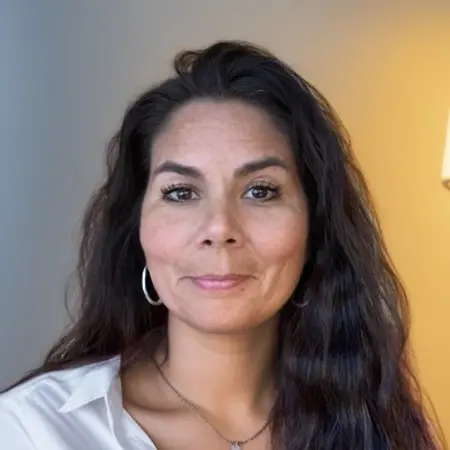
Her Story
About Danielle
I have been working in my field for about 20 years, and I just started a brand new role about a week and a half ago at Telecare, a company focused on mental health. Their cause and mission really spoke to me, which is one of the reasons why I decided to make the change from higher education to healthcare. They're a phenomenal company, and the work they're doing is just extraordinary. Before this, I spent almost 6 years at Northeastern University, where I started as an HRIS manager in June 2020 during COVID. Working in higher education allowed me a couple of opportunities, including getting my master's degree in education, which I completed just 2 months ago. My expertise is in HRIS, which allows me to bridge the gap between HR and IT departments. I'm essentially the translator between the two departments because they don't always understand each other's language. I make sure implementations go well, support HR systems, and ensure that the technical side gets completed while having the HR side still stay compliant. I hold a bachelor's degree in Management Information Systems (MIS), which helped me understand business on the technical side. My master's in education is focused on higher ed administration, and having that degree will also allow me to possibly teach in the future if I choose to do so. Throughout my career, all of the implementations that I have been able to be a part of over the years are what I'm most proud of, especially the system implementations that allow users to maneuver through systems easily. Right now at Telecare, I'm helping them go through their implementation of Workday, so they're just at the beginning stages, but they're taking the leap into a great technology realm that is new to them, so it'll be very exciting.
Her Interview
Ten minutes with Danielle
01What do you attribute your success to?
I attribute my success to hard work and having a good work ethic. That's key. I also know that I'm not always right - it's never my way or no way. It's about making sure that you understand and listen to people, because essentially that's what people want, right? Everyone wants to be heard. So listening to people is definitely important. I think it's about being open to feedback and being willing to learn from others, not just assuming you have all the answers.
02What’s the best career advice you’ve ever received?
The best career advice I've ever received is to keep learning and never stop learning. That's actually why I got my degree literally 2 months ago. I know working in higher education, they obviously push that a lot, but even outside of higher education, there's always room for more growth and more learning. You should never think you're too old to keep learning and developing yourself professionally. Another piece of advice that really stuck with me early in my career was from my mentors at Milton Cat, who taught me to never bring your manager an issue without trying to figure out a solution. So it's about saying, here's a problem that we're having, but this is what I think we might be able to solve. That approach has served me well throughout my career.
03What advice would you give to young women entering your industry?
I wouldn't necessarily direct this just towards young women, because even at 51, when I was working at Northeastern, I still had a mentor for my career path. Having mentors throughout your career is key to making you successful. The mentors that I've had, like at Milton Cat, were phenomenal. They taught me early in my career to not bring your manager an issue without trying to figure out a solution. So it's about saying, here's a problem that we're having, but this is what I think we might be able to solve. I found throughout my career that I still needed and wanted mentors. Even at Northeastern, I was able to have our CHRO as my mentor, and she was phenomenal in guiding me through situations, whether it was dealing with personnel issues or management issues. She was open and completely honest about her feedback towards me. If I was doing something wrong, she'd tell me. I think it's about having mentors throughout your entire career, so don't ever think you're too old to have a mentor. Never, never, never. Look for successful women within your organization, and also look for people who match your personalities. There are some people out there that are excited and willing to mentor and think of it as an honor. I'm actually a mentor myself to some people at Northeastern still, even after I've left. It just makes me feel honored that, one, they see me as successful, and two, that they're interested in what I can teach them.
04What are the biggest challenges or opportunities in your field right now?
The biggest challenge in our field right now is companies moving back to in-office work. I feel that I'm a remote employee, and I think a lot of companies right now are losing out on talented people who are remote. I understand that during COVID, obviously a lot of us were able to go remote, and we helped essentially save those companies by just strictly going home and being able to work and keep the lights on. I think a lot of employees now, and even during my interviewing process when I'm interviewing candidates, they're extremely thankful for being able to be remote 100% because that gives them more of a work-life balance, and it's better for their mental health. I think a lot of remote people have proven over the years that it can be successful. When companies bring everybody into the office, that's hard on people's lives, especially in the economic state that the U.S. is in right now with gas prices. Companies are missing out on a lot of talented people who won't accept in-office positions. It's not fair that everyone's pockets are being emptied at the grocery store and everywhere you can possibly think of. It would be great if companies could still abide by that 100% remote rule, where it doesn't matter where you are, as long as you're talented and you get the work done and you have a great work ethic, it should be good. There are definitely people who can't do remote work, and that's fine, but companies should have that flexibility for those who want it.
05What values are most important to you in your work and personal life?
In my personal life, honesty is probably the most important value. For work, I would say accountability is huge for me. I'm looking for those people who you hire who don't play the blame game. I think it's about those people who come into the office and when they make a mistake, they own it. That's huge for me, because I feel like it's not about pointing the finger at other people. It's about saying, I made a mistake, bringing it to someone's attention, and knowing that that person is going to be okay with it, because that's how I like to lead my team. If you make a mistake, it's okay, we just have to figure out how not to make that mistake again. There's no blaming them or saying you're going to get in trouble, or this is going to be written up. We're not in a time where we can do that to people and scold people for mistakes. We learn from them. But in order for that to happen, you need employees who are okay with mentioning that they made a mistake and who feel safe doing so.
Join Influential Women and start making an impact. Register now.