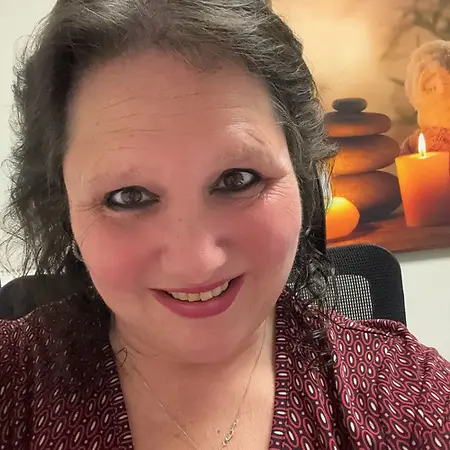
Her Story
About Darleen
I facilitate both hybrid and in-person groups, and they're pretty large groups, majority of them. The sessions are rather long, 2 to 3 hours at a time, so I have to plan ahead and figure out activities including psychoeducation. I do research and have to know my subject well because we have a set curriculum that we have to follow, and some of the topics are kind of boring, so I have to figure out ways to make it less boring or more interesting, which is challenging. I also conduct intakes and assessments where I get all the background information of clients joining in to see what level of care they may need and to figure out what their needs are so we can create person-centered treatment plans. I provide both individual counseling and group counseling because clients also learn from peers. I work in a facility with a team of other clinicians, and we work together. I don't have a set schedule every day, every day is kind of different. Right now I work with intensive outpatient and also PHP, which is partial hospitalization. They're not quite inpatient but not completely outpatient, so it's kind of like a medium in the middle where they still need a lot of structure and accountability.
Her Interview
Ten minutes with Darleen
01What do you attribute your success to?
I attribute my success to my family and friends that show their continued support and love.
02What’s the best career advice you’ve ever received?
Never forget self-care. Take care of yourself. You can't give from an empty cup. This is something I learned throughout my career, and it's especially important in this field because if you don't take care of yourself, you're going to get burnout, because this is a high field for getting burnout on.
03What advice would you give to young women entering your industry?
Kind of the same thing, because if you don't take care of yourself, you're going to get burnout, because this is a high field for getting burnout on. Remember to have fun as well. That's another thing. Remember to have fun.
04What are the biggest challenges or opportunities in your field right now?
Mental health is a big one. A lot of clients are dual diagnosed with mental health as well, and I work with substance use disorders. We have knowledge of working with certain mood disorders, but there's higher mental health that we're not prepared to work with, which I'm actually working on my master's degree to address. It's harder to work on the substance use if they're dealing with disorders like schizophrenia or schizoaffective because they have a lot of delusional thinking and hallucinations, and they have a hard time separating reality from not reality. That's the biggest challenge. When I face these challenges, I don't try to tackle it alone. If I need help, I'll ask my supervisor, I'll ask my other fellow clinicians for advice. I also talk to my clients about what would be the best way to help them with their problem.
05What values are most important to you in your work and personal life?
Integrity, Honesty, Fairness, Genuineness, Empathy, Determination, Openness, Understanding, and many more!!!,
Keep Exploring
More Influential Women · Maryland

Join Influential Women and start making an impact. Register now.