Her Story
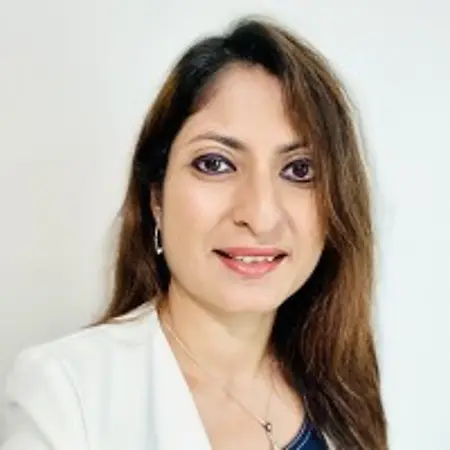
About Debanjali
My career has been defined by patience, resilience, and a truly global perspective. After earning my PhD in Applied Economics from the University of Miami in 2008, I spent five years as a consultant with PricewaterhouseCoopers in New York before transitioning into academia. I've had the privilege of teaching economics, business analytics, and statistics to students from every possible background - undergraduates, postgraduates, working professionals, part-time and full-time students - across 6 to 7 business schools in Asia and America, including the University of Miami and schools in Singapore. The biggest achievement in my career is this multifaceted, multicountry feature - I've worked as both a consultant and a faculty member in four different countries: the U.S., India, Hong Kong, and Singapore. This has given me a very global perspective about different types of clients across the world and different types of students. Now I'm back to consulting, running my own firm in California where I work 6 to 8 hours a day, mostly talking to clients, figuring out solutions for them, and running in and out of meetings. Most of my clients are startups - my biggest client right now is a mental healthcare platform based here, along with a few financial services companies in my portfolio. I'm still attached to the University of Miami where I got most of my educational background from, currently working on a research project with them. Every time I've moved to a different country, setting up in that new place, getting to know people, and building the network has been challenging but adventurous and fun. I'm a mother to a 13-year-old son, and balancing taking care of my kid while building a career has been a struggle at times, but my family has been very cooperative and understanding. So far, so good - I've figured it out and worked through it.
Her Interview
Ten minutes with Debanjali
01What do you attribute your success to?
I attribute my success to two words: patience and resilience. Given that I've gone through an entire PhD path, which is a very long educational path with many multiple years in school, I had to go through a lot of back and forth with successes and failures. It's about understanding what's needed, what's not, and building a career around it. I've always believed that if you're persistent, if you keep on to it, that always pays back. These two qualities have helped me navigate the challenges of moving across continents, building new networks in each country, setting up in new places, and balancing my career with being a mother. My family has been very cooperative and understanding, which has also been crucial to my success.
02What’s the best career advice you’ve ever received?
The best feedback I've consistently received throughout my career, both professionally and personally, is about my time management and punctuality. All my clients have always said I'm very good in time management, and I'm a very punctual and very responsible person. My students have repeatedly said in feedback that there's nobody who's better in time management - if the class starts at 9, I'm there 5 minutes before 9, and my lectures would finish exactly at the right time. Even my family says I manage my time very well at home, whether it's duties with my son or duties with my work. Everything is very organized - if it's not organized, it's not me. I'm never late, even if I'm going to a party. That's how I've been raised, and my parents were very particular about that. This quality of being punctual and managing time well has stuck out in feedback from both professional and personal spaces, and it's something I take great pride in.
03What advice would you give to young women entering your industry?
First, never underestimate the value of higher education. Higher education degrees like master's degrees and PhDs have really helped me in breaking through the barriers. It's not just about the first job you get right out of college, but building on top of that, getting people's recognition, and building up your resume so that people look at you. Of course, with new technology and AI and all of that, things are different and it's reshaping our entire job paradigm, but definitely do not undermine the value of higher education. Second, be patient and be resilient. Instant gratification is very hard to get - you just have to stay at it and build it up. People can trust you more if you're sticking to a certain field and building it up. It's a trust factor, and the more you gain trust from people, the more and more work will come to you.
04What are the biggest challenges or opportunities in your field right now?
The biggest challenge right now is AI. AI is helpful as well as challenging. I'm trying to get myself educated with AI tools as much as I can, but at the same time, a lot of the big consulting powerhouses are using AI models to get the work done. So yes, it's a benefit, but we always have to look out that we are creating something or putting out something which is creative enough to challenge the abilities of the AI models. That's the biggest challenge right now for most people in every industry. There's a huge AI wave coming up in the near future, in the next 5 to 6 years, so there'll be a huge shift in the job paradigms. We're in a transition and disruption phase right now. Some of the bigger companies have really built up their own AI models, but some of the smaller companies are still struggling - they want to be competitive, but not yet. We always play a role in advising them and figuring out how they can navigate this transition.
05What values are most important to you in your work and personal life?
In my personal life, being well-rounded is very important to me. I'm very grounded to my own roots and culture, and from where I come from. I do try to take my son and my family to where we are from originally. Being very attached to roots and being original - or being authentic, that's a good word to phrase it - is something which is very important in personal life. In my corporate life, a well-rounded personality never goes unnoticed. It's not just sticking to my laptop, sitting in a corner, and working. Having a good EQ is crucial - in this day and age, without emotional intelligence, you can't succeed. So yes, being smart at my work, but also trying my best to have a more well-rounded performance, which goes a long way and people always value that. Emotional intelligence is very important, and agility to adapt. When I was teaching, connecting with the people you work for or work with was essential. Being strategic, being a well-connected individual who can reach out to people, people finding me approachable, being well-articulated - good communication, good articulation, and a good ability to connect with people are very important values for me as a leader.
Join Influential Women and start making an impact. Register now.