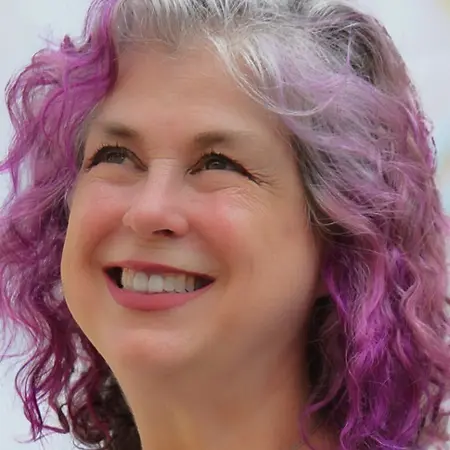
Influential Woman · Disability Inclusion and Advocacy
Debra Ruh
CEO and Founder, Ruh Global IMPACT
Rockville, VA
Her Story
About Debra
My journey into disability inclusion began in 2000 when my first child was born with Down syndrome. I had never met a person with a disability before, and it was a big surprise that never occurred to me. That became the catalyst for everything I do now. Before this work, I spent 25 years in the banking and financial industry, working my way up from an analyst to a vice president in mortgage banking. I really liked how they paid me whether I worked that week or not, which was a blessing. But I felt very drawn to make a bigger difference for my daughter and others like her, so I decided to become an entrepreneur. I created a firm called Tech Access that employed people with disabilities - all different types including blind, deaf, blind-deaf, mobility, quadriplegia, paraplegia. I grew that firm to a multi-million dollar business, though I always struggled with cash flow. During the 2008 banking crisis, my company got hit real bad because my customers were big corporations, and about a year into that crisis, my company got absorbed by a competitor just so I could save my employees with disabilities jobs. I worked for that competitor for about 18 months, but there were pretty significant differences about the way I felt the world should work and the way they did. So I left again and created a placeholder with my name, Ruh Global Impact, which is like a think tank for corporate leaders and leaders all over the world who really want to truly make sure all humans are included. Five years ago, I started a nonprofit called Billion Strong around the pandemic, sadly while my husband was dying. My husband had sustained a traumatic brain injury when he was young - he was hit by a car, killed, went into a coma, and they brought him back. He grew up, married, had two children, and then dementia came for him early. I decided the disability community should come together in a different way with pride and supporting each other. About a year ago, I came up with what I think is a brilliant idea - the Disability Mirror Index. Right now in my field, we like to point fingers at corporations, but the sad fact is the disability community does not include themselves. They don't hire people with disabilities in their executive offices or boards, and they're not accessible themselves. The Disability Mirror Index is the very first index ever created that flips it and turns the mirror around on the disability community themselves. The first one's gonna get birthed in September, and I'm indexing 50 global organizations to see how are we doing and what could we do if we actually remembered we're a billion strong. I have 127 countries engaged and 1,500 youth advisors with lived disabilities all over the world. I'm very engaged with AI conversations - AI for all, AI safety, AI equity - because AI can fix a lot of the gaps. I've been promised funding by some pretty significant founders and foundations in 2027. I also have a very large following on social media platforms, and LinkedIn named me as one of their top 100 creators that they wanted to accelerate. I have a Wikipedia page that someone created about me, and others keep contributing to it.
Her Interview
Ten minutes with Debra
01What advice would you give to young women entering your industry?
I would tell my younger self, don't be discouraged. It's gonna be a hard walk, but so what? Who hasn't had a hard walk? I think that's just part of being alive. Don't let them discourage you. If you don't get funded, don't let that discourage you. Keep going and keep focusing on what the truth is and where we want to go. The world is bigger than you, so keep going, because at the end of the day, you can't take everything with you anyway when we pass over. I believe we're spiritual beings having a human experience, and that helps me get through the day. Just be authentic about who you are. You can feel so quickly if people are in it to help or if they're in it for themselves. And by the way, it's okay sometimes to be in it for yourself, as long as hopefully that changes into being more about others. Women need to support each other better than we've done. We have not done well. If you don't like the way the world works and you don't like that we're excluded, well, what are you doing to help other women? The feminine power's rising, and I feel it. Change is coming.
02What are the biggest challenges or opportunities in your field right now?
The biggest opportunity right now is AI. Now that we have AI, we have the ability to really fix a lot of the gaps that made us say I have a disability, don't not include me. AI can fix things so that it works for everybody. For example, I couldn't read your paper because I was blind, or I couldn't hear your speech because I was deaf - we know how to technically fix all that now so that it works for everybody. We need to be driving to what if it didn't matter that I had a disability? What if it didn't matter that I was a woman? The challenge is that funding hasn't followed as often as I'd like. When you are trying to create something new and doing something different, it's difficult. The world is a little interesting right now too. But I've been promised funding by some pretty significant founders and foundations in 2027. The other challenge is that the disability community does not include themselves - they don't hire people with disabilities in their executive offices or boards, and they're not accessible themselves. That's why the Disability Mirror Index is so important.
03What values are most important to you in your work and personal life?
The most important value to me is helping people and making sure all humans are included. I'm not just helping people from the lens of the United States as an American, but I'm actually reaching into areas that have not been included. I'm proud that I have helped so many voices start to emerge from different countries. I love being able to help, even though sometimes you can't see the true impact. I think when you're crippled by fear, it's such a blessing that you have work that you think actually is helping others. I believe my most important thing now is helping other women get in the door. With my privilege of being born in the United States, I have the door wrenched open and I'm holding it there with my body so others can come in, because people are excluded through no fault of their own. I want to make sure others are heard, including the women that aren't heard outside the United States and the UK, and women who don't get heard here in the United States for a lot of different reasons. I believe we're spiritual beings having a human experience. Collaboration is important - women are really good at it, but we can be better at it. Being authentic about who you are is crucial. At the end of the day, you can't take everything with you anyway when we pass over, so what are you doing now?
Join Influential Women and start making an impact. Register now.