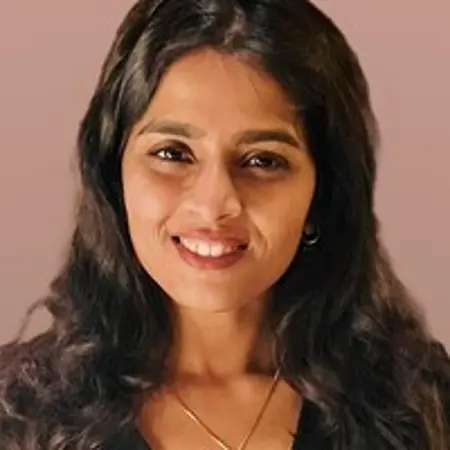
Her Story
About Divyanka
I started my journey in healthcare in 2015 when I began my dental education, and I graduated as a dentist in 2021. During the pandemic, I worked both as a dentist and as a resident medical officer. What really shaped my path was my experience working in a hospital that provided free care during my bachelor's in dentistry. I saw so many patients who traveled miles just to receive dental care, and I became curious about the system-level challenges they were facing - financial barriers, lack of knowledge, and how delaying treatment made costs increase dramatically. I had one patient in their early 40s who didn't have a single tooth, and I made a complete denture for them. Seeing how much more confident and happy she became after getting her teeth back really motivated me to understand what I could do beyond just clinical practice. That's what pushed me to pivot to public health. Since 2024, I've been working for the New York State Department of Health as an epidemiologist, where I perform data analysis on health data to reduce disparities in crashes. I analyze crash characteristics and outcomes across New York State to inform policy, looking at contributing factors like seatbelt usage, road characteristics, and whether high fatalities occur in underserved zip codes. I'm currently working on a project linking crash data to emergency medical service data using advanced techniques, and I'll be presenting at a conference in April to teach others how to do this. What makes my background unique is the combination of being trained as both a dentist and an epidemiologist, which gives me a special perspective. I'm passionate about advocating for oral health integration because oral health is a mirror to your body - diseases like cardiovascular disease and diabetes are first reflected in your oral cavity. But dental and medical health aren't integrated in most hospitals, and I want to advocate for changing that in the future.
Her Interview
Ten minutes with Divyanka
01What do you attribute your success to?
I think my biggest achievement has been successfully pivoting from being a clinician to learning how to code and work with data. Initially, it was very challenging and daunting when I started learning statistics and coding, but I was able to progress from basic coding in SAS, which is what all public health professionals use, to learning R, and now I'm also using Python. As the industry is changing, we all need to learn at least a little bit about AI, and being able to do that transition and master these technical skills has been probably my biggest achievement. What makes me unique is the combination of being trained as both a dentist and an epidemiologist in public health, which gives me a really special perspective. I've also gained experience working in government with the New York State Department of Health, and I've worked with nonprofit organizations during my internships, so I have a pretty all-round perspective. I believe this combination of clinical training, public health expertise, and advanced data analysis skills is what sets me apart.
02What are the biggest challenges or opportunities in your field right now?
I believe one of the biggest opportunities in public health right now is the advancement of technology and AI. With AI and technology advancing, even public health needs to be on top of it and make sure we learn advanced techniques. That's why I'm working on projects that use Python to link hospital and crash data, and I'll be conducting a technical workshop next month to teach others these methods. Another major opportunity I see is in oral health integration. If you read recent research, it's proven that oral health is a mirror to your body - a lot of diseases like cardiovascular disease or diabetes are first reflected in your oral cavity. But if you go to a hospital, you might not find a dental clinic integrated in that hospital, so if you want to get your oral health care addressed, you might want to go to a different provider. Dental and medical health is not integrated, but it's important that we integrate it and not segregate both. That's something I want to advocate for in the coming future, because I believe I can bring some change.
03What values are most important to you in your work and personal life?
What really drives me is addressing socioeconomic disparities and making sure that everyone has equitable access to healthcare. My research informs policies to ensure we're serving underserved communities. When I was doing my bachelor's in dentistry at a hospital that provided free care, I saw patients who traveled miles just for dental care, and I became curious about the system-level challenges they were facing - financial challenges and lack of knowledge. I saw how patients would often come to get care only after there was no other option left than extracting their teeth. I had one patient in their early 40s who didn't have a single tooth, and after I made a complete denture for them, I could see how much more confident and happier she became. That experience made me realize that I don't only want to serve patients who come to my clinic, but I also want my community to have access to the knowledge, and even if I cannot serve them, I want to guide them to the right direction and the right provider where they can get all the help they need. I feel very passionate about oral health and public health, and I believe I can bring some change in the future.
Join Influential Women and start making an impact. Register now.