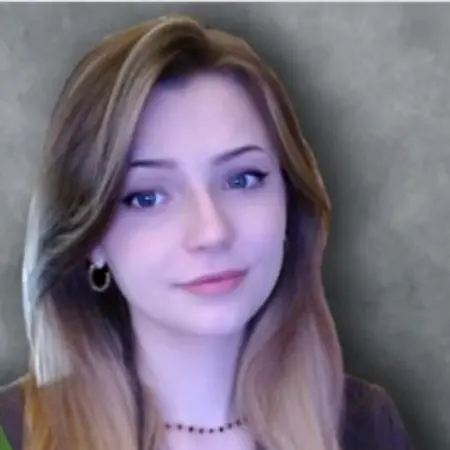
Her Story
About Gemma
I was really looking for positions that allowed me to use statistical analysis in a public health setting, analyzing health data for counties and communities to implement public health interventions. When I found this position at WMED, it checked all my boxes because while it's an academic institution, it serves 14 counties within Michigan, allowing me to talk with communities and provide data to really create change. My focus is on fatal overdoses, and I attend multiple national conferences every fiscal year where I present work on this topic. It's really nice to be able to network and speak with others in this career who also focus on fatal ODs and really make change in the communities regarding drug use. A typical day starts with looking at any suspected ODs that came in overnight, prepping death certificates for pathologists, manually recording the possible substance and route of administration, then reporting out to the counties and health departments. I also manage overdose fatality reviews and overdose fatality review teams for 6 counties, where we pick a case and review the details to discuss recommendations to hopefully prevent future fatal ODs. Towards the end of the day, I work on ongoing projects, whether that's academic abstracts I'm planning on submitting or the annual and semi-annual reports I put out to be used by the Michigan Health Department.
Her Interview
Ten minutes with Gemma
01What’s the best career advice you’ve ever received?
I just went to a conference about 2 weeks ago, and I spoke to an expert in the field, his name is Doug Rhodes, and the first thing he said to me was, stay away from boys, and just focus on your career and get to where you're going, and the family and everything will come later. He said he didn't get married until he was later, and he said, you know, just follow your career path, do what you need to do, and you will excel. That was pretty nice advice, because I'm approaching my 30s, and so all your friends are getting married, and he said, nope, you know, you're doing great. You keep on that path, keep pushing your career, keep doing this research, and focus on that. Keep your eye on the prize. Get your career in, and all that will come later, don't worry about it.
02What advice would you give to young women entering your industry?
Apply high, set high expectations for yourself, and apply. Really just go for it. You have to advocate for yourself, because no one else is going to advocate for you. Also, take forensics courses and try to get internships at coroner's offices, or in toxicology labs, or police labs to really get that experience and get that background. But you also don't need a forensics course. I actually never took a forensics course before this position. I wanted a position that had a basis in statistics, so I actually haven't taken forensics, but I would say forensics probably would help a little more, but it's not necessary.
03What are the biggest challenges or opportunities in your field right now?
Funding is a big thing. Public health is very underfunded, but all medical is really underfunded when it comes to government. So funding's a big problem, trying to get enough money moving in order to not only get the resources, but to employ the individuals to implement and move forward. Can't get anything done without grants, without legislation. I'm actually a part of the CTSE Forensic Epidemiology Work Group with a group of women with similar positions as myself, and we meet up yearly and talk about what we're working on in our coroner's offices and in our government, and really the big discussion is funding. Funding is a problem, trying to get that legislation, get those grants written in order for change to happen.
Join Influential Women and start making an impact. Register now.