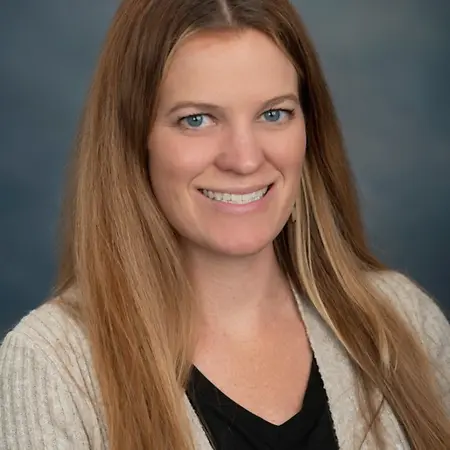
Her Story
About Hailey
I've been involved in campus recreation since I was a sophomore in college in 2009. My main area of expertise is outdoor adventure, which includes programming expeditions for students, overseeing challenge courses, climbing walls, equipment rental, and a bike shop. I manage very large endowments and budgets, supervise about 200 volunteer trip leaders, and coordinate 3 to 6 trips each weekend, totaling 82 to 120 trips per year. We're one of the largest universities with outdoor programming in the nation. I also program about 7 international expeditions and several two-week-long expeditions in places like Alaska and Montana. I conduct all wilderness medicine certifications in-house and am a Swift Water Rescue instructor who trains and certifies our staff. I just started this particular role 2 months ago, so I'm still getting my teeth into this program, but for the most part, what I do these days is a ton of administrative work, though I'll be back in the field helping with expeditions soon. My dissertation work focused on understanding barriers to participation in outdoor recreation by race and gender. I realized there was a gap in research and wanted to understand why certain ethnicities weren't showing up to outdoor programs. At Georgia State, where I worked for 9 years, I flipped the program from being 50% white, 50% other to truly representing the college population through intentional marketing and recruiting diverse trip leaders. My brand has been doing creative programming to make the outdoors accessible and equitable for all, because when people find value in outdoor spaces, they become good stewards of our lands.
Her Interview
Ten minutes with Hailey
01What do you attribute your success to?
I was raised in an environment where my dad told me that if you didn't do it right the first time, that just meant you're going to turn around and do it again until it is done right. So working hard has always been ingrained in me, and it's just been very intrinsic for myself to pursue the biggest or the best things in my environment. I'm definitely atypical in the amount of certifications a person holds in my type of job, but I really like to do education. If I'm going to train other people in all these sports, then I feel like I need to get it from the source myself and make sure that I'm doing right by the people I work with. There's just a lot of intrinsic motivation to deliver the most high-caliber version and be accurate, but it's also because I work in a high-risk field. I'm not doing my due diligence if I'm not training people to a standard of highest safety in the sport. For me, that's a lot of intrinsic drive because I'm motivated to try to acquire and be the most that I can be, but it's also part of that is motivated because when you take people whitewater kayaking or caving, you have their lives in your hands, so you better do it right.
02What’s the best career advice you’ve ever received?
Pick a job you enjoy, and you'll never work a day in your life.
03What advice would you give to young women entering your industry?
This field has greatly changed in the last 15 years since I've been in it. It's really flipped to be pretty heavy-handed with females these days, especially in collegiate recreation. The field is very open to women in all the sports, but I would say if you find yourself being the only female face in a crowd, which can be true for me in trainings where I'm often one of two, the outdoor industry generally is a very accepting environment. Having confidence in yourself is all you need to be successful, because overall, most of what I do is very pro-people and pro-relationships since we're guiding other people. It's a very accepting environment across the board, though you can get into some niche areas where it might not be that way, like in personal guiding versus an industry business model. The biggest thing is just having confidence in yourself, because you have to start somewhere. Everybody has to learn climbing the first time to be really good at it later, so don't give up just because you haven't done it. That doesn't mean you can't be great at it. A lot of these sports I learned throughout my process. It's not like I came into this industry knowing how to cave or knowing how to rock climb. These are things that I picked up as I was in my career and then got credentialed within them as I grew in my roles at different universities.
04What are the biggest challenges or opportunities in your field right now?
I think some of the biggest general challenges are that if anyone wanted to do my career tomorrow, you can go out and get all these certifications, but what it doesn't teach you is the business practice behind it all. How to use Excel, how to maintain budgets, how to really operate from the business lens isn't built into all these guiding-like certifications. So there's a gap in the industry there. If you don't come in with that or acquire it from somewhere else and you step into my role, you can do half of your job really well and you might really struggle with the other half. As far as the clientele I work with, the struggle or coming changes as we keep growing in our ability to use AI and the technology interfaces available to our kids and students these days are so vast. What we're seeing as students populate in the last few years is their lack of communication skills and in-person communication skills. Students these days don't want to answer a phone call at a front desk because they don't like talking on the phone. That is a shift in how people are interacting. As an outdoor industry where we take people out into the woods and say get rid of your cell phones, we're going to be together, that's creating even more of a great divide in experience. Before it was like, oh, I'm just nervous about camping for the first time. Now we're starting to get more into not only am I nervous for camping for the first time, but I haven't really had to talk to a stranger. That growing divide in interaction with people is a hard thing to navigate, especially with students knowing that as they're pursuing college, they're getting that degree to get them a job. Trying to make those individuals see the value in recreation is a challenge too, because in a college setting there's a million things that happen on campus and a million things that happen in Atlanta, so you're competing with all these other things to get people's attention.
05What values are most important to you in your work and personal life?
Values for me in general with who I work with and work with people is as much transparency as possible when it's appropriate. I feel like that's where you get your largest buy-in, whether with new staff or old staff. That gives the most opportunity for understanding and the most opportunity then for potential help. For instance, if it's a no, at least they understand why the no is, and sometimes that helps troubleshoot a compromise because they understand what barrier was there in the first place. So transparency for me is huge. I think anyone that can effectively give the long-term goal or vision for something helps people know what they're working towards. I feel like empathy is important, how I need to remember that at the end of the day, this is just a job. You're not here to be put on Earth just to grind it out. It's about the people that you work with, and that's what you're going to remember on your deathbed, not what you did at work and how well you did it. But on the other side of that, I strongly value efficiency in this kind of high-paced environment that I work in, so finding ways to be the most efficient version of that just helps everything, and the rest will follow.
Join Influential Women and start making an impact. Register now.