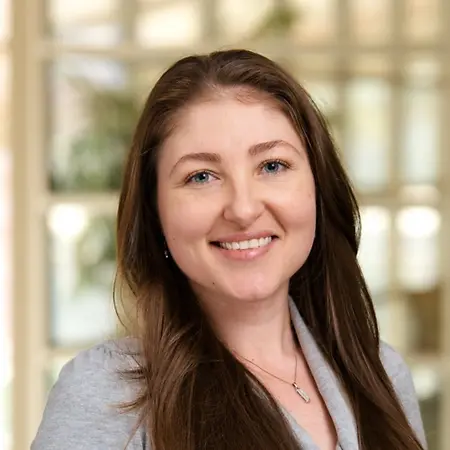
Her Story
About Irina
I began my career in education research in 2011 at the Houston Education Research Consortium (HERC) at Rice University, starting as a volunteer and later working as a student assistant while pursuing my master's in sociology. After completing my master's, I was hired as a research analyst and continued with HERC for quite a few years. What drew me to this work was the focus on impact - I had an early frustration as a master's student where I would complete research and wonder, 'now what?' At HERC, under the leadership of Dr. Ruth Lopez Turley, I learned how research could directly serve the needs of the Houston Independent School District. Instead of the traditional academic publishing route that takes months or years, we would present our findings immediately to school district leaders who would use that information to make real decisions. For example, I was part of a team that analyzed a multi-million dollar program meant to increase student academic performance, and when we found no difference, the district decided to let go of that program and invest those millions elsewhere. This experience showed me that you don't have to do just publications - the impact part doesn't have to be vague. I need to see something done that helps the lives of students and anyone else involved in that work. When I was on the job market, I specifically looked for roles in institutional research (IR) after learning about it through informational interviews at UC Berkeley. I discovered that IR is the research I had been doing, but tied to one specific institution where everything directly impacts students, staff, and faculty. For 1.5 years now, I've been the Assistant Director of Institutional Research at San Francisco Bay University, where I built the Office of IR from scratch. I created a data request system and website portal so staff no longer have to rely on emails. My team and I respond to urgent requests from our VP and president, sometimes needing answers by end of day, conduct compliance reporting like IPEDS, and lead data walkthroughs with faculty and administrators. Every day is exciting because there's always something happening - colleagues from my PhD program ask if I'm tired of my job yet, but that question doesn't apply to me because I love what I do. My proudest moment ties back to impact: my dissertation work on immigrant youth (the 1.5 generation) who came to the U.S. between a few months and under 18. As someone originally from Ukraine who came to the U.S. at age 9, I understand how immigrant families' understanding of the college application process often doesn't match how it actually works here. After completing this research at UC Davis, I shared it with colleagues at UC Berkeley and San Diego State University, and those individuals took that research and shared it with their counseling and advising centers to increase the effectiveness of how they advise students during outreach. That's very exciting to me because I learned a lot in my own process of figuring out how to go to college, and I wanted to make sure other 1.5 gen students benefit from this work.
Her Interview
Ten minutes with Irina
01What advice would you give to young women entering your industry?
My number one advice is to do informational interviews. I didn't know what they were until I started being on the job market, but it was a total game changer for understanding my options based on the skills I have. A PhD program is designed to teach you to become a professor, end of story, and although professors are supportive of you doing something else, they don't have the experience to give guidance. Someone told me not to worry about job titles - what is a data analyst, what is a fill-in-the-blank - and the way you know is by doing informational interviews and learning what a person actually does day-to-day. You also need to figure out what's important to you, like whether work-life balance or geography matters. When I heard 'figure out your priorities' in the past, I did not know what the heck that meant, but it began to make sense when I did informational interviews because I started to figure out what I don't like about certain aspects of jobs. At the end of every single informational interview, which is only 20 to 30 minutes, ask the most important question: Is there anyone else you would recommend I reach out to learn about what they do? Because I'm still trying to figure out my next step. I give this advice all the time - later today I'm speaking to UC Davis PhD students and I'm going to give them my number one advice this afternoon. I love speaking engagements because you get to share your personal experience. Having a research background, I can tell you that statistically speaking, women are significantly less likely to ask questions and significantly less likely to advocate for themselves. I believe in demystifying the process of figuring out your next step, whatever that may be, and making sure accessibility is the goal so everybody can access it.
02What values are most important to you in your work and personal life?
Impact is absolutely my most important value - I did not want to end up in a place where I do a report and then do another report. That doesn't make my day. I need to see something done that helps the lives of students and anyone else involved in that work. When I was looking in the job market, I was specifically interested in finding a job that has relevance, has impact, is in a place geographically with a large immigrant population, and where I can make a difference. I actually made that goal come into reality. Being in a small institution, I can make an appointment with our VP or president, give the results, and make sure something happens - that's exciting to me. My North Star is accessibility, which goes both ways. All my speaking engagements, I do not charge a fee, nor do I pay a fee, because the goal of demystifying is to make sure everybody can access it. I believe in demystifying the process rather than having a vague future. My goal is continuing to make a difference and staying on the path of being able to make a difference.
Join Influential Women and start making an impact. Register now.