Influential Woman · Technology & Artificial Intelligence
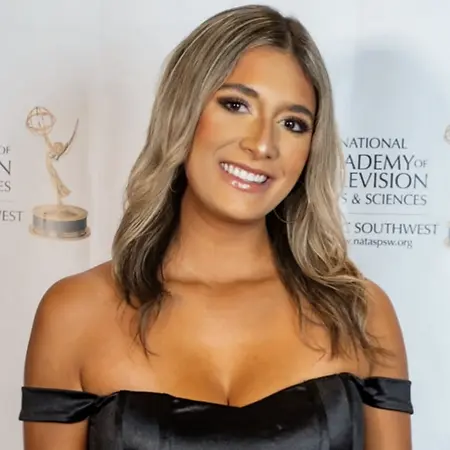
Jasmine Ramirez
Strategic Communications Leader
San Diego, CA
Her Story
About Jasmine
I didn't fall into media — I ran toward it. By the time most college students were figuring out their majors, I was already working as a one-man band at a local NBC affiliate: pitching stories, shooting footage, writing copy, editing, and going live on air. All of it. Solo. That's where I learned that great communication isn't a department — it's a discipline.
What followed was nearly a decade of doing it at full speed. Multiple news stations across the country, covering the stories that actually matter — federal policy fights, public health emergencies, clinical trials breaking new ground, communities in crisis. I reported from state capitols and emergency rooms and neighborhood streets, building the kind of instinct you can only get from walking into a stranger's life and figuring out, in real time, how to tell their truth. My work earned syndication across 100+ outlets and 50+ U.S. markets — and an Emmy nomination I definitely didn't see coming. Eventually I was recruited out to San Diego for my final local news role, and by then I knew exactly what I was good at: making the complicated land.
The transition into strategic communications felt less like a pivot and more like a power-up. Same skill set, bigger playing field. Now I build executive brand platforms, ghostwrite thought leadership for publications like Forbes, and help organizations translate what they actually do into messaging that moves people — across public policy, healthcare, and increasingly, tech and AI.
That last one is where things get really exciting. There is a massive gap between how AI actually works and what the public understands about it — and that gap has consequences. Closing it takes someone who can think like a journalist, communicate like a strategist, and genuinely care about getting it right. That's exactly where I want to be. That's exactly what I do.
Her Interview
Ten minutes with Jasmine
01What do you attribute your success to?
Honestly? A deep, stubborn belief that information is power — and that not everyone gets equal access to it.
I grew up seeing that gap up close. Some people have the networks, the education, the resources to understand how systems work and how to navigate them. A lot of people don't. And the difference that makes in someone's life is enormous. That never stopped bothering me. It still doesn't.
That's a big part of what drew me to journalism in the first place. I wasn't just reporting the news. I was handing people something they could actually use. The parent trying to understand a school policy. The family navigating a health crisis. The community watching a decision get made about their neighborhood without their input. My job was to make sure they had what they needed to understand what was happening and make the best choices for themselves. That felt important. It still does.
But if I'm being real, grit is the other half of it. This industry will humble you fast. Live shots go wrong. Stories fall apart. You get told no more than yes. You figure it out anyway. You get back up. You find another angle. I think a lot of my success comes from just genuinely refusing to quit — not out of stubbornness, but because the work matters too much to walk away from.
What keeps me going now is that the stakes feel even higher. In tech and AI, the complexity-to-public-understanding gap is massive, and the consequences of that gap are real. I want to be someone who closes it and who makes sure the people most affected by these changes aren't the last to understand them.
02What’s the best career advice you’ve ever received?
The most clarifying moment of my career didn't come from advice. It came from someone trying to talk me out of it.
I was in college, interning at the local news station I'd grown up watching. A photographer who had been in the business for decades said, pretty matter-of-factly, that journalism and local news was dying. The implication was clear: find a different path.
I think he expected me to look rattled, but my mind was made up. I believed in the power and the idea that journalism gives a voice to people who wouldn't otherwise have one, that it hands information to communities who need it and deserve it. That belief didn't waver.
And the wild thing? His words had the exact opposite effect than he probably intended. They made me more passionate. Because if local news was struggling, that meant it needed people who actually cared enough to fight for it, not run from it.
So I guess the best career advice I ever received was disguised as a warning. It taught me that when someone tells you something important is dying, that's not a reason to leave. Sometimes it's the reason to stay.
03What advice would you give to young women entering your industry?
This is going to be one of the hardest things you've ever done.
You'll move across the country away from your family into a city where you don't know anyone. You'll feel alone. The stress is high, the deadlines are brutal, and there is no room for error. You'll be standing outside in a snowstorm with below zero temperatures doing a live shot. You'll report in 110 degree heat with no shade. No isn't an option. You show up and you make it look easy.
The best part is that it will be worth it because what this experience gives you, you simply cannot get anywhere else. You learn to take the most complex information in the world — medical jargon, law enforcement language, dense policy, scientific research — and make it make sense for someone sitting in their living room. Quickly. Clearly. On camera under pressure. That is not something you learn in a classroom. You have to go do it.
And when you come out the other side, you have a foundation that sets you up for anything including PR, strategic communications, tech, healthcare, you name it because you understand how information moves, what newsrooms need, and how to communicate across any industry. That insider knowledge is rare. And it's yours.
So yes, it's hard. Go do it anyway.
04What are the biggest challenges or opportunities in your field right now?
Here's the hard truth: that photographer who tried to talk me out of journalism wasn't wrong. Local news is struggling. Stations are closing, budgets are cut, and the audiences that once gathered around the evening news is quickly dwindling.
When local news dies, communities lose people lose access to information that affects their daily lives. That's not just a media problem, it's a democracy problem.
But the field is evolving, and that evolution is full of opportunity for people willing to move with it. We have to meet viewers where they are. AI, new formats and new platforms are here. The question is whether the industry adapts boldly enough to use them.
No one should be blind to the world.
05What values are most important to you in your work and personal life?
Six years ago, I was part of a photoshoot with a group of women where each of us wore a t-shirt with one word we lived by. Mine was open-mindedness. It was 2020 during COVID, Black Lives Matter, the world turning upside down and that word felt like both a personal conviction and a plea. Stay open. Stay curious. Don't let fear close you off.
I still believe in that just as deeply today, in life and in my work.
The word I'd add now is trust. Trust in the organizations we give our energy to. Trust in the friendships and communities that are pure of heart. And maybe most importantly, to surround yourself with people you can trust to their core. The ones who regulate your nervous system, who show up on your hard days and who genuinely want to see you win. Those people are everything.
I truly believe that if we moved through the world with more trust and more genuine intent toward one another, we'd be in a fundamentally different place as a society.
And then there's hope. I'm an optimist at heart. I can't help it and I wouldn't want to change it. No matter what's happening in the news, in the industry, in the world, I refuse to stop believing that things can get better. That people can do better. Hope isn't naive. It's necessary.
Join Influential Women and start making an impact. Register now.