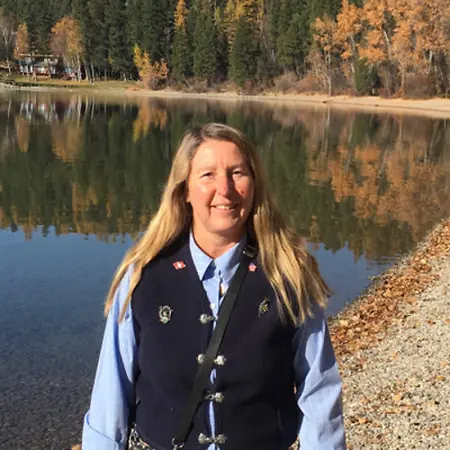
Her Story
About Karin
My journey into engineering started in an unconventional way - I was building solar homes right after high school in the 1970s and early 80s when Jimmy Carter was president. That hands-on experience, combined with my passion for international development and water projects, led me to study engineering at Utah State and receive a graduate degree from UC Davis. I spent almost 40 years as an engineer, with 29 of those years at the City of Whitefish. As one of only two engineers there, alongside the Public Works Director, I had to wear many hats and cover all sorts of municipal engineering areas. What made my role unique was that I expanded it beyond traditional engineering to include sustainability, resilience, and climate action - creating what I called an Engineering Plus Sustainability position. While my specialty in Seattle had been stormwater engineering, in Whitefish I became a generalist, and I'd say my real area of expertise became dealing with people. One of my proudest achievements was working with a completely volunteer committee to create a Climate Action Plan for the city that was adopted in 2018. It has had a huge influence on how the city operates now, and I was pretty instrumental in that as the only city staff person working on it. I was also deeply involved in active transportation, managing the construction of almost every bike path in town and implementing safe routes to school improvements to make it safer for kids to walk or bike to school. These improvements are very visible - if I walk anywhere in town on any day, I run into my projects. Now retired, I stay active through city and county committee work focused on climate action, and I'm currently running for the school board.
Her Interview
Ten minutes with Karin
01What do you attribute your success to?
I would say growing up as what's called free range kids. Nobody really kept track of us - we could wander wherever we wanted. I played a lot of football in the backyard with the neighbor boys, and I didn't even notice I was always the only girl, but it was no big deal. That freedom and experience of just being one of the kids, regardless of gender, really shaped who I became.
02What advice would you give to young women entering your industry?
That's hard because the world is a difficult place these days. I would say if she has the opportunity to do experiential learning - learning by doing - that is very helpful. College and sitting in the classroom is one kind of learning, but learning by doing and trying different things in my life was very, very helpful. Not everybody has those type of opportunities, but if I am elected to the school board, I'll be pushing for that for high school students.
03What are the biggest challenges or opportunities in your field right now?
I think in sustainability, active transportation, and resilience, they're just taking off. If you talk to most young people that I run into, they have a strong interest in those areas. Active transportation is something that's happening worldwide - cities all over the world are becoming more livable. Partly they're being spurred by climate change, because they're becoming warmer and they have to do something rather than have traffic congestion in their city to make them more livable. In the future, that's going to continue to be a field that expands. Communities have to adapt to the changing climate, and they have to adapt because insurance companies don't want to insure for them if they don't adapt. Those fields are growing in the future, and it doesn't matter about the federal administration - on the state level, on the city level, there's a lot going on.
04What values are most important to you in your work and personal life?
I'd say honesty, trust, caring for others including all neighbors, and being tolerant of all types of people - being open to all types of people.
Join Influential Women and start making an impact. Register now.