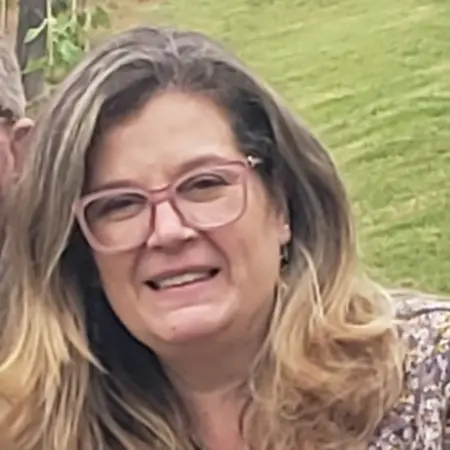
Her Story
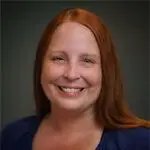
About Lilian
I have dedicated more than 20 years to education, and my journey has taken an unconventional path. For most of my career, I worked as a high school teacher and childhood director in schools. When I moved to the United States 10 years ago, I had to pause my career due to my husband's visa restrictions, but I returned to working with children about 6 years ago. Unlike most educators who progress from high school to university teaching, I chose to do the opposite. I made what some might call a 'downgrade' by leaving high school teaching to work with small children, even though it means making less money. This decision reflects what matters most to me - I want to work with early childhood because that's where the greatest need is. I recently completed my master's degree in early childhood education, choosing to pursue this advanced degree later in life. Currently, I work with GSRP, a government-sponsored program providing kindergarten and early childhood education for families with low income. My work focuses on multilingual learners, particularly children who don't speak English at all when they first come to school - Spanish speakers, Telugu speakers, and Vietnamese children. I understand their struggles personally because my first language is not English, so I feel on my skin how hard it is for them. All of my papers and graduation work focused on multiple language learners, and I'm passionate about helping both these children and their parents navigate the education system.
Her Interview
Ten minutes with Lilian
01What do you attribute your success to?
I attribute my success to my personal experience as someone whose first language is not English. I feel on my skin what it's like, how hard it is for me, and for the kids it's even worse. Some of the kids I have are going to school for the first time, and when they get there, they don't know people and they don't speak the same language as they do at home. I feel the difficulty they have, and I like to help them. I like to help the parents too. Because I've lived through the challenges of learning and working in a language that isn't my native one, I can truly understand and connect with the struggles these children and families face.
02What advice would you give to young women entering your industry?
You're not going to be rich - forget about it. If you do this work, it's for love. You need to be able to do it from the heart. I always tell my friends that I was never going to be able to be a doctor or something important like that to deal with life, but to be a teacher, to be an early childhood teacher, you need to be born for that. If you were born for that, you will be able to do it. If you weren't born for that, you're not going to learn. You work more with your senses, with your heart, than with your knowledge or books. There are people all the time telling you what to do in video clips and groups about children with special needs, but no - you need to feel the kid, you need to work with your heart. Don't think you're going to work with kids because you're going to make a lot of money, because you're not. You need to be in love with your job, and if not, you should choose another profession.
03What are the biggest challenges or opportunities in your field right now?
I think all of my profession is a big challenge. You need to be able to educate children, but the biggest challenge with this generation is that you need to teach the parents as well, not only the children. Most of the parents, when they have kids too young, they don't know how much they are able to raise a kid in a good way. It's hard, and you need to teach the parents how to be parents. That's the most hard thing for my job - I can handle a classroom full of young children, but I cannot handle parents when they think early childhood is only storage for kids, like 'let me put my kids there because I'm at work.' No, it's not like that. Early childhood teachers are more capable than sometimes more graduate teachers - they need to deal with behaviors, and we have more and more children with bad behaviors. The place I am now, I have to teach kids who don't speak English at all, early English learners. They need someone to tell them you are able to learn even though you don't speak English yet. My papers and graduation focused on multilingual learners - Spanish speakers, Telugu speakers, and Vietnamese children who don't speak English and don't know how to ask to go to the bathroom. Sometimes it's hard for them.
04What values are most important to you in your work and personal life?
I think the most valuable thing is knowledge. You need to be able to be flexible, and you need to see the big picture - I don't know exactly how to express it in English, but you don't have to focus on only one problem. You need to see the big scenario, the whole picture of where you can help. It's about having a broad vision and understanding how you can make a difference in the larger context, not just addressing isolated issues.
Keep Exploring
More Influential Women · Michigan
Join Influential Women and start making an impact. Register now.