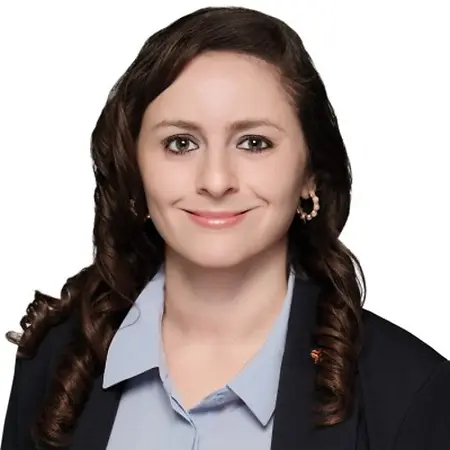
Her Story
About Magen
My path to clinical research has been a journey through every aspect of healthcare. I started as a nurse tech, became a medical assistant, earned my associate's degree in nursing, then my bachelor's, and finally my master's degree. Along the way, I worked in med-surg, pediatrics, infusion centers, and cancer institutes, always wanting to learn more. Through my work in professional development, I discovered clinical research and fell in love with it. I was able to train people to do research the correct way, then led one clinical research unit, which grew to four units. Now I'm back at my current organization as an operations director in clinical research, leading programs across multiple hospitals in cardiovascular and many other specialties. What makes this work so meaningful is seeing patients who sometimes have no other options participate in trials that could help them or future patients. I've witnessed cutting-edge devices that get people diagnosed, analyzed faster, and treated in a fraction of the time compared to standard treatment. Some trials I've worked on are becoming standard of care, like one in infectious disease that will be used broadly to reduce surgical infections and eventually in daycares and schools. My background in nursing helps me understand that if we had only had certain devices years ago, so many patient outcomes could have been different. Watching this technology come to life is really exciting, and I love bringing innovative trials to local communities so patients don't have to travel far to access groundbreaking care.
Her Interview
Ten minutes with Magen
01What do you attribute your success to?
I attribute my success to leading with heart and integrity. My biggest goal is to lead in a way where every employee at every different hospital I work with knows that I'm thinking strategically about what I can do for them today that's going to make them better tomorrow and happier tomorrow. I want all of my patients to feel it, my staff to feel it, and to know that I really do genuinely care about them as an individual. Their situation is unlike everyone else's, and I don't want anybody to think that they're a number. In research, our patients are assigned numbers for confidentiality, but I want every patient to know that we provide more of a concierge service. Being a research patient means you get more dedicated care because we're following up with you, asking about signs and symptoms, and it doesn't just end at the day of your appointment. It's a journey that could be through the lifetime of the trial, sometimes 5 years. That's dedicated care, and I like to give the same treatment to my team and to my patients to know that I'm leading with purpose. I think that really fills my cup each day. I always tell my team that integrity is everything. If you don't have integrity, you have nothing. I preach that to them all the time, along with showing up on time, having passion, and having compassion for others.
02What’s the best career advice you’ve ever received?
The best career advice I received came from my nursing instructor, Ms. Taylor, though it was more through her example than words. She was hard and tough, and you could not get away with anything, but she led with love. When she insulted you because you didn't know something, she would teach you in the same second and make you learn it, and you would never do it again. She made you feel seen, and you knew that she had your back. Even if she wasn't standing in the room with you, you felt her presence anyway. That taught me that wherever my team is, I need to show up and be that person for them. I always tell them I'm a phone call away. If they need me, I will drive there. Some of my teams are an hour away or more, and they've called me and said they're having a conflict with someone or something's happened, and I've grabbed my keys, jumped in the car, and been there. I want to be that presence for people, just like she was for me. Meeting her again at a different point in my life, when I physically bumped into her in a hospital hallway after nursing school didn't work out for me the first time, was God's timing. She invited me to apply to her new program, and I graduated with my associate's degree from her program. She always encouraged me, and now I try to lead my team just like Ms. Taylor would lead me.
03What advice would you give to young women entering your industry?
I would say dive in. Dive in with the expectation that you're doing this for the right reason to help the future of medicine. Don't take clinical research just as something else besides bedside nursing, because a lot of people are looking for an excuse to get away from bedside nursing. If you're just looking for that, it's not that, because you are going to the bedside, you are caring for the patients when they have their procedures. But you are committing to something greater than just a day-to-day rapport with a patient. You're committing to a long journey with them, and you have to be an advocate for them and their treatment, to follow them along and be their cheerleader on their darkest day. You need to know that what technology you're trying to do with research now may or may not be a standard of care, but most likely, hopefully it will be because it'll get FDA approved in the future. And then you can say, one day, far down the line, I helped bring that in. That is just such a cool feeling, to say that's here because we did the research, because we did it with integrity, and the FDA said yes, this study was done correct, and we're able to batch that data and support it and put it on the market. My purpose is really about women empowerment. We're so powerful, and we need to always empower each other and stick up for each other. The majority of research patients are men, and the majority of researchers, I'd say 90% are men. So I always try to get women PIs involved as principal investigators, because they're just not mentioned in a lot of the literature. We are essential in our careers. We should speak up and highlight what we do more and be more influential.
04What are the biggest challenges or opportunities in your field right now?
One of the biggest opportunities in my field right now is bringing innovative clinical trials to local communities. When I look at what's going on in my area of the state, I'm thinking about how people are driving far to places like Miami and other areas, but we need this locally. I'm focused on how I can get the expertise of physicians at local hospitals to do something innovative and get them engaged enough to want to participate, so patients don't have to travel and they can get this groundbreaking care close to home. There are devices that are really cutting edge that get people diagnosed, analyzed faster, and treated within a very small amount of time compared to standardized treatment. One of the trials in infectious disease that I'm thinking about is going to be a standard of care soon and will be used in a broad range of places. We're going to be helping reduce infection, reducing surgical infection, but it's going to be used in other platforms like daycares and schools. There are just so many things that clinical research can do. Seeing how we could treat our patients better with my background in nursing makes me think, if I had only had this device years ago, this patient's outcome and that patient's outcome may have been different. Watching this technology come to life is really exciting.
05What values are most important to you in your work and personal life?
The values most important to me are integrity, compassion, and leading with heart. I tell my team all the time that integrity is everything. If you don't have integrity, you have nothing. I preach that to them constantly, along with showing up on time, showing passion, and having compassion for others. I want to lead in a way where every employee knows that I genuinely care about them as an individual, and their situation is unlike everyone else's. I don't want anybody to think that they're a number. The heart of helping people and the heart of research is where my morals and integrity are. I want all of my patients to feel it, my staff to feel it, and to know that I really do care. I'm always a phone call away for my team. If they need me, I will drive there, even if they're an hour away or more. I've grabbed my keys and jumped in the car when they've called about a conflict or issue, because wherever they are, I'm going to show up and be that person for them. I want everybody to feel very close and connected, no matter how far apart we are physically. Leading with purpose and making sure people know they're seen and valued really fills my cup each day.
Join Influential Women and start making an impact. Register now.