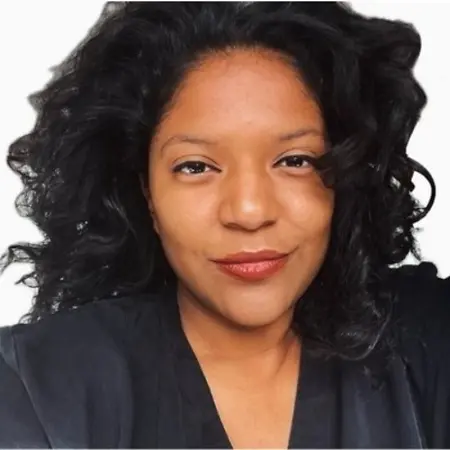
Her Story
About Mara
I started my career at Columbia Artists as a managerial contractor, where I was quickly promoted to contract reader because of my love for reading and writing. I fell in love with producing events and spent about a year and a half there before joining The Shed, a performing arts center in Hudson Yards, as the 12th person hired on the team. I helped co-develop and co-launch their public program strategy over 3 years. Wanting to expand my horizons beyond the East Coast, I moved to Arizona and joined ASU Damage, a small venue where I booked talent and worked with local businesses and schools. During the pandemic, when Arizona was one of the hardest-hit states, I spearheaded three digital programs to protect and support local artists, creating live programming that could be streamed even without in-person audiences. These programs are still running today. I was then recruited by the Park Avenue Armory in New York, where I was dispatched across the U.S. to work with artists in their home environments, then bring their shows to New York while maintaining their authentic voice. Though they asked me to come on full-time twice, my hometown is DC, which led me to the Kennedy Center for about 3 years. Now I work independently across the Washington metropolitan area, programming for organizations like the DC Public Library, Eaton Wellness, and the National Gallery of Art, developing programs that support artists and create meaningful community experiences.
Her Interview
Ten minutes with Mara
01What do you attribute your success to?
I absolutely attribute my success to going to a Black arts high school. If you remember the 1970s movie Fame, that was my high school experience, except everyone was about African American, African, and Caribbean Black. It was incredible. Everyone was an artist with different departments - music, tech, theater - and I was in the writing department. One of the things we were charged to do every year was update our resumes and portfolios. We had crit, we had judges, and we always had to present at the end of the year. It was an amazing discipline and practice to have that so early on in my life. I knew very early on I wanted to be a writer, but writing is so transferable to all fields, so constantly having that feedback and being treated like a young entrepreneur in Washington, D.C. was such a gift. I also got to be an apprentice for a local artist when I was in college, working at the Library of Congress in their Poetry and Literature Center. I got to see someone in the field really creating their work, and it taught me what an artist has to experience. I got to help them become an S-Corp and see the legal side of it. It was really exciting.
02What’s the best career advice you’ve ever received?
The best career advice I received, especially as someone who's worked in corporate, was to have research days. I think this is really applicable to anyone's career. Having a day, or even an afternoon where you can go out and really visit other people who are doing your work is invaluable. For example, in my field as a producer of the performing arts, I would go see a show by another venue, or I would go to an art gallery. Maybe the work I'm working on isn't necessarily an exhibition or something, but it really keeps your mind fresh, so that you're not stuck in the office all day, only absorbing what's happening in your workspace. You're making sure that you're going out there on foot and seeing what's going on, because social media is great and it's a great place for research sometimes, but nothing beats getting out there on foot and supporting other venues. Making that time, whether it's in the middle of the day or in the evening, is really important.
03What advice would you give to young women entering your industry?
Your intuition's probably right. When you're in a workspace and you have an idea, and you're feeling like either something's going really well or maybe something's not going so well, it's important to really think about those things and not ignore it. I think sometimes we're moving so fast in our industry - I come from an office where we used to have 7-minute meetings and 5-minute phone calls that were super impactful - so really following your intuition is just so important. But I also have to go back to work-life balance. When I have a team that I'm gathering for an event, it's really important for me that everyone's on the same page with ultimate clarity of expectations, but also that they're taking care of themselves. One of the first things I do is make sure you have your lunch carved out. I've had people push back and say they're used to not eating lunch on show dates, and I say, actually, this is part of the work. This is part of making us most efficient. Because if you're running on fumes, then our show will run on fumes and it won't be synced. I guess both of it is listening to your body. We're around all these new machines with AI, and that's exciting, but remembering that being a human has its own incredible texture that just can't be beaten. If I could say it concisely: take your time. Things are only moving as fast as you want them to. That's gold I learned from working with bigger teams like Quincy Jones, John Baptiste, Patti LuPone, Jacqueline Woodson, Common, Black Thought - they weren't running their teams ragged or creating fires everywhere. They knew the power of forward movement.
04What are the biggest challenges or opportunities in your field right now?
I think the biggest challenge right now is people deciding how they want artificial intelligence and machine learning to fit into their work. For example, are there things that we're going to completely automate? Are there things that we can collaborate on with AI? And are there things that absolutely machine learning cannot do? Having those things distinguished is a big challenge for us, because it's going to vary by field and by role. An exciting opportunity right now is what I'm seeing with graphic design and marketing and comms - they're using more human-like gestures, like messy handwriting and not perfectly symmetrical artwork, to show a human hand in their work. I'm wondering, how does that relate to our other fields? How do we continue centering the artist but also make sure that we're still working efficiently? The thing is, when we incorporate AI into our branches of work, we're also removing something. We keep talking about how we're bringing on AI and automating different things, but what that also does is it removes an organic part of the process. Now we have to go back and make sure that the AI is doing what we need it to do, and for some industries, it's more work than having a person in the role. We need to really articulate that publicly. We need to be diligent and honest about the results we're getting from using AI, because AI is not inevitable - it is only becoming inevitable because we have such large businesses pushing it forward who have already invested in this. As it comes to our more medium and small-sized companies, we need to be sure: is this actually creating more work for us, or is it actually working alongside us?
05What values are most important to you in your work and personal life?
Definitely work-life balance. I know we talk about it a lot in our field and it's kind of a hot topic right now, but it's very important because I think that it allows you to actually stay nimble. The more that you take care of yourself as an entity - because one of the things we talk a lot about in corporate is resource management - you have to think of yourself as a resource and make sure that is being replenished constantly. We sometimes forget that our staff are also human and they're also a resource that can be depleted. So it's important to make sure that we're taking care of that. What that might look like is encouraging people to take those summer Fridays very seriously and making sure that your staff really is talking to you about their work-life balance and that it's really taking place.
Join Influential Women and start making an impact. Register now.