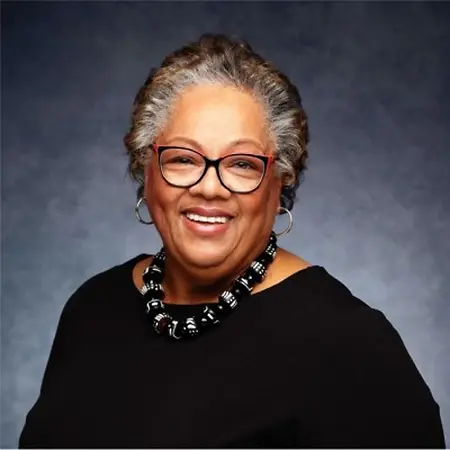
Her Story
About Margie
I was a theater major in undergraduate and graduate school, and like all aspiring young big bubbly-eyed actresses, I thought that I wanted to participate on stage. As I got into graduate school, I found that my love shifted to costume design, so I spent some time as a costume designer for theater companies and dance companies. I had a family, and the theater schedule was a little overwhelming for me with a young family, a new husband, and later on, 2 kids. I just became interested in what other roles were available in the arts and accidentally applied for a position with the City of Dallas in their Office of Arts and Culture doing community development work. I was very young, and so that meant I had a chance to travel around the city and just support artists in their production and getting funding, primarily. I just became more and more interested and concerned about how artists were able to access public dollars, tax dollars, grants, and found that to be a lane that I wanted to stay in. That was somewhere around 1980, 3 or 4, and I just have proceeded down that pathway all these years. This is the intersection of politics and creativity, and it's my life's work. It is what I choose to do.
Her Interview
Ten minutes with Margie
01What do you attribute your success to?
I think it's stubbornness. I stay in this work because it can change every day or every year - politicians change, sometimes the rules change, and sometimes there are unintentional consequences if you just say, oh, well, I just can't do this anymore. But it's my life's work. It is what I choose to do. So I try to stay focused on what I can accomplish and understand that there are some things that I can't change, but I believe it's stubbornness that I'm just not gonna let the system win. Because we're talking about people, and their aspirations, and their histories. So I just can't give up on that. That's what makes us humane, I guess - our culture and our values.
02What advice would you give to young women entering your industry?
I would say frustration is not an option. There will be lots of challenges because it is potentially a very frustrating process, so just be prepared that there will be a barrier everywhere you turn. But this work is very important to artists, especially female artists, artists in rural communities, small towns, artists where they are seen as adjunct to civic life. They have to be determined, I think, to understand the rules of the game, to understand what the guardrails are, and to be very sincere about understanding process. Understand that a process exists, and that it is affected by men, largely - which is not a negative, it's just a reality. And so they have to keep their emotions under control.
Join Influential Women and start making an impact. Register now.