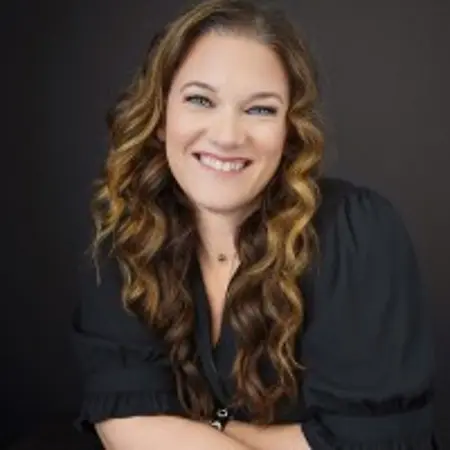
Her Story
About Melissa
I spent over 20 years in corporate roles across accounting, finance, and operations before making a big career change last year. My passion has always been on developing people, developing teams, and really helping drive engagement and culture in an organization. I decided that I wanted to spend more of my time doing that and that I could make a bigger impact in that role than in a corporate environment. So I decided to go out and start my own business doing coaching. I really focus in manufacturing and supply chain industrial-type spaces because I feel like there's a lot of opportunities there for supporting leaders to make workplaces that people want to come to work every day. My goal is to eliminate that Sunday night dread that everybody gets when they think about having to go to work the next morning. I think I can have that impact at the leadership level that will help them become more aligned themselves, but become better leaders, which means their teams will be happier. Then they'll go home happier, which has a positive impact in their house and throughout their community. On a typical day, I spend a lot of time networking and talking to some really amazing people, partnering with some of them on thoughts and ideas that can help to improve companies. I also do one-on-one coaching with some clients, helping them to work through whatever it is that they have as a goal for themselves, whether that's improving their leadership or setting themselves up for that next opportunity. I also do some coaching slash consulting around implementing lean process tools, but a really simple toolkit for those companies that have nothing and don't want to get overburdened by too many tools. I've created a really simple toolkit that can be used to outline those processes that'll help them to improve their operations.
Her Interview
Ten minutes with Melissa
01What do you attribute your success to?
I attribute my success to a couple things. I grew up in a small farming community to parents that were very young when I was born and lived paycheck to paycheck. I grew up on a dairy farm, so it created within me a drive to not only work hard, I was a hard worker, but to go after successes. So I had that drive in me, and I had that ability to work hard from growing up on the farm. But then I got extremely lucky, or blessed, that I found an organization that believed in developing their people. I was able to get a lot of great experiences through that that allowed me to create a strong base for my future successes.
02What’s the best career advice you’ve ever received?
I don't know that I specifically got this as advice, but it's something I think is really important and that I learned, actually through a coach of my own when I was really burned out. What I learned through that process was that being anyone besides yourself is exhausting and not sustainable long-term. I realized that I wanted to show up in my workplace the same way as I was outside of that workplace. It was extremely impactful to who I became as a leader when I stopped trying to be two different people.
03What advice would you give to young women entering your industry?
I would tell them that they should understand their values and make sure that they're able to live their values in all that they're doing. As a part of that, they will need to learn how to set boundaries that work for them, and that's a really important skill for them to learn. And if you're in a space that doesn't value who you are and the boundaries that you need to live your life, you need to find a new place to be.
04What are the biggest challenges or opportunities in your field right now?
The biggest challenge I see right now in my space, which is really coaching leaders within the more industrial spaces, manufacturing supply chain, is that many leaders within that space have been promoted to leadership positions because they were strong performers but have never been given the tools or resources to actually lead teams. Because of that, what they're doing is leading the way they've seen others lead historically. Especially in that manufacturing supply chain type environment, that was much more of an authoritative leadership style, and that does not work for today's workplace. I also think that because leaders believe that's how they have to lead, they are not living aligned to their values many times, and so they're struggling because of that misalignment. Then they're struggling because of the way that they're leading to connect with their teams and to get the most out of their teams that is possible.
05What values are most important to you in your work and personal life?
Leadership is one of my strong values, and being a leader. Even if I'm not officially a leader in a capacity, I can't help but jump in and help. Connection is a really strong value for me, in creating relationships and connections to others. I think another strong value for me is integrity.
Join Influential Women and start making an impact. Register now.