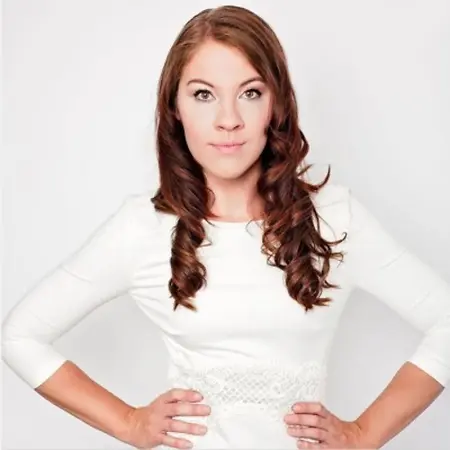
Her Story
About Nicole
I've been working in wildfire mitigation for just about 10 years now, and my journey here has been anything but linear. I originally thought I was going to be a marine biologist - I was in the middle of an internship with the Monterey Bay Aquarium when I watched Paradise burn down in the campfire. I hit the brakes real hard and asked myself, how could this happen? Why is nobody saying what this is, what caused it, how we could have prevented it? There were just too many questions going unanswered, and I wasn't okay with that. So I ended up staying up until the wee hours of the morning for the next five years, figuring out what this is. What makes my approach unique is my incredibly varied background. I worked in building materials, home renovation, roof replacements, and window replacements for a number of years. At the time, I was like, is this all I'm doing with my life? But it's really come in handy, because that's one of the biggest missing pieces in wildfire today. I also got to work with Dr. Jack Cohen, the godfather of urban conflagration and home ignition science, during my time with the Montana Conservation Corps. We went street by street helping entire neighborhoods, and the before and after of all these homes was just unbelievable. Now I do property assessments, work on getting connected with insurance companies, write extensively, and I'm building a pretty good following on LinkedIn. I'm also trying to write a book and develop a new wildfire mitigation professional training program, because the existing training from organizations like NFPA and coalitions in Colorado still has a lot of gaps. My real expertise comes down to the fact that I have a bachelor's in psychology and ecology - I marry the social sciences with ecology, because we get so siloed in our expertise that we forget about the human aspect.
Her Interview
Ten minutes with Nicole
01What do you attribute your success to?
I attribute my success to not giving up, and honestly, to the people who believed in me when I didn't believe in myself. My best friend Ashley and my mother-in-law got me on the hook a couple of years ago when I was first trying to develop my training program. They both paid like $1,300, and then I chickened out. I was like, oh my gosh, what am I doing? Who am I to do any of this? But because I had two students financially on the hook for services, I couldn't just be like, nope, sorry, here's your money back. So at the end of the day, it was people who really kept the wind in my tail. We're so good at talking ourselves out of things and being our own biggest critic and our own worst enemy. Having that support from people is critical to life. We can't do this alone.
02What’s the best career advice you’ve ever received?
The best career advice I ever received actually came from a book, I think by Daniel Pinkman, that I listened to on Audible a couple summers ago when I was doing a big willow restoration project. Everyone always told me to pick one thing, and I was like, I can't. I connect the dots. But this book said that it is good and okay, and very needed to have more generalists in the world. The author said, everyone's a specialist, but how are we going to connect all the dots? We need the people who see the forest, not just the trees. I had never felt so seen and so validated in my entire life. You know, my mom was always pushing me to specialize, but I'm a big paintbrush person. The itty-bitty details, I can do that, but seeing the whole picture is what I do best.
03What advice would you give to young women entering your industry?
It's gonna be hard. You are gonna find a lot of intentionally and accidentally sexist events. I interviewed for a job in Wisconsin with a tree service company. I came in with my own chainsaw, my own gear, an actual state-awarded chainsaw certification. I'm a B sawyer. The business owner interrogated me, asking me to identify all these trees and tell him all the different face cuts. My roommate, who was a dude, also applied for the job and was given it on the spot, no questions asked. He was not trained with a chainsaw and had no idea how to safely fall a tree. So be prepared for those kinds of people. They're not everywhere - some of my biggest supporters are actually men in this field, and I am eternally grateful for their support and encouragement and kindness. But whether it's intentional or not, some of these people are just so stuck in their ways and in this backward, good old boys culture. It's gonna be shocking, and it is gonna suck, and you are gonna get compared to young boys who drink 2 energy drinks a day. It's not a reflection of you, and just keep going. Find a different place - you will find your spot. You just have to not give up. And sometimes, finding your spot is creating your own, and that's not a reflection of your inadequacies, it's a reflection of the world's inadequacy. Sometimes you do have to be the change, because the change hasn't started yet.
04What are the biggest challenges or opportunities in your field right now?
The biggest challenges I face are trying to get in with organizations when I'm in that awkward position where I'm almost old enough to have the 20 years' experience they want, but not quite. At the time, I was like, well, I'm at 8 years, but I feel like that's close enough, right? And they're like, no. But I also think, why do you want people who have all of this experience when the same story that you guys keep regurgitating isn't fixing anything? Maybe you do need to hire a new person with new blood and new ideas to start circulating. It's just human nature - it's the echo chamber. We want to hear the things that confirm our values and our beliefs, because a lot of times we build our identity around that. When that gets threatened, we're like, oh no, I'm wrong, I'm stupid, I am bad, when really it's like, no, you're just getting updated information, and we're adding new variables to the equation. The biggest opportunities are that this field is self-taught, and this is the biggest opportunity for anyone to actually make their own path. As much as I believe that the 1950s ideal of the American dream is kind of dead and we're living in this monopolist nightmare, we are in a position where, because we have all these titans, we can get a lot of small movers and a lot of grassroots movements and end up taking our collective power back without having to fight them head on. You don't have to fight this giant elephant when you're ant-sized to it, but with enough of you, you can tangle up its legs. There's other ways to do things besides just taking things head on.
05What values are most important to you in your work and personal life?
Determination and self-belief are the most important values to me. My mom, mostly, did not believe or strongly support what I've been doing the last few years. She's very much the kind of person that's like, no, go get an office job, go get a 401K, go get a job that's safe. There's nothing outside the box with her, and I are very opposite in that way. But I was like, I can't ignore my dream - this is too big. I'm literally trying to save people's lives and change the way we do things. When I didn't get support from her, I have a fiance who believes in me without any hesitation. He's a welder, so he has a good job wherever he lives, and he's been able to support us, pay the bills, and just let me focus on things.
Join Influential Women and start making an impact. Register now.