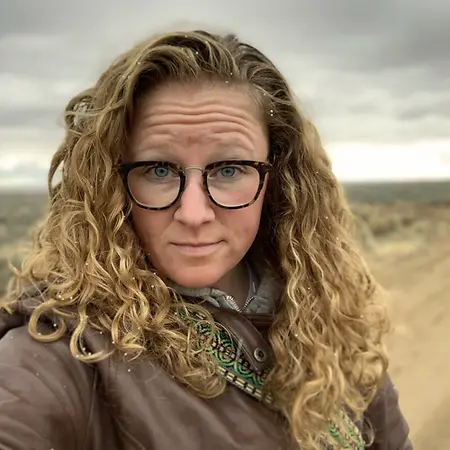
Her Story
About Paige
Filmmaking is something I've always felt called to since I was a kid. When I got out of high school, my very first job was as a production intern at a minor league baseball team. I really wanted to go to film school, but my parents didn't think that was a real job, so I carved my own path into filmmaking by joining the Army and got a film-related job where I designed and built TV studios for the military. My first duty station was at Fort Gordon, Georgia with the NSA, where I got pulled into the top-secret side of things. I got lucky enough to be in the right place at the right time when the White House Communications Agency came recruiting, looking for people with my particular job field and clearance. I applied and had to extend my contract from 4 years to 7 years, but I spent the last 4 years of my time in the military doing live events and other recorded events for the president and vice president - at the time, that was Obama and Biden. I went through the 2012 campaign with them and everything. I was super young, I was [AGE] when I arrived at the White House. I got out at [AGE], did my undergrad at the Art Institute in DC, and then moved to LA before I knew I got into AFI. In my undergrad is when I realized directing is what I wanted to do - prior to that, I thought I was gonna either edit or act, but it was a professor of mine that kind of held it all together and helped me see the light. I applied to the AFI Directing Program, moved to LA before I knew I got in because I knew that's where I wanted to be, and then got into AFI and graduated into the void of 2020. I started writing a lot, had a few features that lined up and then fell through. When it started to pick back up, I directed a web series and got into a Disney program, a Warner Brothers program, and the Veterans Writers Guild program. Then the strikes hit in mid-2023, so right when things were picking up, it all came to a screeching halt again. In fall 2023, I started doing the vertical and micro-drama stuff because I was just like, I'll direct anything at this point, just let me work. A lot of filmmakers at the time were saying it's garbage, don't do it, it'll ruin your reputation, but all it's done is excel my career. This year, we're just starting to see major Hollywood platforms partnering with these micro-drama platforms - Disney has partnered with Drama Box, Peacock has partnered with Real Short, and Fox has partnered with MyDrama. I find myself as one of the top directors in the micro-drama space, and it's been a wild year.
Her Interview
Ten minutes with Paige
01What do you attribute your success to?
Honestly, I think it's just doing the risky thing. Like when I moved to LA before I knew I got into AFI, people were like, are you crazy? And then same with this vertical space - it's just kind of like that's what my intuition's telling me to do, and I just kind of do it, even if people are thinking it's kind of insane or doesn't make sense at the time. But I just kind of trust it, and it seems to work out. That's what I'm most proud of, to be honest.
02What’s the best career advice you’ve ever received?
The best advice I ever received was on my very first day at AFI. The very first thing they ever taught us was when we were all gathered in the theater, and the producing teacher came out and she just said, show up. Just show up, if you're invited. Doesn't matter what it is, don't put a status on it, because you're gonna grow up with the people around you. These are your peers, you're going to grow up in the industry together, and eventually, you will be the movers and the shakers in the industry. And if you want to continue to work, you need to show up if you're invited. Doesn't matter how tired you are, doesn't matter how you feel. Show your face, show that you're still relevant, and that you exist, you know. And then talk about literally anything but work. Like, do not talk about film, do not talk about filmmaking. If you're asked about it, go ahead, pitch. But do not come in thinking that the person you're talking to is gonna change your career. Only you can change your career, and you do that by just showing up.
03What advice would you give to young women entering your industry?
I would give them that same advice about showing up, because it works. But also, I would say specifically for women, when you get that shot, you have to be better than your male counterparts. Period. We don't get the luxury, even right now, we don't get the luxury of messing this up. The way you treat people, the way you show up on set, the way you lead your team, the product that you create at the end of the day, the projects that you choose to put your name on - all of that matters. Because when one woman gets the chance to direct something that maybe women haven't directed in a long time, or haven't directed at all, they're testing you. If you mess it up, you mess it up for the rest of us, and that's where that whole community thing comes in. Unfortunately, you definitely still need to be twice as good as your male counterparts.
04What are the biggest challenges or opportunities in your field right now?
I think there's just a lot going on. This year's been wild. There's a lot of challenges. I think entering right now is a huge risk, but it's also a really opportune time to get in if you're wanting to get into filmmaking, because everything is changing right now. There's a whole new wave of indie filmmakers coming up, like we've seen with the movies like Obsession and Backroom - those movies took a completely new path that filmmakers have not taken before. Then you have the fact that the big studios are still doubling down on rebooting and remaking everything, and using the same filmmakers they've used over and over again, instead of taking any risks. They've shut down so many productions, especially with them merging all together. It's like their own nail in the coffin. But then you have this other weird third thing, which is the vertical micro-drama space that's kind of coming up and providing a lot of work for people, but it also has its own faults and issues. What I'm seeing in that space, which is what historically happens in film, is that right at the beginning, it was mostly women - mostly women producers, mostly women audience, mostly women directors, writers, all of that. We were all being told it's stupid, it's gonna ruin your career. But it's making real numbers and making real money. And then once that starts happening, then the boys get involved, and they're like, yeah, you should take it seriously. That's what we're starting to sort of see coming up, and a lot of us are trying to make sure we keep it as equal as possible. We have the opportunity to set a new standard.
05What values are most important to you in your work and personal life?
Most important value in work is collaborating with people, working with people, lifting people up, helping people out within where you can. And yeah, community, man. Community is everything.
Join Influential Women and start making an impact. Register now.