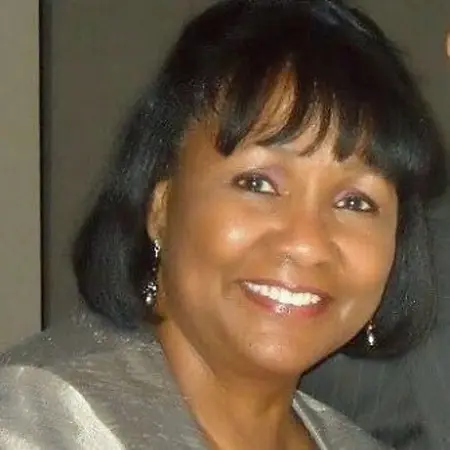
Influential Woman · Government service, Nonprofit
Paulette Norvel Lewis
Retired Workforce Development Professional, Writer; Jewelry Designer
Jonesboro, GA 30236
Her Story
About Paulette
Throughout my nearly 40-year career, the through-line has always been advocacy for women, for equal pay, and better employment opportunities. I started after college working with the Recruitment and Training Program in New York City as Deputy Director of Training, where we recruited and prepared young African Americans and Latinos to enter apprenticeship programs in the building and construction industry and civil service jobs. I then moved to Atlanta with my best friend Alexis Herman, who later became the first African American U.S. Secretary of Labor. We started a program to recruit and place African American women and women of color for management, professional, and technical jobs in private industry. This initiative was established after a study conducted by the School of Economics at the University of Texas indicated that the presence of African American women in private industry could not be statistically computed. Over 10 years, we opened 10 offices around the country and placed about 2,500 women of color into management and technical positions. After that program closed in 1982, I worked briefly with Calocerinos and Spina, one of the top 5 consulting engineering companies in the country, managing their Atlanta office. I then went to the City of Atlanta as Chief of Employee Development and Safety and Loss Control. This was a new position in which I was charged with developing and organizing training for the city's 8,000 employees and developing a safety and loss control program. From there, I went to the Martin Luther King, Jr. Center, first as assistant to the executive director and then as her Chief of Staff for Mrs. Coretta Scott King. I conducted a study to identify the descendants of African Americans whose land was seized when they were unlawfully expelled from Forsyth County, Georgia. I wrote correspondence and board reports, helped with speechwriting, organized office systems, greeted dignitaries, and traveled abroad with Mrs. King. I left there to work for the U.S. Small Business Administration as the Regional Advocate. I worked with small businesses throughout the 8 southeastern states to identify their concerns and appeal to Congress for solutions. There was a focus on women entrepreneurs, so I did a lot of work identifying them and connecting them with resources. I then moved to the U.S. Department of Labor as Chief of Employee Development, managing 9 employees and overseeing half a billion dollars in grants allocated to the 8 southeastern states, including innovative projects such as recertifying immigrants with medical backgrounds, research-based agricultural initiatives, and workforce development programs. I ended my career at the Women's Bureau of the U.S. Department of Labor, focusing on initiatives that promoted jobs and equal pay for women, such as green jobs and entrepreneurship, trauma-informed job programs for women who experienced sexual abuse in the military, and financial literacy programs. I retired in 2014 and have since been very active with the National Council of Negro Women, where I chaired the Program Committee of the Board and rolled out national webinars to support the organization's mission to lead, advocate for, and empower women of African American descent and their families.
Since retiring, I have devoted time to my family and hobbies: jewelry making, photography, and writing. In 2025, I authored/curated an anthology of essays by African American women ages 20 to 80 with varying backgrounds and levels of education about their mothers' influence in their lives: "My Mother's Daughter: A Legacy of Faith, Service, Wisdom, and Love."
Her Interview
Ten minutes with Paulette
01What do you attribute your success to?
I think a good work ethic. I've always tried to do my work and volunteering with excellence. I try not to half-do anything. I learned from my mother that how you do things, and how you serve others, reflects your respect and regard for them and for yourself. I try to do everything with excellence, especially what I do in service for others. That can sometimes be misuderstood but, I think I've learned to work around it.
02What’s the best career advice you’ve ever received?
One thing that Dr. Dorothy Height told me when I worked with her on the National Council of Negro Women's National Black Family Reunion in the 1980s has really resonated with me over the years. I was working as Interim Executive Vice President. I am often perceived to be a very serious, focused kind of person. As I was working with Dr. Height one day, she said she had learned very early on to take her work seriously, but not herself. As I thought about that, I concluded that I sometimes took myself too seriously. I think she meant she didn't allow her sensitivities to impede important work. She tried to remain open to suggestions and input from others, even when she may not agree. In other words, don't put your ego on the fence in everything...take your work seriously, but not yourself. There will always be innovation, new perspectives, and improvements to your ideas if you're open to them. I'm sure I got a lot of other professional advice, but that, I think, resonated with me more than anything. I was also told by a total stranger that I should smile more. That has made a big difference in how others perceive me.
03What advice would you give to young women entering your industry?
From the government, it's a very, very difficult time, but what advice I would give to women is to look outside, to look outside of what they were used to. When I was working with the women's program when it first started, one of the things we had for our work was, if there's no wind, row. In other words, find a way to get there. Look beyond what you are accustomed to, have done in the past, and dare to be creative and innovative. And that's not... work is not easy, that's why they call it work. And careers are not easy, and they're a lot more difficult today than when I came along. But I think women are a lot more enlightened and stronger, maybe not stronger, but enlightened than we are, and there are a lot more opportunities. We just have to look beyond what we have always done, and always been accustomed to, and how we've always done it. And I think young women are very creative, and I have every confidence that they will figure it out and do well, despite the obstacles that are in their way.
04What are the biggest challenges or opportunities in your field right now?
It's a very difficult time for many in the workforce and the education system. Over 600,000 African American women have been laid off from government jobs, vital entities such as the Centers for Disease Control and the Department of Education have been dismantled, leaving masses of people unemployed, confused, lost, and struggling to survive. The drastic and sudden changes in our government structure, I believe, present the biggest challenge to employment opportunities today. These changes not only threaten the security of individuals, but they also have a drastic impact on the security of families. If we add AI to the scenario, the employment landscape becomes dire. The closing of government agencies that are not only vital to the security and well-being of the country, but also to the well-being of families, has been catastrophic. Can you imagine a country, a world leader like the United States, without a Department of Education, a Center for the Disease Control, and other entities that are critical to an advanced civilization? So, this is the primary challenge as I see it. It has disoriented people, businesses, the legal system, and organizations, leaving little recourse for recovery. Young people, women, and people of color have been targeted and disproportionately affected. Where do these individuals and families go to maintain their dignity and restore their quality of life? So, as I see it, those are the obstacles. It will take the will of our government and leaders, and quite a bit of time, to restore these vital systems.
05What values are most important to you in your work and personal life?
Time to reflect. And time to appreciate what I have learned, what I have seen, the people I know, the people who are in my life. I wrote a book a couple of years ago called My Mother's Daughter, a legacy of Faith, Service, Wisdom, and Love, where I captured stories of African American women, all family and friends, and their relationships with their mothers, and what they learned from their mothers, and carry into their lives. So that kind of thing. You know, stories about life, and learning, and love. That's what I value most.
Join Influential Women and start making an impact. Register now.