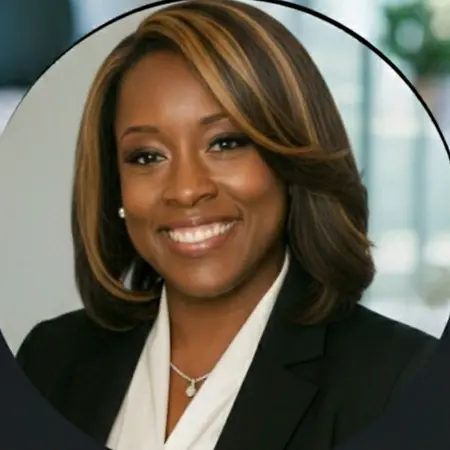
Her Story
About Portia
I have been in education for 24 years, though teaching was not what I originally set out to do when I entered college. I wanted to study psychology, sociology, or anthropology, but somehow I was pulled into education along the way. I went to school to become a special education teacher and have been moving forward ever since. My professors told me I had a natural gift for teaching, for classroom management, and for creating a positive learning environment. They said that while they had to teach these skills to other students, it came naturally to me. I never considered teaching as a career when I was growing up, but I was always led to people. My mom was an employment counselor who helped migrant farm workers find work, bringing them out of the agricultural fields and sending them to school. When I would take career assessments in elementary and middle school, they always said I would be working with people in some form or fashion. I knew I had a calling to help and support people, I just didn't know in which capacity. I saw myself as a sociologist, social worker, or maybe even a lawyer, but I ended up in education. Today, I serve as an assistant principal at a middle school, where I am the 6th grade administrator and support our English Language Arts Department.
Her Interview
Ten minutes with Portia
01What do you attribute your success to?
I think it's important for us as individuals to be willing to always learn and have a humble attitude towards whatever the experience is, being ready to listen and learn. I continue to hone my communication skills, being a good listener and communicator, speaking my voice even though sometimes it may feel uncomfortable, but not silencing myself because it is uncomfortable. I give myself grace when I make mistakes, understanding that maybe I didn't handle something the way I should have in one moment, but I forgive myself and remember what I need to do the next time. It's really just having conversations with yourself and lifting yourself up. If I need to seek outside resources, like therapy or whatever the case is, then I do that to help build up the confidence I need to be successful. I also believe strongly in balance. I take time to turn work off and spend time with my family and those who lift me up, and I find time to connect with my faith and spiritual side. I have a strong relationship with the Creator, I read the Bible, and I understand that happy is the person who's conscious of their spiritual needs and desires. When you're connected to that higher power, it helps keep me balanced and focused on things that are important to keep me grounded.
02What advice would you give to young women entering your industry?
The advice I would give for someone interested in obtaining a leadership role is to continue to want to learn and grow, and do whatever you need to do to prepare yourself for that role. If you're setting goals and you visualize yourself in a certain role, whether it's 1 year, 3 years, 5 years, or 10 years, it's important that we see ourselves there and figure out a plan to get there. Understand that plans don't always go in a straight path, that there are some detours, but if you continue to see yourself and visualize yourself accomplishing that goal, then you will reach it. But you have to do the work to prepare yourself so that when the door opens, you're ready to walk in. If you've not done the work in different avenues, whether it's communication skills, your self-esteem, relationship building, or whatever it is, then when the door opens you're not going to be ready. Understand that just because the door opens didn't mean that was for you, and don't take anything personally. Just continue to see yourself in that role and keep working towards it. Meet people, get to know different ones, interview people, make friends with ones you see who are in that role, learn from them, reach out and ask for someone to be your mentor. Ask questions, interview, find out what they needed to do. It's really about research and information getting. The more information you can get to help prepare you, the better off you'll be. When you get there, you'll not only land the position, but you'll be able to keep the position.
03What are the biggest challenges or opportunities in your field right now?
There have been many changes in education over the years. The students, the policies, the requirements, the families, and the family structure have all changed. The values in people have changed. Even in today's time, the values of family are completely different than maybe 10 to 15 or 20 years ago. Many years ago, educators were highly respected and appreciated, but in today's time, sometimes you don't see that so often. There's competitiveness among students and parents, with parents trying to live out their dreams through their students, which can impact the success of students and their mental health. The pandemic definitely had an impact on our students, teachers, and schools, just as it did with other businesses, but it gave people a different perspective. It did something with our interconnectedness. At one point, people realized we needed one another and were more communal, but nowadays people seem more individualized or individualistic, handling things on their own. In my philosophy, that's not how we were created to be. We were created to be in villages and with communities, working together, as opposed to moving individually. We're better together versus alone. Social media and cell phones have also had a huge impact. In my opinion, it has desensitized people to the point where students will see things and won't report it, or they may see things and want to record it versus getting help or seeking help. When things happen in school, instead of reaching out to report or get help for individuals who may be hurt or going through something or being bullied, some people will want to make it entertainment. We have to teach these things as educators, versus in the past, these things were taught at home.
04What values are most important to you in your work and personal life?
One thing I really, really believe in is balance. I have that philosophy of balance overall, and I think that's so important because of mental health and physical health and how our minds and bodies are all connected. Sometimes what happens in education and probably many other fields is people have this expectation that the one who burns the midnight oil is the most successful or the hardest worker or the best worker because they're working overnight, they're here early, and they stay late. That's not really my philosophy. Although I give everything I have to give, I also believe when it's time to turn it off, it's time to turn it off and spend time with your family and those who lift you up. I also find time to connect with my faith and spiritual side. I have a strong relationship with the Creator, I read the Bible, and I understand that happy is the person who's conscious of their spiritual needs and desires. When you're connected to that higher power, it helps keep me balanced and focused on things that are important to keep me grounded. One thing I do at work that I've done for many years is I take a moment, close my door, and eat lunch. Sometimes I eat lunch by myself, or I may have lunch with somebody else, but I still take time to sit, eat my lunch, pray if I need to, give myself positive affirmations, or whatever it is. I take those few moments for myself. We might have 30 minutes, 15 to 30 minutes for lunch, but it's so important to take that time and ground yourself and do whatever you have to do to feed yourself physically, emotionally, mentally, and spiritually.
Join Influential Women and start making an impact. Register now.