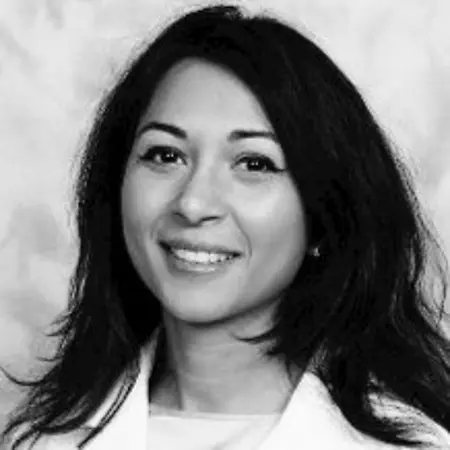
Her Story
About Sabiha
I see adult patients as an internist, providing comprehensive care that goes far beyond traditional medicine. During the day, I see patients, advocate for them, coordinate their care, and treat any problems they have. I manage chronic conditions, help with social health and home health care, and make hospice recommendations. I fill out disability forms and FMLA forms - really anything that helps an adult's health. I do prevention and acute care, like directing patients who call about a stroke. As a community physician in Albany, I've grown to know the community and help the community. I work in a big office with 6 physicians and lots of nurses, and we were here through COVID and beyond. What I pride myself on most is the art of medicine - getting to know patients so well that I can detect ominous signs of diseases before they appear. I was able to diagnose a very tiny pancreatic cancer that would have gone completely unnoticed had I not really known the patient and insisted this was not normal. But beyond the medical part, I do a lot of life coaching and mental health coaching. I talk to patients about reconsidering everything on their plate, about not trying to do everything the media tells us we have to do. I don't believe in having it all or work-life balance, because most of us do a job that's 100% and family is 100%. You have to hop in and out of these things - you can't be at 200% all the time. I talk to patients about nutrition, teaching their children about nutrition, about downtime and doing nothing. There's an Italian saying, Dolce Faniente, the beauty of doing nothing. I grew up in Switzerland and try to bring that environment to Albany, which is a really nice community where people are smart, educated, and very receptive to these conversations.
Her Interview
Ten minutes with Sabiha
01What do you attribute your success to?
I attribute my success to my mother, who was very encouraging, but mostly to my early education. My high schooling was at the Geneva International School, and this school really pushed us to think for ourselves. I was educated in an international baccalaureate system, and it encouraged independent thinking, education, and just really pursuing your thoughts into action, implementing them, and leadership, and doing the right thing. By leadership, we don't mean you have to be president of this or that, but really leading the right thoughts, doing what is right, and doing what is right even if you are the only one doing what is right. That is, in my mind, leadership. I think that played even a bigger role than my family, but of course my mother was very, very encouraging.
02What’s the best career advice you’ve ever received?
The best advice I ever received came when I was changing professions radically from banking to medicine. Back in the days when I was making that change, there were few people doing that. I think the best advice I have ever received is that life is a long game, and you have to choose something that you really care about. You have to put your passion at game. It has to be meaningful to you.
03What advice would you give to young women entering your industry?
I would tell them that when things get overwhelming, they need to step out, and they need to choose themselves. For example, I am right now on sabbatical. I actually left my job to take a break. I am still doing per diem and helping out whenever they need help, to keep my skills afloat and to see my patients who are in between doctors. But I took time off because I realized that I needed to strengthen myself. I needed to revisit my foundations, my beliefs, my strengths, and really, in order to serve my community better and to be a stronger physician, I needed to get back to my original thoughts. I needed to work on myself, to reset and revitalize myself after 16 years. Physicians' work is mentally and physically draining, because if you are an empathetic physician, you basically relive everyone's life. We're thinking about our patients 24-7, and when you have 1,800 patients, you're carrying these 1,800 patients with you. It's a very draining job, and a lot of the women also have a spouse that's working, little children, parents that are aging. You have to step back at times and really revitalize yourself, because I think it's very hard to go on without doing it. It's harmful to you, and it's not beneficial to the community you're serving.
04What are the biggest challenges or opportunities in your field right now?
I think the biggest opportunities in my field right now is to educate people regarding prevention, health prevention, and really helping everyone understand that we are part of the environment. There's a one medicine concept - one medicine means that we're a zoonotic world. We are in the same environment as the animals, as the plants, as the sea, as the fish, and we must live as such. Everything we do affects them, and everything they do affects us. When we talk about microplastics in our brain, in our bone, in our environment, it affects the whole world. We don't live as a singular entity. Coronavirus and all these viruses that come from animals, from things that probably threw this universe into an imbalance. More than thinking of our lives in a balance, we have to also think of the universe in a balance. It's not just about medication, it's not just about exercise and eating well. You also need to maybe slow down your consumption of processed food. Maybe you need to think about growing a few plants in your own garden. Maybe you need to think about really scanning the creams you're using to make sure they're paraben-free. Make sure that your child learns about recycling, about plastics, about compost. I mean, you really want to create a sustainable Earth. We need a sustainable Earth in order to help us thrive. We don't live in isolation. This is not a healthy approach to the universe.
05What values are most important to you in your work and personal life?
In my work, communication is a very big and valuable skill - honest and transparent communication. And empathy. Those are the two things that I have to use constantly and feel that I need to use constantly. So open communication and empathy for my work. For my personal life, it really is just keeping my family together, making sure that I'm raising strong, brave, and kind children with keen curiosities. The way the world is moving, I don't know if they need to go to college. I don't know if they'll ever go to college. I don't know if they'll follow the same path as we did in the 80s and 90s. I have no idea what the future's going to hold. But I know one thing to be true for thousands of years is values. If your values and your ethics are straight, and in all commandments of all religion and all theology and all beliefs, they're all the same, pretty much. All the values are the same, and it really boils down to 4 or 5 values. I think that's it. That's the only thing you can foster in children, and that's their compass for the future.
Join Influential Women and start making an impact. Register now.