Her Story
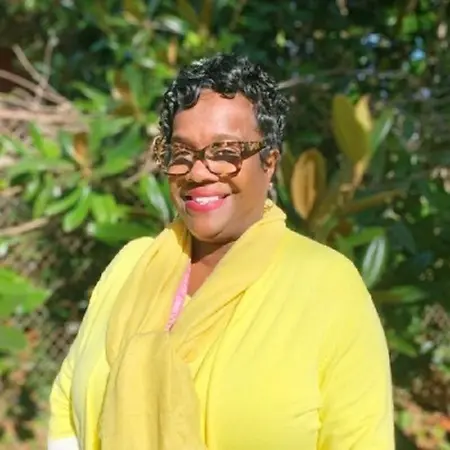
About Sabrina
My career journey has taken me through law enforcement, teaching, and social work. I spent 14 years as a law enforcement officer, 3 years as a teacher, and I've been a social worker since 2014. For the past 5 years, I've been a police social worker with the Clayton County Police Department in Jonesboro, Georgia. What I'm most proud of is bringing a wellness program into the police department. I'm sort of a unicorn because while the Midwest, East Coast, and West Coast have social workers embedded in police departments, I'm one of the only ones that actually works for the police department, and it's not only citizen-based, it's also wellness for the officer base. Coming in and gaining the trust of the officers that they're normal human beings that go through everything just like everybody else, they just have to hide theirs behind the badge and the gun, they can protect others, but there's really nobody there for them. I became part of a family where people would call, even some of their wives or husbands would call and say, please don't let such and such know that I called you, but I'm having this kind of problem, how do I deal with it. I love that they trust me enough to know that they can come to me and they're not worried about me saying anything. I'm also a forensic interviewer of children who have experienced some kind of trauma, whether it's sexual abuse, physical abuse, or witness to a homicide, and I interview them for the police. A lot of people ask how I can listen to those stories over and over, and I tell them I'm able to package it somewhere and be there for that child. Just to see their faces when they leave, they're happy because they were able to tell what happened and get it off their chest. That's kind of a gift that I've always had throughout my career in law enforcement. I can go from Officer Callaway to Auntie, and it's truly a gift. I just know that I can kind of bond with anybody, it doesn't matter your color, shape, or creed.
Her Interview
Ten minutes with Sabrina
01What do you attribute your success to?
I think it was my own trauma. I was raised by maternal grandparents, and I grew up thinking that my mom didn't love me because of whatever reason. When my maternal grandparents died, I met my mom, and that was a different life. She was one of those parents that was just hustling, trying to now raise four children. Then I had a child out of wedlock, and I just wanted the best for him. I made sure that I was going to show him that I wasn't going to let him ever feel that missing parent, that the absence of that missing parent made him less. My son told me when he was grown that I never showed it, I never told him when we were going through things, and I said, but that's what I'm supposed to do. I said, that's a good parent, when you had the best childhood and you didn't even know half the time I was trying to still pay for Peter to pay Paul. I just wanted to make sure that I didn't want to let the things that people said about me be remotely true. Even when I was having my son, back then it was Black males being raised in a single mother home, it's more likely they end up in jail or dead, so I fought for that. It was all of those things because I was working in law enforcement, and people would say he's a mama's boy. Well, who else is he supposed to be with? That's all he had. So it was just being young and inexperienced and not having a comparison of how to raise a child, what that looked like, because my grandparents died when we were 14. My sister and I were 14 and 15, so we didn't have the total, like, what's the right way to raise a child. I just did what my grandmother and my grandfather did.
02What’s the best career advice you’ve ever received?
The best advice I ever received was don't betray the trust that's been bestowed on you. That was from my deputy chief when I was in law enforcement. He's passed away since then, and he said to the whole graduation class, don't betray the trust that's been bestowed upon you. As a young person in law enforcement, I was like, okay, but now that I've gotten older, trust is everything. I mean, I trust to get in my car and I don't worry about my car not starting. I trust to go home and my air is on, light's on, I trust that. But when I don't have trust, that's how I had to get rid of one of my cars because I told it, I don't trust you no more. You broke down on me twice. I said, I don't trust you. So that's probably the best advice I've ever received, and I do that with all interactions, personal and professional. When I can't trust you anymore, then that's over.
03What advice would you give to young women entering your industry?
The biggest advice I would give is follow your heart. When I first got my master's, I was older. I was in a class of say 50-something people, and there was a handful of us, about 5, that were in our 40s getting their masters. Everybody knew because I had the life experience and they had the book knowledge from college. So when they would say a terminology, I was sitting there on my computer googling, like, okay, what are they talking about? And I was like, oh, I just had that happen today, and so I was able to apply life to that. When forensic social worker came about, all of them said, oh Sabrina, we thought about you, and that just warmed my heart. I'm like the Google Earth, looking at things from a different perspective. I look at the entire person and their entire surrounding. I've been a cop, so I understand about the justice system. I've been a teacher, so I understand about what goes on in our schools. I'm a social worker, and I get it. So when we look at the whole person, I tell people we take people at their chaos and then put it in our chaos and expect them to thrive in our chaos. I said that's probably one of the biggest injustices because we don't have it together. When we take people and say, okay, you gotta do this, this, and this before you get your kids back, or we're gonna lock you up if you don't do that, and these parents are out here just trying to survive. You got some that's just out here trying their best to survive. So I would say don't get caught up in the system. When I worked in the school system, social workers could get easily caught up if the principal didn't like that student or the parent, then it was all, oh, we gotta make sure they live in zone, we gotta make sure they do this. It was always these power moves in law enforcement. So it's like, just follow your heart and listen to what you know is right, because at the end of the day, that's you and your conscience is the one that goes home. I promise you, I sleep well because I know I may not, my colleagues may not like me all the time, but I sleep well at night that I'm gonna speak up.
04What are the biggest challenges or opportunities in your field right now?
The biggest challenges I would say is the struggle for money. A lot of times, most social work jobs are seen as case managers. A friend who's a social worker said that a nurse told her the only thing I know social workers do is give out bus passes. Social workers are so vast, and everywhere you turn now since the pandemic, you see where folks are saying a social worker is needed. They're adding social workers to attorneys that sue for injuries because they see that before we go to court, especially if it's some horrible, injurious accident, people are suffering, especially if they were injured in the accident and they can't get back to work. They have literally started hiring social workers to help build bridges and connect resources. The biggest opportunity is making yourself relevant, and people will undervalue you. They will undervalue you in every means. They know they need a social worker on their team, but they'll make you one of the lowest paid on the team. The field is vast, and a lot of people are now post-pandemic seeing the value of a social worker. But there's also limitations depending on who that person is and what degrees they have, because unless you are another social worker, you don't get it. One of my supervisors who was a licensed professional counselor said, you know what Sabrina, I can tell the difference between people who go get their master's in social work and those who go get their master's in counseling. She said social workers are dot the I's, cross the T's, they're gonna make sure they did everything. Counselors or LMFTs or whatever other degrees out there, they said the only thing they kind of do is I'm just going to do the assignment. The social workers are the ones that go beyond the assignment. So they may come back and say, hey, I know we were just seeing this family for this, but she may need some housing. People in other degrees, based on her experience, they just do the, hey, I just had to see them for 6 sessions and that was it. So I think it's the investment into people.
05What values are most important to you in your work and personal life?
Being authentically me. I tell people, and they'll laugh, because I say I am 55 years old and I'm probably 20 to sometimes 30 years of your senior, and I can't be anything but me. I can't be, you know, I don't pretend to try to be somebody else. I just tell them to be who you are, stand on it, and understand you can shift your view sometimes because the world is changing. This new generation is the why generation. I grew up, you don't question authority, but this generation asks questions, and it's okay to shift. I said, and I'm not, it's not comfortable at first, but then after a while, I'm like, okay, I understand, because the next generation's supposed to build upon the previous generation. So I now welcome the why. Matter of fact, I tell the cadets here when I teach them, I say question everything. Don't just go out there, especially in law enforcement, and do what everybody else is doing when you know there's something, like, something's not right about this. Question it. Now, some of my older generation who's still in law enforcement, they don't like it, but I tell them question it because it will keep you out of trouble when you just say, hey, I just got this question, why are we doing it like this. Because sometimes if someone just questioned instead of just going and jumping in and doing what everybody else is doing, maybe we wouldn't have had such a disconnect with law enforcement and certain people of certain cultures. We started off rough, and then there are more Blacks and people of color in law enforcement, but we still haven't breached the gap. We've fallen in line with what everybody else was doing. It's like, no, question it.
Join Influential Women and start making an impact. Register now.