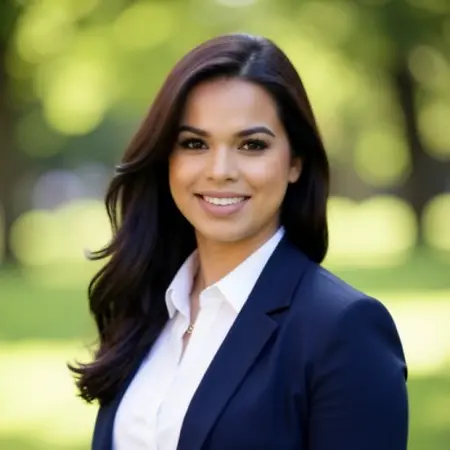
Her Story
About Shanjida
My journey into mental health has been deeply personal and shaped by my lived experiences. Growing up as a South Asian American woman and child of Bangladeshi immigrants, I witnessed firsthand the challenges families face when navigating mental health, disability, and cultural expectations. My older brother has special needs, and watching his journey after a medical crisis when I was young taught me about resilience and the importance of meeting people where they are. I've spent the last 14 years working with families and children on the autism spectrum in schools, homes, and hospital settings, gaining a comprehensive understanding of how to support the whole family from a holistic perspective. My father, who was a civil engineer in Bangladesh but worked as a security guard here, always encouraged my education even as we faced financial hardships and discrimination, especially after 9/11. Losing him during the pandemic in 2020 was devastating, but his last words to me were to focus on my work despite what society might say. That loss led me to complete a grief educator certification with David Kessler so I could help others in the Bengali community process grief in healthy, culturally appropriate ways. My approach to therapy is deeply humanistic - I treat every person as a human being first, approaching each client as a blank canvas without judgment. I've completed two master's degrees, one in school counseling and one in mental health counseling, along with a bachelor's in psychology and sociology, and I'm now looking to pursue my doctorate in education. I offer services in both English and Bangla because I understand the unique challenges immigrant families face, and I'm committed to making mental health support accessible to communities that have historically been underserved.
Her Interview
Ten minutes with Shanjida
01What do you attribute your success to?
I attribute my success 100% to my father and my parents. My dad is the reason why I have been able to get this far. Even though he worked as a security guard here after being a civil engineer back in Bangladesh, and even though we lived off his disability check after an accident, he always encouraged my education and professional growth. His last words to me before he passed in 2020 were to focus on my work, no matter what people say, especially as a South Asian American woman facing cultural expectations and societal judgment. My mom has also been my anchor and armor throughout everything. She taught me resilience through her own example as a homemaker and artisan who would sew clothes for me when we had very little. Growing up with my special needs brother and witnessing the challenges my family faced, including the discrimination we experienced after 9/11, taught me the strength and determination I needed to keep going. My father rooted the professionalism in me, and my mother taught me to be resilient no matter what life throws at you.
02What advice would you give to young women entering your industry?
I wouldn't give advice in the traditional sense, but I would just listen. I would give her my presence and really hear what she has to say. That's my approach to working with young adults - I don't tell them what to do, but I send them resources and guide them without doing it for them. I believe in giving people the tools they need to find their own path, rather than directing them down a specific road. Sometimes the most powerful thing we can offer is simply being present and listening without judgment.
03What are the biggest challenges or opportunities in your field right now?
The challenges in my field have evolved significantly over the years. When I was younger and starting out, there weren't many people who looked like me in mental health professions, and in many settings I was the first Bengali professional working in the field. I was met with racism, harassment, and being treated poorly in the workplace. This was especially difficult after 9/11, when my family and I faced attacks, abuse, and harassment in our neighborhood just for existing. Back then, the challenge was simply to be - to exist and persist despite the discrimination. Now things are different, and I see more people who look like me in the field. The current challenge is to dismantle the patriarchy and the toxic misogyny in our culture. There's also the ongoing need to make mental health services accessible to immigrant communities and to address the stigma around mental health in South Asian communities. I'm seeing more opportunities now to serve Bengali-speaking communities and to provide culturally sensitive grief counseling and mental health support to populations that have historically been underserved.
04What values are most important to you in your work and personal life?
The number one value for me is to treat human beings like humans. My approach to therapy is very humanistic and rooted in that principle. I see each person as a blank canvas - I don't assume or judge. I approach every session with humility because I come from nothing. Growing up, my father didn't work after his accident and we lived off his disability check. My mom was a homemaker who would sew clothes for me because we couldn't afford to buy them. My brother also receives a disability check and doesn't work. Coming from these humble beginnings taught me not to judge others or make assumptions about their circumstances. I'm not the blank slate in the therapy room - my client is - so I meet them where they are with compassion and without preconceived notions. This humility and human-centered approach guides everything I do, both professionally and personally.
Join Influential Women and start making an impact. Register now.