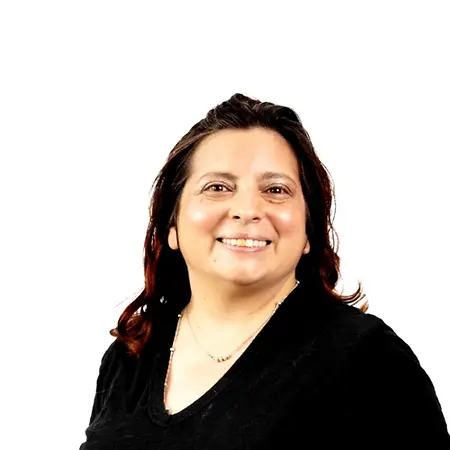
Her Story
About Sharon
Sharon Diamondstein is a Jewish communal professional with over 20 years of experience in educational leadership, curriculum development, teen engagement, and program design within synagogue and community-based learning environments. She currently serves as Director of Congregational Learning at The Jewish Center of Princeton, where she oversees educational programming for learners from early childhood through adulthood. Her work focuses on building inclusive, relationship-centered communities through innovative curriculum design, experiential education, and strong partnerships with clergy, families, and educators. In her leadership role, she supervises faculty, teen madrichim, and educational staff while managing religious school operations, family education initiatives, retreats, and large-scale community programming. She is recognized for reimagining teen engagement models, strengthening participation, and mentoring emerging educators and student leaders. Sharon brings a strategic yet hands-on approach to program development, combining organizational management with a deep commitment to meaningful learning experiences that connect tradition, identity, and community. Across her career in Jewish education, Sharon has held roles as an educator, education director, and youth program leader, building expertise in both classroom instruction and institutional leadership. She holds a bachelor’s degree in Political Science from Kean University. Dedicated to lifelong learning and community impact, she continues to focus on strengthening Jewish education and fostering environments where learners feel engaged, supported, and inspired.
Her Interview
Ten minutes with Sharon
01What do you attribute your success to?
I think what shaped me into the professional that I am is just on-the-job experience - asking myself, can I do this? I hated doing this as a kid, how can I make it so that it's better for the next generation? That's a big part of it. I continue doing professional development - right now I'm working on a series where I'm learning with colleagues about conflict, and how to have dialogue through conflict, and how do we recognize and have a conversation with somebody with whom we disagree. I've done a lot of professional development in the field of Israel education, and how do we teach about Israel, because that's a very difficult topic, especially now. I've done social, emotional, and spiritual learning - all the public schools do social-emotional learning, and we add in that extra spiritual component. I'm always seeking opportunities for professional growth, how to make things more alive and meaningful. I really believe that the day you stop learning is the day you stop being good at your job, in any field, I think, especially in education.
02What’s the best career advice you’ve ever received?
My mentor, Gail Buchbinder, who was my very first religious school principal back in 2005, has been one of the greatest influences in my professional life. I still talk to her regularly, and at one point she said to me, I don't need to be doing this with you anymore, you've gotten there. But I said no, we're still doing this. Her guidance and support have helped shape my leadership approach throughout my career, and I've maintained that relationship for nearly two decades.
03What advice would you give to young women entering your industry?
I would say keep an open mind and build relationships. For me, it's all about these relationships, and who are you talking to, and always try to see the good and keep an open mind. One of the things that I've learned early on, and has been reinforced to me, is oftentimes what's being expressed is not what's actually being expressed, especially with criticisms or the really hard questions. It's coming from a place of, I'm afraid, I don't understand, I don't know, and that especially came out during COVID. Right before COVID, we lost our beloved Rabbi who passed away, and there was a lot of people uncomfortable with uncertainty, and that often causes people to lash out because they don't know what to expect or what's coming. If somebody's starting off in this field, you have to really come to it with an open heart and an open mind, and really listen and build relationships.
04What are the biggest challenges or opportunities in your field right now?
I think any religious institution will see a decline in engagement. We have a generation of kids and teens that have so much being asked of them - they're being asked to do sports, and to do clubs, and to do jobs, and oftentimes religious engagement comes at the very bottom of that list. We see that across the board. On the flip side to that, people in this field as professionals are also dealing with a lot of burnout. In the Jewish world, post-October 7th, there's exhaustion. You have those competing, or maybe not competing - they're kind of in concert with each other. Everybody's tired. I was reading an article in eJewish Philanthropy about the state of Jewish education, insights from leaders across the field, and the part that talks about the supplemental schools says the third challenge is human capital - Jewish education is facing a shortage of excellent educators at the moment when excellence matters the most. The teachers are expected to be mentors, counselors, content experts, experiential educators, culture builders, oftentimes mom, dad, everything. It's a lot to hold together. It's one of the things that I really still feel strongly about - we need to build this next generation of young Jewish people into a place where they can be proud of their heritage, and proud of who they are, and proud of what they do, and still have some sort of reasonable expectation of showing up, which is the biggest challenge right now.
05What values are most important to you in your work and personal life?
I believe strongly in lifelong learning and the importance of professional growth. Throughout my career, I have pursued continuing education in areas such as conflict resolution, Israel education, and social-emotional learning. These experiences have enhanced my ability to support students, families, and educators while adapting to the evolving needs of our community.
Join Influential Women and start making an impact. Register now.