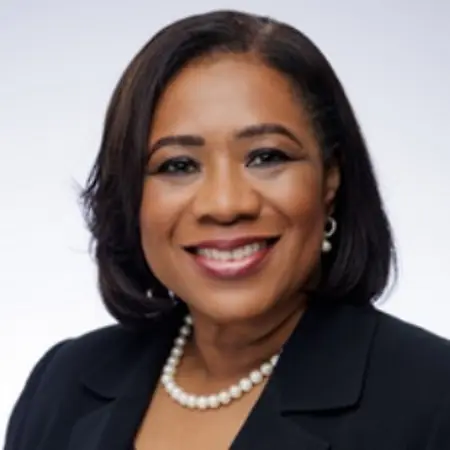
Her Story
About Tina
I come from a family of 12 children where I'm number 7, and we weren't well off at all. My family taught me qualities of love, unity, perseverance, and faith. I started working at 8 or 9 years old, picking blueberries to earn money for school clothes, learning early that nothing was handed to you and you had to work for what you had. I was the first in my family to earn a college degree. I started at Purdue studying computer science, but health issues brought me home where I attended Indiana University at South Bend. In 1984, I landed a temporary position at St. Joe Bank and Trust, which became permanent when they saw my potential. I rose to operations management in trust operations, managing the transactional operations area. During the banking deregulation era, I went through multiple bank conversions. My boss at the time asked me daily to help him with his computer, and when he was displaced, he and another gentleman courted me to help them start their own company. I took a calculated risk in the early 1990s to leave my secure banking position to co-found Indiana Trust and Investment Management Company, the first pure trust company in the state of Indiana. We started with zero assets and zero dollars, and when I retired in 2023, we were managing over $2 billion in assets with three offices in Mishawaka, Elkhart, and Muncie, Indiana. For 25 of my 35 years there, I was the information technology and operations manager, doing most of it single-handedly. After COVID, I transitioned to nonprofit foundation engagement, working with nonprofits, foundations, and charitable trusts to help them increase their endowments. Now I'm president of a nonprofit redevelopment corporation building affordable housing and providing financial literacy programs to help individuals improve their economic mobility and build generational wealth. I also co-pastor a church in South Bend with my husband.
Her Interview
Ten minutes with Tina
01What do you attribute your success to?
First, I attribute it to the words of my mother, who always said to me that I have to do more, I have to be better. She would say, well, because you're black, you're a little black girl, and because of that, you have to do more. Even when you're doing the same as the other kids in school, you're going to have to do something more, because you're going to have to show up and make it look like you're doing something more. Even though you're already doing the same, you're going to have to do something better so people would notice you. My children tell me I'm so extra, but I'm not extra, I'm just doing what it is I need to do, and to me it isn't extra, it's just moving in excellence because I've learned to do that. The other thing that drives me is that when I was going through my career, I was actually told that this career was not necessarily not for me, but what I was told was that this was a career that was for senior white men, and that I would never succeed. I'm not sure why that was told to my face, but it was told. I thought, hmm, that's interesting, and so I outlasted those that said that to me. I thought, well, you know what, I'll be here longer than you will, and I was. I just thought there was something I not had to prove to them, but had to prove to myself, that I'm better than that. The only person I have to prove something to is myself, and that I just have to be the best Tina that I can be. I don't have to compare myself to any person.
02What advice would you give to young women entering your industry?
Probably the one thing is being present. Sometimes, I think people feel like because they don't have certain networks, or they don't maybe have the voice, or they don't have certain resources, that they cannot be around people who have those things. I think when you are present, when someone sees you, you may not say anything, but when they see that you are willing to be in places and be in rooms where maybe you don't feel like you belong - and from my standpoint, being an African-American woman, sometimes there were places where, well, I'll say about to me, I always felt like I belonged, but where other African Americans may feel like they didn't belong - but you just showed up anywhere. When people feel like you can show up in places, and maybe there may come a conversation where you maybe have something that you can add, someone may hear it. They may not acknowledge it at the time, but they may have gone off and thought about it. Then they may call you off to the side, or they may ring your phone when no one else is thinking about it, or when they don't think anybody is paying attention. That thing that you said becomes very valuable to them, and then that thing that you said, because it was very valuable to them, they recognize that it would be very valuable to other people. The thing that I will say to people getting started, or women getting started, is just be present. Because not only may something that you say be important, but something that someone else is saying in the room may also be important to you.
Join Influential Women and start making an impact. Register now.