Her Story
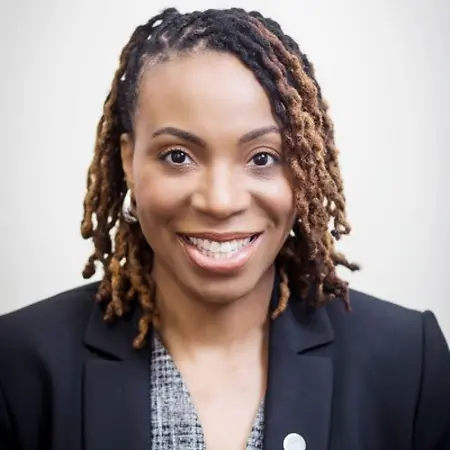
About Tomeka
My official title is Owner of The Roof Clinic. My working title is something closer to Director of Operations, Chief Relationship Builder, Staff Developer, and whatever else the day requires — because that's the reality of building something from the ground up and refusing to let it be anything less than excellent.
The business development side of The Roof Clinic is very much me. I'm the face in the room — engaging, connecting, and building the kinds of relationships that turn a first conversation into a long-term partnership. I review contracts, drive strategy, and make sure every client touchpoint reflects the standard we've committed to. But I'm equally invested in what happens internally — the training cycles, the safety protocols, the innovation we need to stay ahead of. I stay boots on the ground because I want to know what's next in this industry before it becomes the standard. If there's a new system, a new technique, a smarter way to protect a building — I want our team trained on it first.
But none of that is the why. The why has been the same since day one.
I built The Roof Clinic to eliminate the friction between insurance and construction — to take what felt like the dark side of property ownership and turn it into a collaborative, transparent process. Building owners and property managers were navigating claims alone, buried in language designed to confuse rather than clarify, with no one in their corner who could break it down in plain terms. We changed that. We became that person — the knowledgeable advocate who walks alongside the client, explains what matters, and makes sure they never feel like they're on the wrong side of the process.
That same discipline carried over into government contracting. Spec books that read like legal encyclopedias. Compliance requirements that overwhelm even seasoned professionals. We learned to treat every specification like a language — and once you learn the language, you can translate it for anyone. That's the value we bring to our general contractors, our facility managers, our property management firms, and every stakeholder in the commercial sector we serve.
At its core, The Roof Clinic is a support mechanism built on one principle: when we break it down into small, clear, actionable pieces — our clients succeed. And when our clients succeed, so do we. That exchange is the foundation of everything we've built, and it's not changing.
Her Interview
Ten minutes with Tomeka
01What do you attribute your success to?
Consistency of vision — from day one, without apology.
I saw something early that most people in this industry weren't talking about: the space between insurance and construction was broken. It wasn't collaborative — it was adversarial. Building owners and homeowners were left alone in a process full of legal language nobody explained to them, navigating claims with no advocate and no roadmap. I decided that's where The Roof Clinic would live — in that gap — and that we would be the translator, the guide, and the expert all at once.
That clarity never wavered. And consistent messaging built on a clear vision is one of the most underestimated competitive advantages in business.
The skill we developed around insurance — understanding the claims process, breaking down the legalese, making sure the insured feels supported and not steamrolled — that same muscle transferred directly into government contracting. Spec books that look like encyclopedias. Compliance language that overwhelms most people. Once you train your brain to break complex systems into digestible, actionable pieces, it works everywhere. Once you've read one, you've read them all — and more importantly, you know how to make it make sense for the person sitting across from you.
That's really what I attribute our success to at its core: the ability to simplify complexity for the people who need us most. We don't just do the work — we make our clients feel capable, informed, and supported throughout the entire process. When your client wins, you win. When they feel seen and guided, they come back. They refer. They trust.
We broke it down into small nuggets — for insurance, for government specs, for property owners, property management, facility firms, general contractors, and all other relevant stakeholders in the commercial sector. That commitment to clarity, consistently delivered, built everything we have.
02What’s the best career advice you’ve ever received?
How you do anything is how you do everything.
That one sentence changed how I operate — in business, in leadership, and in life. It means your standards aren't situational. The effort you put into the smallest task is the same effort you'll bring to the biggest opportunity. Excellence isn't a gear you shift into when the stakes are high. It's a habit you build in the quiet moments when nobody's watching.
But the second piece of advice that works hand-in-hand with that is this: before you try to change anything, identify the bottleneck first.
Real change doesn't come from working harder around a problem. It comes from having the discipline to stop, diagnose what's actually broken, and then strategize with intention. Most people treat symptoms. They patch the leak without ever asking why the roof is failing in the first place. That reactive cycle costs time, money, and momentum.
When you find the real bottleneck — the behavior, the gap, the broken process — and you address that, the change creates actual impact. Everything downstream improves because you fixed the source, not the surface.
That's how I approach roofing. That's how I approach leadership. That's how I approach life.
Find the root. Fix it with precision. Then hold the standard — in everything.
03What advice would you give to young women entering your industry?
First — this pathway is here, it's open, and it's lucrative. Women in construction are not the exception anymore. We are becoming the standard. And I need every young woman who has ever driven past a job site, walked into a building, or wondered how something got built to understand that there is a seat at that table with your name on it.
I went to school for sociology. I have never worked a day in that field. I don't say that to discount a university degree — I say it to liberate anyone who thinks that a traditional four-year path is the only road to something meaningful. There are skilled trades, certifications, project management pipelines, business development tracks, and entrepreneurial lanes in this industry that will engage your mind, challenge your capabilities, and build real wealth. Don't let anyone put a ceiling on what counts as a worthy career because it doesn't fit the traditional mold.
Here's the exercise I give people: the next time you're driving, walking, or just existing in the world — look up. Look at the roof over your head. Look at the grass, the mailbox, the signage, the infrastructure. Every single thing you interact with daily had to be manufactured, installed, maintained, and managed by someone. Reverse engineer it. Ask yourself — how did that get there? Who made it? What did that take? There is a career, a business, a livelihood behind every fundamental thing we use without thinking. Construction, trades, and the built environment are everywhere — we just haven't trained young women to see themselves in it.
And if something is already brewing in your mind — if you see a problem and you instinctively know you can solve it — that is not a coincidence. That is your signal. Don't wait until everything is perfect. Don't wait until you have every answer or every resource or every connection lined up. Start. The pieces fall into place when you're in motion, not when you're waiting for permission.
The skill set you already have — your instincts, your perspective, your way of seeing gaps that others walk past — that is exactly what this industry needs. Women bring precision, communication, relationship intelligence, and a level of operational thinking that changes how projects get built and businesses get run. We are not just participants in this space. We are architects of it.
This industry will pay you. It will challenge you. It will build you. But only if you show up for it.
Don't sit idle. Get up. Get moving. The roof isn't going to build itself — and neither is your future...
04What are the biggest challenges or opportunities in your field right now?
The roofing industry is in the middle of a reckoning, and I'll be straight about what I see — because I'm living it.
The money is reshaping the industry in ways that aren't always good for the client.
Private equity roofing platforms went from 17 at the start of 2023 to 56 by end of 2024 — a 229% increase in 24 months. Investors are buying up roofing companies at a pace nobody has seen before. On paper, that sounds like growth. In practice, what's happening is that volume becomes the goal, not quality. When private equity renegotiates installer pay to protect margins, the A-team walks out the door — and quality goes down while complaints go up. We've already seen one of these roll-ups — Renovo Home Partners — file for Chapter 7 bankruptcy in November 2025, abruptly closing all 19 of its affiliated companies and leaving customers with unfinished projects and employees without notice. That's not just a business story. That's people's buildings abandoned mid-project.
I didn't build The Roof Clinic to flip it. I built it to stand for something. And that distinction matters more right now than it ever has.
The replacement-first mentality is costing property owners real money.
This one bothers me personally. Too many contractors in this space — whether from lack of knowledge or pure profit motivation — are quoting full replacements on roofs that don't need them. A preventative maintenance plan or a targeted repair would solve the problem and protect the client's budget. The data backs this up: a managed roof can last 20 to 35 years compared to 10 to 14 for an unmaintained one, and preventative maintenance costs roughly $0.04 per square foot versus $0.16 per square foot for reactive repairs. That's a 75% cost difference — but only if someone is honest enough to tell the client the truth.
We take the clinical approach seriously. We diagnose first. We don't prescribe a surgery when a check-up and a treatment plan will do.
Material costs and tariffs are creating real pressure.
The New Section 232 tariffs on steel and copper have spiked material costs and stretched lead times by six to eight weeks. Increased building material costs rank among the top three challenges for commercial contractors in 2025, cited by 38% of respondents. For a small contractor without purchasing power or deep supplier relationships, that's squeezing margins and pushing timelines. For clients, it's creating budget surprises mid-project. The way we handle this is upfront — flagging contingencies in every scope, documenting change orders, and having those honest conversations before the project starts, not after.
The workforce crisis is real and it's structural.
The lack of qualified workers is the biggest challenge facing commercial contractors — 61% said it was an issue. Immigration policy changes are compounding what was already a long-term skilled labor problem. This isn't a 2025 problem. It's a decade-long failure to invest in trade education and workforce development. At The Roof Clinic, we've solved for this through investment in training, HAAG certification, OSHA compliance, and building a team that stays because they're treated well and paid fairly. That's not easy, but it's the only way to maintain the standard our clients expect.
And yet — the opportunity is real.
Here's what I know: when the market gets flooded with volume-chasing, cost-cutting operators who can't hold the line on quality, the clients who got burned start looking for something different. They want a contractor who shows up, communicates, delivers what was promised, and has the credentials to back it up. They want a partner, not a vendor.
That's exactly the space The Roof Clinic occupies — and we're not moving out of it.
05What values are most important to you in your work and personal life?
Everything I am flows from three things: faith, family, and friends. Business is not separate from that — it grew out of it, and it's held together by it. The values that shape how I lead The Roof Clinic are the same ones that shape how I show up as a mother, a partner, a daughter, and a friend. You cannot separate the professional from the personal in my world, because my morals and my character are the through-line connecting all of it.
Knowing me personally is just as much value as knowing me professionally. The people I do business with aren't just clients — they become part of a relationship built on trust, and trust starts with who you are before any contract is signed.
Integrity is non-negotiable. In an industry where corners get cut and clients are surprised by hidden costs and poor communication, I made a conscious decision early on that The Roof Clinic would operate differently. Transparent scope reviews. Documented change orders. Clients who know exactly where their project stands at every phase. That's not a business strategy — it's a personal standard I refuse to compromise. My faith demands honesty from me. My character delivers it.
Excellence without excuses. I hold myself and my team to a level this industry doesn't always demand. HAAG-certified crews. OSHA-30 superintendents. A flawless safety record. We didn't pursue those standards because someone required them — we pursued them because the people depending on our work deserve nothing less. That same standard applies to how I parent, how I plan, and how I show up for the people I love. Mediocrity isn't an option in any room I occupy.
Community over competition. The certifications I carry — MBE, DBE, WOSB — aren't compliance checkboxes. They carry a responsibility to open doors that weren't always open to people who look like me. Every major project we land, every prime contractor relationship we build, every seat at the table we earn — that creates a pathway for someone else watching. My faith reminds me that every platform is a form of service, and I take that seriously.
Precision and intentionality. I brought a clinical lens to roofing because I believe every problem deserves a diagnosis, not a quick fix. That same thinking governs how I lead, how I build relationships, and how I make decisions in my personal life. I don't move reactively. I assess. I strategize. I execute with intention — and I do it in a way that honors the people I care about most.
Service as purpose. At the core of everything is the understanding that we protect roofs because we're protecting what's underneath them — people's livelihoods, patients in healthcare facilities, students in schools, families in their homes. That weight is never lost on me. Service isn't a department. It's the reason I exist, professionally and personally.
My values aren't posted on a wall. They show up in every decision I make, every relationship I build, and every standard I hold — because the women who influenced me, the faith that grounds me, and the family that motivates me all require my best. That's what I bring to every table.
Join Influential Women and start making an impact. Register now.