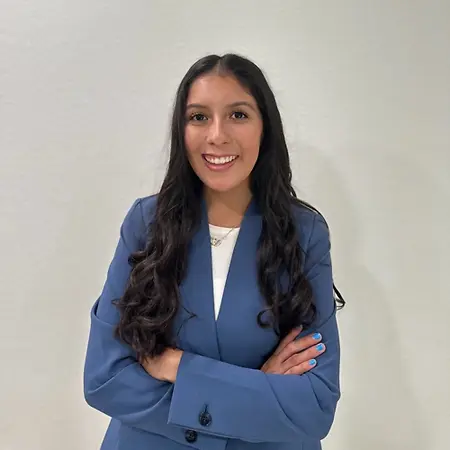
Her Story
About Vannesa
My journey in healthcare began in high school when I volunteered at CHOC Children's Hospital, inspired by my grandmother who had a stroke when I was younger. Seeing her go through different health transitions as she aged exposed me early on to hospitals, skilled nursing, and home health, and I always thought I wanted to be a doctor. I pursued a degree in public health with a minor in gerontology, and worked as a CNA in skilled nursing facilities on and off during school. About a month before graduating college, my career path shifted when I was offered an administrator-in-training position, changing my plans from PA or accelerated nursing school to healthcare administration. Now, as an administrator overseeing entire skilled nursing facility operations, I manage all departments - nursing, dietary, activities, physical therapy, social services, laundry, housekeeping, and maintenance. My experience as a CNA has been invaluable because I can relate better to the hands-on staff I work with, and I'm not shy about helping patients directly with their requests. I also spent about a year and a half on a church mission trip in Peru, which taught me crucial communication skills and how to navigate difficult situations with very different personalities. I work with Caprico, a company with buildings in 17 states, and I'm currently at my second building as administrator. I started there just 2 months ago during a difficult period with inspections and care challenges, but I'm committed to improving outcomes for our residents and supporting our staff through the complexities we face, including increasingly behavioral patients and individuals transitioning from homelessness.
Her Interview
Ten minutes with Vannesa
01What do you attribute your success to?
I attribute my success to remembering my why - the reason I chose this field in the first place. For me, it's to be able to make an impact and help serve others in the community, and it's something I've always been very passionate about. When I'm going through difficult and hard times, like when I walked into my new building 2 months ago that was going through a lot of difficult situations with inspections and care, remembering that purpose - that my goal is to help continue to improve the care for the patients and make that difference in their lives - helps me push through all the revisits and work the long hours that I have to. I think if you remember the why behind what you're doing, you will be able to have that reflection of the long-term reason of what the work you're doing will have versus the short term. I also help my staff remember their why by asking them what made them choose healthcare, and I love to hear their stories. Helping them go back to that root cause, especially with difficult situations or difficult residents, helps them remember why we are here.
02What’s the best career advice you’ve ever received?
The best career advice I've received is to remember your purpose and remember your why. In this field, there's a lot of things that can go wrong and a lot of regulations we have to follow, but if you remember why you're in the field you're in and the reason why you're doing it, it'll help you be brought back to the reason that you're there. For me, it's to be able to make an impact and help serve others in the community, and it's something I've always been very passionate about - to make that positive impact and hopefully make the difference in the lives of not just one person, but the teams as well that I work with. If you remember the why behind what you're doing during those difficult and hard times, you will be able to have that reflection of the long-term reason of what the work you're doing will have versus the short term. At the new building I started at just 2 months ago, they were going through a lot of difficult situations with inspections and care, and I did walk into a difficult situation. But just having that why, and knowing that my purpose is to help continue to improve the care for the patients and make that difference in their lives, helped me push through all the revisits and work the long hours. I've done this with my staff as well - when I started, I asked them why they're in this position and what made them choose healthcare, because in the end, regardless of the department they chose, they chose to work in healthcare. I love to hear their stories, and helping them go back to that root cause, especially with difficult situations or difficult residents, helps them remember the why we are here.
03What advice would you give to young women entering your industry?
I would give them the advice that if you set your mind to it and you have the passion for it, go for it. It takes a lot of work, but in the end, the results and impact you can make in the lives of others is worth it. I just want young women to be able to find the thing that they're passionate about, and be able to set their mind to it, and be able to know that they can do it if they have their mind set to it. It's not easy being a female in this industry - it's definitely male-driven - but I do know that we have the capability to be able to achieve great things. Even if we encounter a lot of difficult situations, or we're just maybe the only female in the room when it's the meeting of just those in our position, like administrator meetings, it's okay to have questions and ask for help. I want to help reassure young women going into this field that if they do have that passion, they can do it, and that it will not be easy, but long-term will help give these long-term results to help impact the community and also the field that we are in. And if it doesn't work out, I want them to find the passion - something they're passionate about - because in the end, we need more female leaders. It's not a field that is very easy, but there's so many other leadership roles within healthcare. If they like working in that field of healthcare but maybe not as the administrator of skilled nursing, keep pursuing and keep pushing to find what they are passionate about, because if they're passionate about what they do, it will help them be able to continue to press forward during the difficulties of their roles and make that impact in our communities.
04What are the biggest challenges or opportunities in your field right now?
I think one of the biggest challenges is the complexity of patients we're seeing as residents coming into the facilities. It's definitely becoming more complex - when I was a CNA, I didn't see as many complex patients with behaviors or patients without as much support. We are seeing an increase in residents that are suffering with medical conditions that are more behavioral, such as mental health diagnoses, and we're trying our best to be able to take care of them. I think there's definitely a need for researching more into these areas and seeing what else we can do for them, versus jumping to giving medications. We're highly regulated, so it's not like we can just give them anything, but we need to see what other research can be done to help these individuals be more at peace and more calm in these new environments as they enter skilled nursing facilities. We also need to figure out how we can better support them with programs to transition into a lower level of care, if applicable for their medical needs. In my area, we are seeing a lot of residents that originally were homeless or people that don't have established housing, so it's very difficult to bring them in and then try to help them be set up for success after as well, so they don't decline again and end up in the nursing home again for wounds or injuries. A lot of them have suffered physical injuries from others as well, and we're trying our best to help make sure that they are protected as they transition to a lower level of care after skilled nursing. The complexity of patients has been the most challenging thing, and we're just trying our best to help take care of them and help them transition to a lower level of care so we can continue to bring in others that do need that skilled nursing assistance from therapy and rehab and wound care, as a lot of them are still in the hospital and needing that care.
05What values are most important to you in your work and personal life?
I think integrity and compassion are very important in this field of work. You just have to have that compassion and patience to be able to put yourself in the shoes of the staff members that are going through hard things - a lot of them have shared with me the hardships they're going through outside of work, yet they still come in and help take care of others. We have some behavioral patients, and obviously it's not their intention to offend staff or make them feel a certain way, and I try to help staff better understand that it's not the patients themselves doing it intentionally, but just the diagnosis that they're suffering with. I also try to be compassionate toward the patients that are here in the facility going through this transition for the first time, or their loved ones who are seeing their family member in this setting. Most of them probably would love to have them at home, comforted and by their side, but if they're not able to take care of them, I know it's a hard transition. A lot of the residents are going through the transition of being able to do everything on their own and then having to now ask for help, which can be very hard. It's something that I also struggle with - I like to be very independent - and I know a lot of the individuals that come in like to have their freedom of choosing what time they eat and everything they want to eat, versus we have set meals and set schedules. They're struggling with losing their independence in a way, having to rely on someone to sometimes even assist them to be fed. Some of them come in from a shock accident, like they had a fall and were doing everything on their own before, and now all of a sudden they have a surgery they're recovering from or a fracture. It's that sense of losing independence and their fear of not being able to return back to how they were and the lifestyle they had prior. I try to be compassionate and patient, as some of them have a lot of questions and concerns, and I try to help them with the transition. We also have core values with Caprico: C is for customer second, making sure we fully train our staff; A is for accountability; P is passion for learning; L is for love one another, which is one of the most important core values because regardless of what you're going through or what maybe one of the residents has said, you still have to show that unconditional love to everyone; I is for intelligent risk; C is for celebrate; and O is for ownership, where we emphasize that regardless of what role you have in the facility, if you take ownership of your role, you can be that difference in the lives of others.
Join Influential Women and start making an impact. Register now.