How She Redefined Success After Achieving It
Women reflecting on what success meant once they reached it.


Women reflecting on what success meant once they reached it.

Success revealed itself to me not at the top of the ladder, but in the moment I allowed myself to grow, pivot, and become comfortable with not having it all figured out.

After graduation, success was defined for me as landing a job in my field. I am very fortunate to say I did not just land a job, but I ended up getting five different offers, with one of them being for my "dream" position. I did not just complete my goal; I hit a home run. Now, success is less about a specific goal, a more about a lifestyle. I approach each day at my current position with a grateful heart and an ambition to produce the best work I can for my customer, my company, and the warfighter. Facing such a tough job market right out of college taught me both grit and gratitude, and that is what I bring to work every day to define my success.

For most of my career, I had a very clear picture of what success looked like. It looked like strong revenue growth. Clean financials. Efficient systems. A full schedule. A team that moved quickly, hit targets, and didn't call out every other day. In veterinary leadership, especially in hospital management, those benchmarks are easy to measure. They're tangible. They're objective. And for years, I chased them relentlessly. I believed that once I achieved them, I would feel like I had "made it." And eventually, I did. The hospital was performing well. Profit margins were healthy. Operational systems were structured and predictable. We had improved workflows, tightened inventory control, refined scheduling, and strengthened accountability. On paper, it was everything I had worked toward. But what surprised me most was that I didn't feel the way I expected to feel. There was no dramatic sense of arrival. No emotional exhale. No moment where I thought, This is it. I've reached success. Instead, there was a quiet realization. Success, at least the way I had defined it, was incomplete. Then, there was a shift. It didn't happen during a Teams Call or a monthly review meeting; it happened in the smallest moments. It happened when a team member asked for guidance not just on a task, but on her career path. It happened when conflict surfaced between departments, and I realized operational efficiency didn't automatically create cultural alignment. It happened when I saw how much weight leadership decisions carry, not just financially, but emotionally. I had helped build a productive hospital, but productivity and purpose are not the same thing. That was the moment my definition of success began to change. Early in leadership, success feels like a climb. Every milestone reached proves you are capable. Every improved metric reinforces that you are effective. Revenue increases validate strategy. Profit margins validate discipline. Efficiency validates the structure. Don't get me wrong; those things matter. They are the backbone of sustainability. But once those numbers stabilize, something else becomes more visible. You begin to see that the true measure of leadership isn't just in growth charts; it's in your people. Is my team developing? No, wait, is each team member developing? Are they confident in decision-making? Is my hospital culture strong, even is I'm not in the room? I started noticing that the most meaningful wins weren't always financial. They were the moments when a team lead handled a difficult client without escalation. When two departments resolved tension without defensiveness. When someone stepped into a higher level of accountability without being pushed. Those weren't line items on a P&L, but they were indicators of something deeper. Achieving success doesn't reduce responsibility; it increases it. When you are building toward success, your focus is upward. You are proving yourself. You are establishing credibility. You are driving results. Once you achieve this, your success takes a shift. Success becomes something you strive for, for your team. You want to build other leaders, not just great employees. You want to hold standards without losing your empathy or compassion, and you want to sustain a positive culture, not just productivity. It's about integrity between values and action. It's about building something sustainable, not just impressive. It's about who I am becoming while leading, not just what I am building.
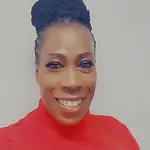
Success used to mean achievement for me—earning qualifications, leading teams, and building a respected career in mental health across the UK. But after reaching those milestones, I realized success isn't a destination, it's a decision to keep growing. Starting over in a new country, returning to student life, and supporting diverse communities has redefined success as impact over titles. Today, success means using my experience to uplift others, advocating for mental health, and creating spaces where people feel seen, supported, and empowered to thrive—no matter where they start.

By the time I reached what many would call success, I had spent over a decade building my career. I worked as a privacy and regulatory attorney in firms and as an executive inside complex healthcare and life sciences systems. I advised boards, built compliance and privacy programs, and even wrote language that was later incorporated into California privacy law. By every external measure, I had made it. I had the title, the credibility, and the influence. Then, without warning, I nearly lost my life to a pulmonary embolism. Before that day, I saw success as being close to power, handling complexity, and being the one who could take on anything. Afterward, my idea of success changed. It became about sustainability, not just for me, but for my family and for the women who would follow. My health crisis made me face a hard truth. I had succeeded in a system that subtly rewards people for running themselves down. Women, and leaders in general, are often praised for how much they can handle. We take on conflict, manage risk, do invisible work, and push ourselves to seem always available and ambitious. We get called resilient, dependable, and strong. In many professional environments, strength is still measured by how much you can endure. During recovery, I no longer had endless energy, and I still do not. I live with the long-term effects of that health event and am now permanently disabled. My energy is limited. My body and mind need support. I now see leadership through the lens of disability. Accessibility was no longer a policy issue; it's personal. Once you notice the gaps, the assumptions that everyone has endless energy, perfect mobility, and is always available, you cannot ignore them. I used to think I was an ally to the disabled and neurodivergent community. Now, I am always aware of how structures leave people out. I started to see that the way I had defined success was based on a narrow idea of who leadership was meant for. That idea no longer included me. After my health crisis, my idea of success shifted. It was no longer just about achievement. It became about alignment. Now, success means building work that does not require people to hide who they are. It means making accessibility part of the foundation, not something added later when someone has trouble. It means creating cultures where caregiving, disability, and human limits are seen as real and planned for, not as weaknesses to hide. This shift led me to start Heart Led Leadership, my speaking and coaching platform. It was not a rebrand, it was a turning point. As a lawyer, I was trained to look at systems, to ask where risk lives, who carries it, and how power is shared. After my health crisis, I started to look at workplace culture in the same way. I asked: "Why are women praised for resilience instead of invited to redesign the conditions that require it? Why is burnout treated as a personal failure rather than a predictable outcome of unsustainable design? Why are accessibility and flexibility framed as accommodations instead of infrastructure?" Heart Led Leadership became my answer. It is a framework that looks at systems and shifts the focus from individual endurance to how work is designed. Instead of asking women and others to be more resilient, it invites organizations to talk about how work is set up in the first place. Things like workload, advancement, how quickly people are expected to respond, and what counts as good performance are not set in stone. They are choices we make. And design can evolve. Better systems are not just fairer. They are more strategic. They reduce risk, including the loss of talent to burnout and disengagement, and help keep people. They make organizations stronger at a time when transparency and trust matter more than ever. Under the Heart Led Leadership framework, accessibility and flexibility are seen as benefits for everyone. When organizations build inclusion from the start, they do not lose standards. They become stronger and more durable. They open the door to more talent and reduce the extra burden placed on women, caregivers, and people with disabilities. Heart Led Leadership does not lower standards. It makes systems stronger so that people do not have to hide parts of themselves to succeed. For me, redefining success meant I no longer had to prove I could survive a broken system. It meant using my influence to help change it, so the next generation of women can lead without having to just survive. Redefining success became about more than my own recovery. It became about how I could use my influence. If women reach positions of authority and keep using the same models that wore them out, we have not moved forward; we have only survived. But when women in power start to change the conditions of power itself, we create new possibilities. We normalize flexibility without shame, speak openly about health and disability, measure performance without sacrificing well-being, and make space for leadership styles that are strategic and humane. As a mother of three daughters, this is even more personal. How I define success becomes the example they see. I do not want them to think that being in charge means hiding their needs. I want them to see women who are ambitious and accessible, powerful and whole. I still believe in excellence. I still care deeply about impact. But success is no longer about how much I can carry. It is about what I build, and whether the systems I help shape let other women, including those with disabilities, caregiving duties, or invisible challenges, rise without breaking. I achieved success once. Redefining success and making it possible for others has been the more meaningful accomplishment.

Success is an ever evolving achievement. It can change daily, weekly or monthly. Life situations can alter what we once believed to be successful. In High School, my idea of success was to own and operate my own business. When I hit college my idea of success was to get my diploma and find a career in that field. Somewhere in there, success was marriage, house with the white picket fence and kids. However, life had a different direction for me to follow. I landed in unfavorable situations that in the moment felt absolutely soul crushing, but were miracles in disguise. Thirteen years ago, I got my start in the management roles and once I hit one level I relished in it for a moment, but I wanted the next step up, and then the next and the next. When my grandmother passed it shaped my idea of success. Yes I still wanted to grow with a company and keep moving up that ladder, but I also came to realize that my success is nothing without the family I have at home waiting for me. I can continue to climb, move or shift my title or position and always want more and more and more and call it the next level of success. It was the death of my husband that made me truly understand that real success is finding a way to be successful at home and professionally. The famous work life balance! I seek that balance every day and I call the days I can come home and spend quality time with the kids and truly leave work at the door. That is my true success. I'm not perfect at it and I fail more often than not, but the small wins count and mean just as much as my big wins.
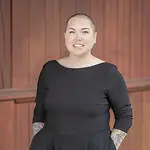
Success used to mean reaching a goal. Now, it means building something that continues to grow beyond it. I've learned that achievement isn't an endpoint; it's a starting point. What matters most is how you evolve, how you use your voice, and how you create impact with what you've built.

I once thought success was an arrival; a series of milestones, visible and completed. But after seven promotions in three years and impacting thousands through service and creativity, I realized that success isn't a destination. It is an evolution of dimensions. Today, my success is measured by alignment. It's no longer about the hustle of the shallows; it's about the responsibility of the deep. I navigate by one constant mantra: People first. (The heartbeat of the ecosystem.) Systems strong. (The currents that sustain progress.) AI smart. (Guiding innovation with ethical precision.) Success is not what you reach. It's the architecture you choose to build, and the person you choose to become, once you get there.