The Opportunity She Almost Missed
Stories of women who nearly passed on something that changed their lives.



Stories of women who nearly passed on something that changed their lives.
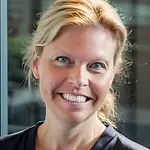
I had just lost my job; something that could have easily felt like a setback, but instead of rushing to replace what I had lost, I stayed with the question that wouldn't leave me: Why does AI feel right sometimes… and completely off other times? The more I explored it, the clearer it became: The problem wasn't just what AI produces. It was what happens next. What happens when someone reads it. Interprets it. Acts on it. That's where the real impact lives. That's where trust is built or broken, and that's the part no one was really focusing on. So I stopped trying to fit what I was seeing into existing categories and started building something around it instead. Not a better model. Not a smarter system, but a layer that sits in between, between AI output and human action. A layer designed to protect something we don't talk about enough: Human judgment. There was no roadmap for this. No clear category. No obvious next step. Just a growing sense that if I didn't follow this idea, I would regret it. So I did.

My journey has been shaped by perseverance, growth, and a deep commitment to making a meaningful impact. This recognition is not only a reflection of my work but also serves as a reminder of our responsibility to lead with purpose, empower others, and create opportunities for future generations. I am grateful to be part of a community that celebrates and empowers influential women, one that embodies strength, dedication, and vision, and is committed to driving lasting, positive change.
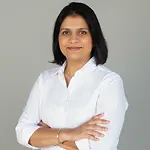
For most of my career, I pictured myself exactly where I was: deep in the code, solving complex problems, building products from scratch. I started coding in school, the kind where you lose track of time and look up to realize ten hours have passed, and that passion carried straight into my professional career. After nearly a decade in product development, I had found my groove and honestly, I was comfortable there. When a leadership opportunity came up, my first instinct was to say no. Managing technical teams, representing as a technical expert in front of clients, navigating the human side of technology rather than just the technology itself, none of that was part of the picture I had drawn for myself. I did not think I had it in me. And I think that feeling is more common than we admit, especially for women in technical fields who have spent years proving their expertise and are suddenly asked to pivot into something that feels entirely unfamiliar. But I said yes anyway. And it changed everything. The discomfort of unlearning what I thought I was and relearning who I could be turned out to be the most important work I have ever done. Building high-performing teams, watching people grow, and knowing that the impact I am making is so much bigger than anything I could have built alone, that is what I would have missed if I had walked away. To any woman standing at that same crossroads, the discomfort you are feeling is not a sign that you are in the wrong place. It is a sign that you are growing. Stop waiting until you feel ready, say yes first, and trust that you already have what it takes.

There was a moment in my career when I was offered the opportunity to step into a Project Coordinator role and my first instinct was to say no. Not because I didn't want it, but because I wasn't sure I was "ready." At the time, I had built a solid foundation as a Serviceability Specialist. I understood operations, mapping, and support, but stepping into project coordination felt like a different level. It meant visibility, responsibility, and stepping into rooms where I would be expected to lead, not just support. I questioned myself a lot in that moment: Was my experience enough? Would I be able to keep up? What if I failed? But, then I realized something; growth doesn't come from staying where you're comfortable. It comes from stepping into the unknown and trusting that you'll figure it out along the way. So instead of saying no, I said yes. That decision changed everything. It pushed me to think bigger, speak up more, and truly start owning my path in project management. It also showed me that readiness isn't about knowing everything. It's about being willing to learn, adapt, and lead anyway. Looking back, that "almost no" became one of the most defining yeses of my journey.

The opportunity I almost missed was valuing myself enough to make the difference in the world I always knew I was meant to make.

They used to tell her she was "the future." In the cramped offices and echoing community centers, she gave everything, late nights, weekends, pieces of herself she didn't even realize she was handing over. She believed in the mission because she believed in them. The mentors. The leaders. The ones who said they loved the youth and lived for the work. For a long time, she thought exhaustion was just part of purpose. But slowly, things shifted. The same people who once praised her ideas started questioning her tone. The ones who encouraged her leadership began pulling her aside, reminding her to "stay in her place." Opportunities she earned turned into conversations about why she wasn't "ready." And when she was ready, when her voice carried, when others listened, that's when the resistance became undeniable. She wasn't imagining it. She was outgrowing the space they needed her to stay small in. The disappointment cut deeper than the workload ever had. It wasn't just burnout, it was betrayal. These were the people who taught her to care loudly, lead boldly, and fight for change. But when she started doing exactly that, she became… inconvenient. At one point, she even thought, this should have been my dissertation topic. Not theory. Not models. But this exact unraveling: what happens when mentorship turns into control, when growth threatens the very people who once encouraged it. She was living the research in real time, collecting data in the form of silence, side-eyes, and closed doors. For a while, she almost left. She updated her resume. Looked at jobs that felt safer, and quieter. Considered walking away from the very work that once felt like a calling. It would have been easier to disappear than to keep pushing against walls that suddenly appeared where doors used to be. But then she asked herself a harder question: If they're the reason I leave, who loses? It wasn't them. So, she stayed, but not in the same way. She stopped waiting for their approval. Stopped shrinking her voice to make others comfortable. She found allies in unexpected places, people who cared more about impact than hierarchy. She poured into the youth the same way she always had others pour into her, but now with clearer eyes. She saw the system for what it was, and chose to navigate it, not be defined by it. And slowly, something changed. Not them. Her. She realized "how she did it" wasn't about winning them over or climbing their ladder. It was about refusing to become what disappointed her. It was about building something honest in a space that often wasn't. It was about staying, not because they deserved her, but because the work still did. They may have tried to make her the problem. But she became the proof.

One of the most defining opportunities in my career was also one I almost didn't take. When I was offered a leadership role focused on operations (overseeing areas like finance, human resources, and organizational systems) I hesitated. My background was rooted in direct service, working closely with youth and families. That was where I felt most confident and connected. Stepping into a role that required a different skill set, and one that felt less visible but deeply complex, was intimidating. I questioned whether I was ready. I wondered if I had enough experience in areas that weren't traditionally part of my training. For a moment, it felt safer to stay where I knew I was effective. But I also recognized something important: the long-term impact I wanted to have couldn't be achieved by staying in my comfort zone. I had seen firsthand how strong programs could struggle, not because of a lack of passion or commitment, but because of gaps in systems, infrastructure, and sustainability. I realized that if I wanted to help organizations not just serve, but truly scale and last, I needed to understand and lead those systems. So I said yes. That decision changed the trajectory of my career. It pushed me to grow quickly, to build new skills, and to see the work through a different lens. Today, I operate at the intersection of mission and strategy ensuring that the programs I once delivered are supported by the structure they need to thrive. Looking back, that moment taught me that the opportunities that feel the most uncomfortable are often the ones that expand you the most. Growth rarely feels like confidence at the beginning. It feels like uncertainty, risk, and a willingness to step forward anyway. Sometimes the most powerful thing you can do for your future is say yes before you feel ready.

My turning point wasn't dramatic. It was a quiet moment of truth that felt like God placing His hand on my shoulder and saying, "You cannot stay here." I realized I had built a life around endurance instead of alignment. I had learned to tolerate what hurt me instead of choosing what healed me. And I knew that if I didn't choose myself soon, I would lose the parts of me that were still trying to survive.
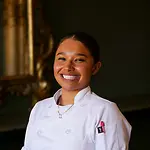
I had applied to be a cook, at the kitchen I currently work at, but the chef wanted me to be his Sous Chef for the Garde Manger Banquet kitchen. At first, I thought I wasn't ready to step into that role because I feel I have so much to learn, but I took the opportunity anyway, and I've grown so much from it. I'm thankful I took the opportunity.
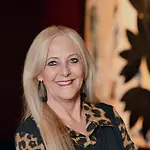
In the late nineties, I was busy and focused on switching out my entire career and life. My old hospitality boss Monia offered me a hospitality recruitment job three times before I accepted the idea and job. I was a little scared of a one hundred percent commission job while I was used to a management salary and benefits. I finally accepted the offer on a trial basis and within six weeks I nailed the results. Sometimes, the paths that we fear the most end up being the best thing for us at the end of the day.
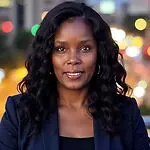
My "no" moment came when I tried to avoid a career in tech because it intimidated me. Saying yes anyway taught me that growth often lives on the other side of our most certain plans.
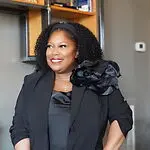
I almost walked away from writing 7 Rules of Resilience because I questioned whether my story, setbacks, and lessons were enough to help someone else. But I chose to step forward when I realized the very struggle that made me want to quit was the reason someone else needed my words.

I almost said no to sharing my story publicly after breast cancer because I was still healing and didn't feel ready to be seen. But stepping forward turned my pain into purpose and ultimately led me to create Bravery Bra so other women could feel supported during one of the hardest moments of their lives.

There was a time when I almost said no to putting myself out there more publicly in the tech community through speaking at events, creating technical content, and engaging with developer communities. I kept feeling like I needed to be more experienced, more confident, or more qualified before stepping into those spaces. But choosing to move forward helped me realize how important representation truly is. Over time, I started hearing from women and students who said that seeing another woman actively talking about AI, open source, and developer technologies made the industry feel more approachable and achievable for them. That reminded me that sometimes the opportunities we hesitate to take are the very ones that can inspire someone else to believe they belong too.

One moment that truly changed the trajectory of my career started with what I thought was just a lunch meeting with my boss. I walked in fully expecting to be asked to move into a sales role. Instead, he looked at me and said he wanted me to lead and build the Account Management department. Honestly, my first reaction was uncertainty. Sales felt familiar and safe. Building a department from the ground up felt big, intimidating, and full of unknowns. But he saw something in me that I hadn't fully seen in myself yet. I chose to say yes anyway. That decision pushed me outside of my comfort zone and into one of the most rewarding chapters of my career. I had the opportunity to help shape a team, create processes, mentor people, strengthen customer relationships, and truly make an impact on both the business and the people around me. Looking back, that lunch taught me something important: sometimes the opportunities that scare you the most are the ones that grow you the most.

I almost kept my hormonal health journey private because it felt too personal to share. But choosing to step forward after a diagnosis I never wanted became one of the biggest opportunities of my life, and ultimately led me to help women reconnect with their bodies and hormonal health.
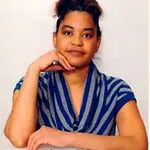
I nearly declined getting my Masters Degree due to cost of education. However, I stepped up to pursue my career I have always wanted and I am well on my way to success. "You have to spend money to make money."