When She Became an Advocate
Speaking up for an issue or person beyond herself.



Speaking up for an issue or person beyond herself.

My dual role as an international singer, and college professor demand that I dare to be different, not wanting to interpret operatic roles, songs or characters like everyone else expects. Working on syllabi for the classroom that are unique and send my students into the 'amazing lecture mode.' You must be able to back it up with knowledge and experience. Take the chance, go out on a limb and show the world that within the parameters of both the performance and teaching worlds, you can create your own unique style. In the singing world, don't let them know you want it so much! That takes the pressure off yourself. Also be totally prepared before you go out on stage or step into a classroom. If you don't, you're heading for failure.
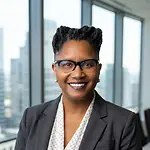
Once I realized there were people advocating for me and the doors that advocacy opened, I knew I wanted to, no had to, do the same for others. That led me to work that positioned me to be an even more influential voice for others. What I have learned is that my voice might not be heard every time, but a voice never spoken will never be heard. I keep speaking out to support others until I am heard.

I became an advocate by seeing how much a person's support and encouragement can change their confidence and future. I found my role in advocating for students helping them recognize their potential, navigate obstacles, and believe that their circumstances do not have to define them; real change happens when we consistently listen, show up, and give people the tools to advocate for themselves.
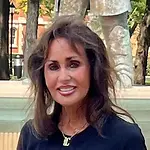
I became an advocate for sculpture because the three dimensional forms have the power to confront the viewer. Through creating my art, sculpture is not a passive medium but a powerful tool that can change lifelong learning and community dialogue.

Advocacy started long before I ever called it advocacy. I grew up in a low-income family, and I was the first person in my family to graduate from high school and then go on to graduate from college. There wasn't a roadmap for what that was supposed to look like. No one could hand me a step-by-step guide for college applications, navigating professional spaces, building a career, or figuring out what I was capable of. A lot of it was learning as I went. I had to ask questions. I had to figure things out. I had to be willing to admit when I didn't know something and then find someone who could teach me. And there were plenty of moments when I walked into rooms wondering if I really belonged there. But I kept walking in. That experience shaped the way I approach my career and the way I see other people. I know what it feels like to have the ambition but not necessarily have the access, connections, or knowledge that make the path easier. I also know how much one person can change things simply by taking the time to explain something, answer a question, open a door, or tell you, "You belong here." That's where I found my role in advocacy. I've learned that you don't have to have a fancy title or a huge platform to create change. Sometimes advocacy looks like speaking up when something doesn't make sense. Sometimes it looks like asking the question everyone else is too afraid to ask. Sometimes it means sharing what you've learned so someone else doesn't have to learn it the hard way. And sometimes it means being the person you needed when you were starting out. My background taught me that hard work can take you incredibly far, but I've also learned that hard work shouldn't have to compensate for a lack of access or information. People deserve opportunities to succeed, but they also deserve someone willing to help them understand how to reach those opportunities. I didn't start out knowing how to navigate these spaces. I learned by doing it, making mistakes, asking questions, getting back up, and refusing to let not knowing something convince me that I couldn't learn it. Now, I want to make the road a little easier for someone else. Because being the first doesn't just mean being the person who gets through the door. It means realizing that once you've figured out how to open it, you have a responsibility to hold it open for someone coming behind you. That's what advocacy means to me: taking everything I've had to learn along the way and making sure someone else doesn't have to figure it all out alone.

As women, we need to not only have confidence in ourselves but empower other women to feel the same.
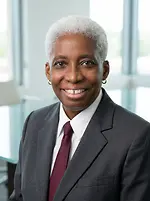
I became an advocate when I realized that my most important role was to perform so that I could meet the needs of a kindergarten student. She was the most important audience member. Her needs were more important than those who held fancy titles or held keys to important offices. I kept my focus only on her needs and made myself accountable to voicing her individual concerns. Her educational concerns were my own. My purpose was to empower her. That was my aha moment. When that became my focal mission, other tasks fell in place. What I realized was that if one stays focused on the purpose of clinical teaching, assessing, prescribing, implementing, and evaluating, the mission will be accomplished. It was my responsibility to empower my student. When I kept my focus on my student, incredibly the parents, colleagues, and administration found their proper place within the universe.

For a long time, I didn't think of myself as an advocate. I thought of myself as someone who worked hard. I'm the first-generation daughter of immigrants, I've had a job since I was 14, and I put myself through college working in hair salons, nursing homes, kitchens and front desks. My mom was my first example of what it looks like to wear every hat and keep going. That changed when I landed at A&H. After almost 13 years as a flight attendant, I was a new mom looking for a way back into work during the pandemic. I found Apis & Heritage Capital Partners through The Mom Project and started as a part-time admin. Four years later, I run the firm's back office. Along the way I wondered whether I belonged. Then I realized that if I treated my seat like luck to protect, I wasn't making it any easier for the next woman to earn hers. My role turned out to be the work I already do. I'm in operations, so my advocacy doesn't look like a podium. It looks like hiring processes that give people from nontraditional paths a real shot. It looks like review systems where everyone knows how they're measured and what it takes to grow. It also shapes where I choose to work: A&H helps employees become owners of the companies they help build, which is one practical way to close the wealth gap. What I've learned about creating change: - Raise your hand, even when you don't feel qualified or ready. That's how you learn. - Take ownership of what you know and say it out loud. That advice from my boss changed how I work. - Nothing is wasted. Every odd job was training for what came next. - Change usually isn't loud. It happens in the systems: who gets the interview, how people are reviewed, who gets the next opportunity.