When Women Realized They Were Allowed To Want More
Stories from women who stopped settling and admitted they were meant for something bigger.



Stories from women who stopped settling and admitted they were meant for something bigger.

There was definitely a time when I felt a quiet pull toward something bigger—but I didn't know if I was "allowed" to chase it. Life had me settling into roles that felt safe: helping others, serving in the moment, and meeting expectations. The pull I felt was subtle at first, almost like a whisper saying, there's more for you. What helped me acknowledge it was giving myself permission to feel that longing without judgment. I realized that wanting more didn't mean I was ungrateful for what I had—it meant I was capable of creating something meaningful on my own terms. That shift changed everything. It gave me the courage to leave old patterns behind, embrace risk, and build FCB—a space that reflects who I am, what I value, and the kind of impact I want to make.

Growth Often Feels Like Grief and Here's Why. Change asks us to leave something behind: a role, a routine, a version of ourselves we once knew. Even when the change is wanted, the loss of the familiar can produce a quiet, ambiguous sorrow, an ache that looks and feels like grief. Psychologists call this kind of unclear loss ambiguous loss, and it creates chronic stress because there's no tidy ending to process. That is why promotions, breakups, relocations, and spiritual awakenings can all feel like bereavement. At the nervous‑system level, transitions trigger the same alarm signals as other losses: disorientation, sleeplessness, irritability, and a sense of being unmoored. People often report feeling relief and deep sadness at once, an emotional paradox that's normal but disorienting. When the loss is unclear (a relationship that's changed but not ended, a role that's fading), people can become stuck in rumination and anxiety instead of moving through grief toward integration. A personal note For years I tried on other people's definitions of me. I followed the ideas and commands of who I was told I was supposed to be: the "standard" wife, the "good" mother, the woman who never complained. I thought conformity was faithfulness. It wasn't until I let go of those preconceptions that my eyes opened. Life is messy; everyone has an individual, divine plan; and every family looks different. That realization changed everything. It freed me to steward the gifts God actually gave me instead of performing to someone else's script. That kind of unmooring felt like grief. I mourned the version of myself that had been safe and known. I also discovered a strange freedom: grief cleared space for a truer life. Naming the loss made room for new identity to grow. Why this matters for women leaders Growth often requires risk: saying no, changing priorities, stepping away from expectations. Those moves can threaten social bonds and identity—especially in cultures that reward caretaking and consistency. For women in leadership, the stakes feel higher because identity and role are often tightly woven together. Recognizing grief in growth helps leaders practice compassionate transition work rather than forcing productivity or pretending nothing changed. When we treat transition pain as a normal part of growth, we give ourselves permission to mourn and to plan. That combination (honoring loss while taking practical steps forward) keeps us from burning out or making choices out of fear. Practical steps to move through growth‑grief • Name the loss. Write what you're leaving behind and allow yourself to feel the gap. Naming reduces shame and clarifies what needs tending. • Ritualize release. Small ceremonies—journaling, a goodbye note, a symbolic clearing—help mark the transition and give the community a cue that something has changed. • Map grief to gain. Make a two‑column list: what you'll miss; what you'll gain. Add one practical step toward the new role. • Create a grief‑to‑growth plan. Schedule one small, concrete action each week that moves you toward the new identity (a conversation, a class, a boundary). • Seek community. Share the experience with a mentor, peer group, pastor, or therapist; ambiguous losses are easier to bear together. • Practice Sabbath and rest. Treat rest as a boundary that protects your capacity to grieve and to grow. • Use reflective prompts in prayer or journaling: Who am I leaving behind? What do I fear losing, and what might I gain? When have I mourned a small ending and later discovered unexpected growth Closing encouragement Growth and grief are not opposites; they are companions. The sorrow you feel when you step into a new season is not a sign you chose poorly—it is evidence that something meaningful is shifting. Let yourself mourn the familiar, name the loss, and take one small, faithful step forward. Over time, the grief will loosen its hold and the new life you're building will feel less foreign and more like home.

There was a long stretch of my life when wanting more felt inappropriate; almost indulgent. I was surviving, contributing, showing up for others, and telling myself that should be enough. The pull toward something bigger didn't arrive as a dramatic epiphany; it showed up quietly, as a persistent sense that the way I was living wasn't aligned with what I was capable of building. For a long time, I mistook endurance for fulfillment. I had learned to be resilient, helpful, and adaptable, but not necessarily expansive. What shifted things for me was realizing that wanting more wasn't a rejection of my past or a lack of gratitude. It was an acknowledgment of growth. I wasn't asking for more comfort or recognition; I was asking for more alignment. Giving myself permission to want more meant letting go of the idea that my role was to fit into existing systems rather than create new ones. It meant accepting that the work I felt called to do didn't yet have a clear container and that waiting for permission was a way of staying small. That realization changed my path entirely. It pushed me from coping to creating, from managing circumstances to designing solutions. Wanting more became less about ambition and more about responsibility; to myself, to my family, and to the communities I care about. Once I allowed myself to want more, I also accepted that I was allowed to build it.

I realized I was allowed to want more the day I stopped apologizing for having dreams bigger than my circumstances. For years, I adjusted myself to fit what society expected — a daughter-in-law, a wife, a mother but not a woman with her own ambitions. When I decided to pursue my studies in the USA, people questioned everything: "Why is she going after marriage?" "Why can't she study online?" "She will forget her roots, her responsibilities, her home." Those words made me shrink myself… until life pushed me to see my truth. When I reached the United States and my son fell sick from the separation, I was ready to give up everything — my degree, my savings, and the dream I had carried for years. But in that breaking moment, one realization changed my path: my dreams were not a betrayal — they were a legacy for my child. I understood that wanting more didn't make me selfish; it made me strong. It made me a mother who leads by example. It made me a woman who finally chose herself. From that moment, I allowed myself to want more — not just for my growth, but for the future my son would one day believe he deserves. And once I gave myself permission, everything shifted. I became braver, more grounded, and more aligned with who I was meant to be. Now I know: Women don't need permission to want more. We only need the courage to believe we deserve it.
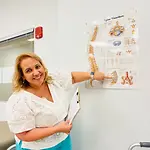
During many years I worked to molecular level like research inside of laboratory, only in contact with diagnostic systems. Working in clinical level with humans, real patients; I felt the necessity to educate in medical aspect many people with poor access to util information with respect to their healthcare. Diabetes and hypertension are the main conditions in the population and how avoid this conditions was motive for to work in function of education. Posteriorly, I train new generations of students that will work face to face with patients

Are you wrestling with a big change? Feeling imposter syndrome creep in? Wondering if what you've always done is still what you're meant to be doing now? For most of 2025, I lived inside those questions. They swirled around me like a slow-moving hurricane, not because I lacked skill, ambition, or passion, but because I was deeply exhausted. I was questioning sustainability, identity, and impact. I had built a life that looked successful on paper, yet something in me kept whispering, This can't be the final version. At the same time, I gained unexpected clarity around how undiagnosed ADHD had shaped my leadership style, my energy levels, and the impossible expectations I placed on myself. Everyone else seemed to see it before I did. That realization was both liberating and painful, especially while parenting a neurodivergent child inside systems that weren't designed with either of us in mind. I had spent years helping others navigate rigid structures while quietly contorting myself to survive inside them. The moment I realized I was "allowed" to want more didn't arrive as a lightning bolt. It was quieter...a slow, steady refusal to keep sacrificing my health, creativity, and family in the name of being "resilient." I wasn't failing. I was outgrowing a version of myself that had been necessary once, but no longer fit. In June '25, I stepped down from a district leadership role. In December '25, I made the decision to step away from public education altogether, at least from the inside. That choice felt radical and terrifying, especially for someone whose identity had been so tightly braided with service, leadership, and being needed. Letting go meant admitting that wanting more didn't make me ungrateful or disloyal. It made me honest. What's wild is how little time has passed and how much has already changed! In just a few weeks, I've built meaningful connections beyond the confines of my district bubble, presented on work that genuinely matters to me, made my LLC official, designed a homeschool path that honors my son's needs, and returned to creative projects that had been collecting dust in the "no time" pile. The parts of me I thought were gone were simply waiting for permission. This recalibration hasn't been easy. At times, it's been downright miserable. These kinds of shifts often get labeled a "midlife crisis," but a more honest description might be popping the hood or finally reading the ingredients list of your own life. When you do, you gain something powerful: understanding, agency, and direction. Stepping away didn't diminish me, my son, or my influence. It clarified it. Wanting more wasn't about abandoning responsibility, it was about choosing alignment. We're not just surviving this change. We're already thriving!