Recommending a Project Risk Management Plan
Identifying, Analyzing, and Managing Project Risks for Organizational Success

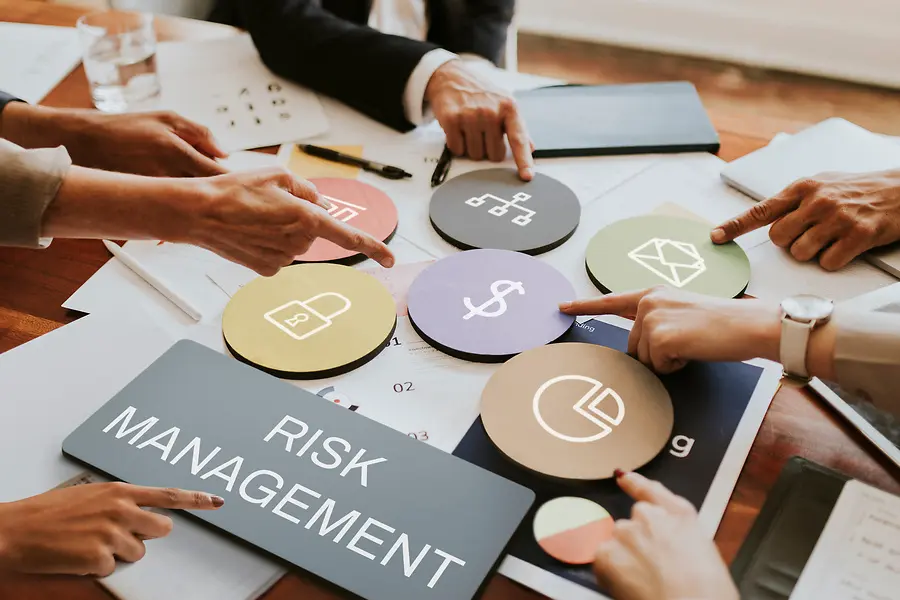
The next step in a project risk management plan after risk planning is to identify the potential risks and opportunities in the project. Risk can be defined as an uncertain event that has a positive or negative (upside or downside) effect on any one of the project parameters (Young, 2009). Some events take place during the lifetime of a project, and when such events occur, they can have a positive (opportunity) or negative (threat) effect on project measures such as project time, quality, and cost. Risk management allows board directors to have sufficient information that is vital to implementing their responsibilities, which will boost the organizational capabilities that create and promote organizational values (Bugalla et al., 2010).
The various factors and tasks to consider in risk identification are: reviewing the procurement plan, interviewing subject matter experts, brainstorming, analyzing assumptions and constraints, and using visual risk identification, such as diagrams. Identifying risks is a very vital step in a risk management plan; when risks are not identified, there will be no way to devise responses to such risks (Seyedhoseini & Hate, 2009).
The items that are needed in order to identify risks are: WBS (Work Breakdown Schedule), Procurement Plan, especially the Assumption Lists and Constraints Lists, Contract Product Description or information about the final goods or services of the procurement, Cost Estimates, especially if the project is a procurement-related project, Project-related Procurement Plan, if the project is a procurement-related project, and Resource Plan (Lindstrom, 2014). The formal processes involved in risk management are: planning, identification, qualitative risk analysis, quantitative risk analysis, risk response planning, and risk monitoring and control (Rose, 2013).
Among the many benefits of risk management are the successes it brings to the organization or project owners. Successful risk management requires risks and costs to be combined and balanced. When all the questions in the risk and cost columns are answered positively, the targeted benefits of risk management are achieved. This allows risk management to obtain a value proposition for the organization (Wallis, 2012).
Reviewing the Risks
The risk and opportunity management process is an ongoing process. From time to time, new risks and opportunities will emerge over the course of the year. In the same vein, some risks and opportunities will be removed from the register during the year. The likelihood and impact of risks and opportunities should be assessed frequently to monitor management actions related to risks and opportunities, usually on a quarterly basis. Sometimes, new management actions may be identified to further reduce risks and enhance opportunities.
Team members and staff members who are responsible for the action associated with a risk or opportunity should review and update the risk registers on a regular basis. In a situation where a risk is scoring high, the issue should be discussed with the managers who are in charge of those risks or opportunities.