Her Story
About Amanda
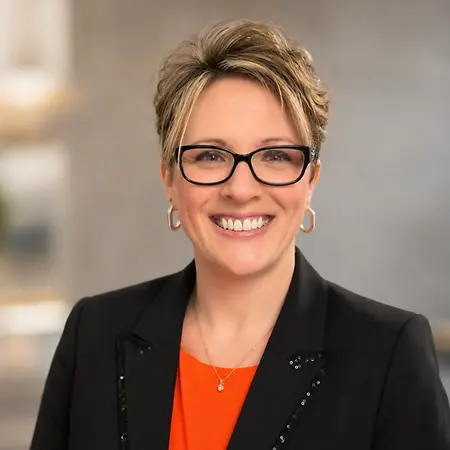
Dr. Amanda Robinson, PhD, MBA, MLS(ASCP), is a clinical and translational research scientist specializing in antimicrobial resistance and bacteriophage therapy. Her research focuses on how emerging scientific discoveries can be moved into real-world clinical use, particularly for patients with difficult-to-treat resistant infections.
Her doctoral work examined antimicrobial resistance from several perspectives, including trends in resistant infections, the economic feasibility of new treatment approaches, and the clinical evidence supporting phage therapy. Her goal is to help strengthen the evidence base for phage therapy and support its responsible development as a potential treatment option.
Dr. Robinson currently works as a Senior Analyst at Scout Clinical, where she develops clinical trial budgets and proposals for global biopharmaceutical sponsors. Her role requires her to interpret complex study protocols, identify operational needs, and translate scientific plans into practical trial frameworks.
Her broader experience includes next-generation sequencing in regulated laboratory settings, oncology clinical trial laboratory operations, STEM program leadership, and teaching biology and health sciences at the college level. This range of experience has given her a practical understanding of how research moves from the laboratory into clinical trials and, ultimately, into patient care.
With academic training in biology, business, and clinical research, Dr. Robinson brings both scientific and operational perspectives to her work. She is also an experienced educator and science communicator who enjoys making complex scientific topics clear and accessible to students, clinicians, researchers, and the public.
Her work is guided by a commitment to patient-centered research and to improving how new ideas in antimicrobial resistance, precision medicine, and translational science are evaluated and put into practice.
Her Interview
Ten minutes with Amanda
01What do you attribute your success to?
I attribute much of my success to curiosity and a genuine love of learning. I have never been very good at leaving a question alone once it catches my attention. I want to understand how things work, why they work, and what might work better. That curiosity eventually grew into a passion for both research and teaching.
Mentoring STEM students at the University of Indianapolis was especially rewarding. I enjoyed helping students recognize their strengths, explore career paths they may not have considered, and become more confident in their abilities. Their enthusiasm was also infectious and often reminded me why I was drawn to science in the first place!
During the COVID-19 pandemic, I decided that if the world was going to grind to a halt, I might as well use the time productively and pursue my PhD. I completed the program in three years while continuing to work full-time. It was demanding, occasionally absurd, and one of the best decisions I have made. It allowed me to deepen my expertise and focus my career more deliberately on clinical and translational research.
02What’s the best career advice you’ve ever received?
The best career advice I have received came from Iliza Shlesinger’s book Girl Logic: “Just because they don’t see it in you doesn’t mean it’s not there.”
That line stayed with me because careers are not always shaped by people immediately recognizing your potential. Sometimes you have to keep building, learning, and moving forward before others understand what you are capable of. It reminded me not to let someone else’s limited view of me become my own. Thanks, Iliza!
03What advice would you give to young women entering your industry?
The biggest thing that held me back was self-doubt. I spent far too much time assuming that the people I admired were somehow more capable, more confident, or simply made of different material. The older I have gotten, the more I have realized that they are normal people too. They may have taken a different path or approached things differently, but that does not mean the same goal is out of reach.
My advice to young women entering the field is to go for it before you feel completely ready. Do not wait for someone else to confirm that you belong there. Walk into the room knowing, “I can do this too.” Your path may not look like anyone else’s, but it is still yours to pursue. I wish someone had told me that earlier. It would have saved me a great deal of unnecessary mental anguish.
04What are the biggest challenges or opportunities in your field right now?
One of the biggest challenges in clinical research is the sheer weight of the regulatory and administrative process. Oversight is essential, but the system can become so complicated that promising discoveries spend years working their way from the laboratory to the patients who could benefit from them.
Women’s healthcare is another major challenge. Too many conditions affecting women have been understudied, underfunded, or dismissed for far too long, and patients are still living with the consequences.
The greatest opportunity in translational science is better collaboration. Researchers, clinicians, laboratory scientists, regulators, and industry teams often work in separate worlds, even when they are trying to solve the same problem. Bringing those groups together earlier could reduce unnecessary delays, improve clinical trial design, and help effective innovations reach patients faster without sacrificing scientific rigor or patient safety.
05What values are most important to you in your work and personal life?
I value curiosity, kindness, and humor most. Curiosity keeps me asking questions. Kindness keeps me grounded and appreciative. Humor keeps me from becoming an actual mad scientist.
Join Influential Women and start making an impact. Register now.