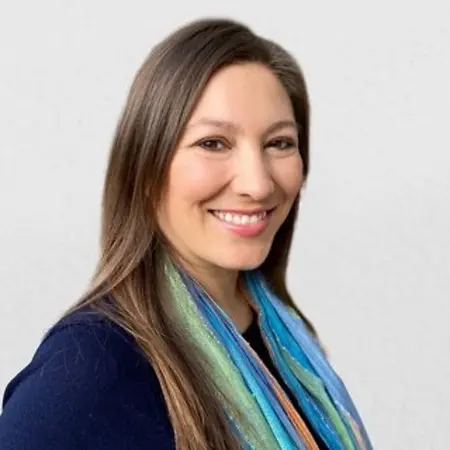
Influential Woman · Eldercare and healthcare advocacy
Andrea Pezel
Founder, Artichokes & Aging
Walnut Creek, CA 94598
Her Story
About Andrea
I've been in the field for 20 years, and I've always known I was going to be a social worker. I originally thought I was going to work with children, but I had the opportunity to work at Adult Protective Services and I saw the negative side of that, and I realized I could have a positive impact in changing the way people are aging and really maximizing their health. I started my career working in Adult Protective Services and Child Protective Services for three and a half years right after graduate school. Then I worked in medical social work, seeing people discharged from the hospital, for 12 years. During the pandemic, I realized there was going to be a shift to digital healthcare, so I went to a startup in digital healthcare providing support for caregivers globally for a little over 3 years. A year and a half ago, I founded Artichokes and Aging. I've seen many sides of aging - from adult protective services to the medical piece to global caregiving - and that has shaped how I think of aging in many cultures, in many countries, in many different aspects of people's life. I've really paid a lot of my dues working in these organizations, both big government and startup, and that led me to form my own company where I could see the need and see the gaps and fill that. My company is named Artichokes and Aging because aging is like an artichoke - it's layered, thorny, the heart is at the middle, it's really complicated but worthwhile. I support not only my team, but also community outreach to let people know that aging could be thought of differently.
Her Interview
Ten minutes with Andrea
01What do you attribute your success to?
I think that by nature, I have a lot of confidence, and I don't fear failure. I've also made very genuine relationships with mentors, with bosses, in a professional encouraging way, and so I've always felt like I have a strong belief in myself, I don't fear failure, and others have had a strong belief in me, even when it was a new challenge, or even when it was a new opportunity. I felt really supported.
02What’s the best career advice you’ve ever received?
It's sort of cliche, but it is, you know, do what you love, and find different mentors and different co-workers to understand different ways to utilize your skills. For me as a social worker, when I became a social worker, I didn't realize all the career paths. I thought it was very narrow, and so I think what I have learned from various mentors is to learn from others about what's on the table and what you can do - how you can expand your skills in non-traditional ways. I learned that careers and skills can be leveraged and utilized in different ways. I'm a social worker and now I'm a business owner, I worked at a startup, I led a company, I led a services department - there are different ways in which careers and skills can be leveraged and utilized.
03What advice would you give to young women entering your industry?
I would say reach out to other people who may have been in the industry. I think for a lot of us who have been in our careers for some years, I am certainly willing to talk with people, let them know what my experience is, let them know what options are. I don't think I always knew that reaching out to a mentor or reaching out to someone was an option, and I think that's one of the things I would recommend. And then the second thing I recommend - it sounds silly, but I always play the 'what don't you want to do?' game. People always say, like, what do you want to be, or what do you want to do? And I always play the, what don't you want to do? People always want to rule things in, but sometimes it's okay to rule things out. I think there's a little bit of that, of really understanding that you can have skills, but you don't have to use them in the traditional sense.
04What are the biggest challenges or opportunities in your field right now?
The biggest challenge is that ever since I graduated with my master's in social work, people never know what social workers do. They underestimate the importance of having a social worker because they always think it's for punitive or negative reasons - people think APS, people think CPS - but they never really understand what we do. And then in my work in aging specifically, the challenge is that as a country, as a culture, we tend to follow what has already been done instead of thinking outside the box. My company helps support aging in a way that promotes well-being and not necessarily following the standard norms. I respect the hospitals, I respect the doctors, but I do have a lot of questions when it comes to treatment and medications that are prescribed. I want to be a partner, but I also want to look closely at the 'it's always been done this way' mentality. Really looking at it from a holistic point of view is sometimes challenging when, especially with medical, especially with aging, sometimes it feels like the viewpoint is very narrow. As for opportunities, especially for women business owners, there's a lot of resources that people aren't aware of - everything from the state to local communities and agencies and groups. There's a lot more being done to support women business owners. There's also a lot more opportunities for collaboration, and less competition, but more collaboration. And I think leveraging technology, especially for social workers who may have certain specialties but haven't traditionally jumped into the tech piece - meshing my skills with technology helped me have a greater impact.
05What values are most important to you in your work and personal life?
Above all, being ethical - being ethical in front of people, being ethical behind closed doors, I think that's important. And I also think, in terms of leadership, one of the things that I learned over the course of my career is when I was younger, I used to really care what my bosses thought. And then as I became older and more in my career, I really valued what my coworkers thought in terms of my work. And now, even before owning my company, when I led a team, I really valued what the people who reported to me thought, because I want to make sure that I'm raising leaders, both professionally and personally, and I want to make sure that I'm doing right by not only the people I'm reporting to, but by the people who are reporting to me as well.
Join Influential Women and start making an impact. Register now.