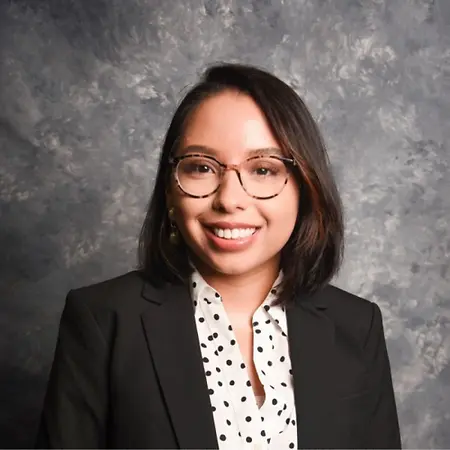
Her Story
About Berenice
I'm the daughter of immigrants and the first person in my entire family line to become an attorney. I'm also the only woman in my family, including extended family, to get a college degree and a postgraduate degree. My work is deeply rooted in human rights, encompassing immigration law, criminal justice reform, and advocacy for disenfranchised communities. I started my career leading state task forces on juvenile justice reform, working with coalitions of psychologists, restorative justice practitioners, educators, and lawyers to address the school-to-prison pipeline through the Transforming School Discipline Collaborative. I helped pass the Chicago Just Housing Ordinance, protecting people with nonviolent criminal records from housing discrimination. As a restorative justice practitioner trained by Dr. Robert Spicer, I approach all my work through a lens of empathy and restoration. During law school at Wisconsin, I focused on gendered violence, women's movements, femicide, and abortion in Latin American countries, and spent part of my 3L year studying in Brazil. I was selected for the prestigious Peggy Browning Fund Fellowship and later became the only person from my class at the Brooklyn DA's office selected for the Red Hook Community Justice Center Bureau Unit, the only restorative justice prosecutor's unit in the country. Now, leading the Francis Law Center, I represent immigrants throughout the country on human trafficking cases, detention matters, and federal litigation challenging constitutional rights violations. I'm fluent in English, Spanish, Portuguese, and French, allowing me to serve diverse communities. As a professor at local Chicago universities, I teach criminal law and social justice, examining the criminalization of different groups through the lens of race, poverty, and gender. I feel like I'm on the front lines of defending human rights in an era of mass abuse, and all my work is driven by the sacrifices my parents made and the responsibility I feel to break generational curses and change our family legacy.
Her Interview
Ten minutes with Berenice
01What do you attribute your success to?
I attribute my success to my parents, my sisters, and where I came from. My parents dealt and endured so much - my mom was a victim of domestic and sexual violence from a pretty early age, and both of them came to the U.S. and essentially had to raise themselves. They had to do the best they could to give us a better life and access to opportunities. My younger sister has always looked up to me, so it has always been my mission to set a good example for her and be the support that I never really had from my parents, not because they didn't want to give it to me, but because they didn't understand what a scholarship was or what the LSAT was. My mom only got an 8th grade education, and my dad only got a 5th grade education. Because of their experiences and sacrifices to improve their lives in this country, and because my little sister looks up to me for everything she does, I take my inspiration from them. I carry all of their experiences with me - my mom growing up in rural Mexico where there's no police, no hospital for 30 minutes, where scorpion bites can kill you, where young girls are married off at 15. I carry these experiences not to feel guilt or sadness, but to change their future, which is what I do. There's a poem by Joanna Raine that says 'I am my mother's mother' - I'm a product of who I came from and where I came from, and I will never forget where I came from. That's where I get my inspiration from, and that's why I'm a strong advocate for women and victims of violence.
02What’s the best career advice you’ve ever received?
The best career advice I got from my professor, Professor Wu, in my legal writing course in law school. She told me to lead always with intention, always never forgetting the human component of the work that you do. Even if you're a prosecutor and someone has committed a heinous crime, they are still a human, and they are still protected by our Constitution and the UN Convention on Human Rights. Because I'm a perfectionist and I feel so much responsibility - I've always wanted to have the answers that I, as a child, didn't have for my parents when they got letters from lawyers or needed help calling doctors - Professor Wu told me to give myself some grace. She said that as long as I don't forget where I came from, and that all of what we do as lawyers and even as non-lawyers, we should never lose the empathy for others. Our lived experiences are not things that make us weaker or that should contribute to imposter syndrome - all of those things are actually things that make us stronger. I don't have the answer to world peace, even if I hope that in my lifetime we will see positive changes for women, children, and vulnerable communities. I can't put all of that burden on myself, so all I can do is lead with these principles to best represent and advocate for people that have their voices taken away from them.
03What are the biggest challenges or opportunities in your field right now?
I think one of the biggest challenges in human rights and law, and even being an educator, is embracing diversity of opinion, embracing reform, and implementing empathy into our legislation, into representing clients, and into being more socially conscientious of what people around the world endure. Right now we're seeing people be disappeared from their homes and job places, and what are their crimes? Literally existing in a country that has these man-made borders that control who has privilege and who doesn't. The legislation we've seen is completely an attack to the essence of this country - we should never persecute someone for their freedom, for who they are, their identities, or what they believe in. A lot of the crimes I've seen happen are related to hateful rhetoric from leadership in this country and around the world that tries to kill any empathy that people might have for others. With civil unrest in Iran, potential World War III, new viruses, and economic decline, we're seeing leaders make everyone believe that certain groups are the enemy - just like in the movie Wicked, where the wizard made everyone believe the animals were the reason for suffering. The fact that we have forgotten the empathy and our history and our origins, and we're seeing our ability to have access to education severely restricted because affirmative action has been gutted - the fact that people have forgotten cases like Brown v. Board of Education and the work of Malcolm X, Assata Shakur, and Martin Luther King Jr. is very concerning. This era of anti-intellectualism is the biggest detriment to my work. People live in a bubble and don't know what's going on in the world that would cause people to need to migrate. I've had clients who voted for Trump and now are shocked when policies affect them - I always tell them, let this be a lesson that when they say we're just coming for the Mexicans or Venezuelans, one day they will be coming for you. It's exhausting because I wish the world would open up a history book and say we can't let this happen again.
04What values are most important to you in your work and personal life?
The values most important to my work and personal life center around nurturing my mind, body, and soul. I love seeing the world and learning new recipes, specifically continuing to utilize the recipes of my ancestors - my mom is from Central Mexico and my dad is from southern Mexico, and their types of cuisine are so different and diverse from each other. Continuing to carry my ancestors with me through cooking is very therapeutic for me. I also do therapy and always advocate for mental health because I know how many of us struggle with mental health issues, especially in these traumatic times. I'm a gym member of the Latina Sweat Project in Pilsen, Chicago, which has made fitness very accessible for Latina women and is taught by women of color. We do community events giving access to health and fitness activities to communities who might not have access, specifically because the Latino community has very high rates of obesity, diabetes, high cholesterol, and heart problems. I love traveling and solo traveling - I've traveled to about 15 or 17 countries since 2016, and most of them I traveled solo. I love celebrating other cultures, learning from their religions, and implementing them into my own values. Even though I have a fear of heights, during Christmas 2024 I solo traveled through Peru and hiked Machu Picchu. All of these things keep me going because I love that the U.S. has people from all over the world with beautiful parts that make their countries great. These trips are some of my greatest achievements - I'm a single, childless, overly educated woman that didn't fall into what is often a cultural trap for Latino women. I've always been a die-hard feminist, and doing these friend-centered and community-centered things help me continue to do this work and take care of myself.
Keep Exploring
More Influential Women · Illinois

Join Influential Women and start making an impact. Register now.