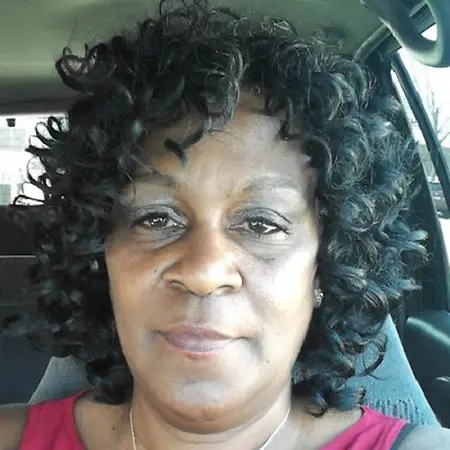
Her Story
About Beverly
I've been working in social services for over 30 years now, and I'm currently in my third year at Mission St. Louis, coming up on three years this April. In my role, I'm one of two people who do screenings and intakes to see what services people actually need when they come into our center. We help with employment, we have a diversion department that works with people who have open cases in the city of St. Louis, and we also have minor home repair and healthy home repair programs that work with seniors to try to keep them in their houses. Before Mission St. Louis, I worked at the St. Louis Job Corps Center where I had multiple duties - I was a dorm lead, a teacher, worked in the cafeteria, worked in recreation, so I pretty much worked all over the campus. I got my start at Grace Hill Settlement House back when I sent my children to their after-school youth program. Being the mother that I am, I couldn't just let them go on their own - I had to go see what kind of things they were going to be learning and doing, and from that, it opened up a whole other world of work for me. I live in the neighborhood where I serve, so I'm a neighbor to the people I help. A lot of people already know me and my background, and they know I don't feel that I'm any different than they are. They can call me when things are not going well, and we can talk through things.
Her Interview
Ten minutes with Beverly
01What do you attribute your success to?
I attribute my success to staying power - I'm just not the kind of person that gives up. Social service is an industry where people get burned out, and I've lasted quite a long time. I've done other ventures in between, like I owned a home-based childcare center, and I completed my education while still working and raising my family. I also always believed that every person had something to offer. You may not need it right then, but eventually you'll be able to use it. That perspective has helped me keep going and find value in every experience and every person I work with.
02What’s the best career advice you’ve ever received?
The best career advice I ever received was to get my degree. When I started in this business, I didn't have a degree, and some of the executives that worked at Grace Hill actually made sure that I was able to have the time and the transportation to get to the program. I would either work first and then leave and go to school, or go to school that morning, leave school, and go to work. They made that possible for me to be able to do that without thinking that I'm going to lose income or anything like that. Their support and encouragement to pursue my education changed everything for me.
03What advice would you give to young women entering your industry?
Find an area that you're passionate about, and then it doesn't seem like work. It just seems as if you're a member of a community that is trying to advance that community. When you're passionate about what you do, it transforms the experience from feeling like a job into feeling like you're part of something bigger - a movement to lift up the people around you.
04What are the biggest challenges or opportunities in your field right now?
Money is always an issue in social services, because it's mostly grant-funded. When grants run out, then people become out of work. If there's nowhere else to transfer them to within the organization, then people end up unemployed because of lack of resources. It's a constant challenge that affects not just the sustainability of programs, but the livelihoods of the people doing this important work. The funding instability makes it difficult to provide consistent, long-term support to the communities we serve.
05What values are most important to you in your work and personal life?
Trust and honesty are the most important values to me. When people walk into our building, they came in for a reason, and maybe that first conversation doesn't give you the exact reason why they're there or how they got into a situation. But if you can get people to trust you, and you're open and above board with them, then they'll start to open up, and you can get to the point of what they really need. Sometimes people think that what they really need is just help with this one thing that's standing in their way, but really, it's deeper - it's a lot deeper than that. You have to ask how did you get into this situation, what could you have done differently. Because I've worked in this industry for so long in the St. Louis area, a lot of people already know me. They know my background, they know that I don't feel that I'm any different than they are. I live in the neighborhood where I serve, so I'm a neighbor. They can call me when things are not going well, and we can talk through things.
Join Influential Women and start making an impact. Register now.