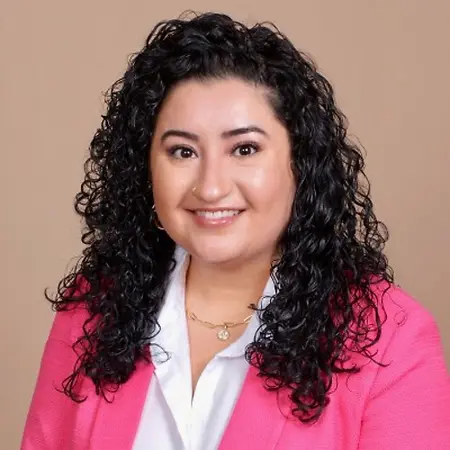
Her Story
About Christina
I have been working in the behavioral health field since 2013, beginning my career as a direct care professional. Although I entered the field without fully knowing what to expect, I quickly discovered a passion for helping individuals with developmental disabilities and pursued additional credentials along the way. I became a Registered Behavior Technician and later earned my Board Certified Behavior Analyst (BCBA) credential in 2024.
I began working in the BCBA role with a small agency providing services in homes and daycare settings. Most recently, I joined OneWell HealthCare in May, a company that provides direct support services to individuals with developmental disabilities across multiple states. As OneWell expands into Connecticut, I have the exciting opportunity to help establish and grow the ABA division from the ground up.
Within the field of behavior analysis, I am especially passionate about functional communication training and teaching emotional regulation skills. I love helping children learn appropriate ways to communicate their wants, needs, and feelings, particularly during moments when they may feel overwhelmed or upset. One of the most rewarding aspects of my work is witnessing challenges that once seemed like mountains become manageable molehills simply because a child has been given the right tools to express themselves.
Her Interview
Ten minutes with Christina
01What do you attribute your success to?
I would attribute much of my success to persistence, maintaining motivation, and learning to trust myself. While those things are often easier said than done, I have relied heavily on the same principles of behavior science that I use professionally to help me remain consistent and continue moving toward my goals.
For a long time, I stayed within the comfort of a role that felt familiar because I questioned whether I was truly ready to take the next step. Like many people, I experienced moments of self-doubt and wondered whether I was capable of succeeding in a larger role. However, once I finally stepped outside of my comfort zone and challenged myself, I found that confidence came with experience. As I continued to grow professionally, I realized that I had spent more than a decade developing the knowledge, skills, and clinical judgment necessary to succeed.
Looking back, I think one of the most important lessons I have learned is that confidence doesn't always come before taking a leap—it often develops because of it. Giving myself permission to grow and trusting in the foundation I had built allowed me to recognize that I was more prepared than I had given myself credit for. Since then, I have approached both my professional and personal goals with greater confidence, curiosity, and a willingness to continue learning.
02What’s the best career advice you’ve ever received?
The best career advice I have ever received is simple: don't let fear make decisions for you. Looking back, it's probably advice I wish I had embraced sooner. After spending more than a decade in the field, it still took me a long time to step outside of my comfort zone and pursue bigger opportunities because I questioned whether I was truly ready.
What I eventually realized is that confidence doesn't always come first. In many cases, it develops after you leap. Once I challenged myself and stepped into new roles, I discovered that I had built far more knowledge and experience than I had given myself credit for. Over time, I became more secure in my skill set and more confident in my abilities.
I think we often wait for the fear to disappear before making a change, but I've learned that sometimes you just have to do it anyway. The time is going to pass regardless. There may be setbacks, mistakes, or moments of uncertainty, but those experiences are often where the greatest growth happens. Looking back, I'm grateful that I stopped waiting to feel completely ready and simply permitted myself to try.
03What advice would you give to young women entering your industry?
My advice to young women entering the field would be to first make sure that your practice aligns with your values and the type of impact you want to have on the individuals and families you serve. Technical skills are important, but compassion, integrity, and a commitment to doing what is best for your clients should always remain at the center of your work.
I would also encourage new professionals to be open to feedback and view it as an opportunity for growth rather than criticism. Behavioral health is a highly collaborative field, and ongoing feedback is essential to developing strong clinical skills. Some of the greatest lessons in my career have come from supervisors, colleagues, and mentors who challenged me to think differently and continue improving.
Finally, I encourage young women to find their community. Surround yourself with like-minded professionals who share your commitment to ethical practice, collaboration, and putting people first. Having mentors and colleagues who support your growth and share your values can make all the difference, both professionally and personally. When you find the right people, you not only become a better clinician, but you also build a career that is sustainable, meaningful, and deeply rewarding.
04What are the biggest challenges or opportunities in your field right now?
One of the biggest challenges facing our field right now is overcoming misconceptions and rebuilding trust. Behavior analysis has evolved significantly over the years, yet many people still associate it with outdated practices or are understandably concerned by stories that highlight issues such as profit-driven models and the misuse of services. As practitioners, I believe we have a responsibility to demonstrate through our actions that ethical, compassionate, and person-centered care must always come first.
At the same time, I see tremendous opportunity for growth. I think many professionals are working hard to redefine what high-quality behavior analytic services look like and to show how behavioral principles can be used to improve quality of life in meaningful and socially significant ways. For me, that means collaborating with like-minded professionals who share a commitment to putting people and values at the forefront of their work.
I am also excited by the potential for behavior science to extend beyond traditional service models. While autism and developmental disabilities remain an important area of practice, I believe the principles of behavior are universal and have applications across health, education, organizational systems, and everyday life. Continuing to build those connections, educate others, and demonstrate the positive impact of behavior change represents one of the greatest opportunities for our field moving forward.
05What values are most important to you in your work and personal life?
In my professional life, the value that matters most to me is keeping the individuals and families we serve at the center of every decision. In a field where competing priorities and business considerations often prevail, I believe it is important to remember that the work we do is deeply personal. Behind every treatment plan, assessment, and recommendation is a child and a family who have entrusted us with something incredibly meaningful, and I strive to honor that responsibility by ensuring that their needs and best interests remain the priority.
In my personal life, integrity is one of the values I hold most closely. I believe in being the same person when no one is watching as I am when people are. Whether in my relationships, my work, or my everyday interactions, I value honesty, accountability, kindness, and respect toward others. To me, character is not defined by what we say, but by the choices we make consistently, especially when they are difficult.
Ultimately, I try to approach both my professional and personal life with compassion, integrity, and a commitment to doing what is right, even when it is not always the easiest path.
Keep Exploring
More Influential Women · Connecticut






Join Influential Women and start making an impact. Register now.