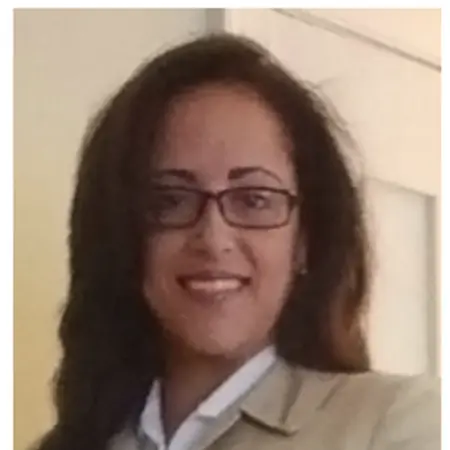
Her Story
About Debbie
Debbie Sanabria, M.S., is a seasoned research administration leader serving as Director of Pre-Award in the Office of Sponsored Programs at Atrium Health Wake Forest Baptist within Advocate Health. With more than 25 years of progressive experience across academic medical centers and higher education systems, she leads enterprise-wide proposal development and submission operations across multiple states, including North Carolina, South Carolina, and Georgia. She oversees high-performing teams managing complex, high-volume sponsored research portfolios while ensuring regulatory compliance, financial integrity, and operational excellence.
Debbie’s journey in research administration began in 1998 at Albert Einstein College of Medicine, where she started as a department secretary in Psychiatry & Behavioral Sciences. Through the encouragement of mentors and a strong commitment to growth, she pursued her bachelor’s degree while working and steadily advanced into leadership roles. Following the Montefiore–Einstein merger, she made a pivotal career move to North Carolina, joining the University of North Carolina at Chapel Hill, where she supported grants administration, pre-award operations, and clinical trial budgeting. She further expanded her expertise in industry clinical trials, including contract negotiation and end-to-end financial management, and later served as a manager at Lineberger Comprehensive Cancer Center before being recruited via LinkedIn to Wake Forest Baptist Hospital as Assistant Director in Sponsored Programs.
She earned her Master of Science in Research Administration and Compliance from CUNY School of Professional Studies, strengthening her leadership approach and expanding her strategic impact within sponsored research administration. Debbie is deeply committed to mentoring, cross-training, and building strong, resilient teams in a fully remote environment, while fostering collaboration through structured meetings and in-person team-building events. Outside of work, she enjoys salsa social dancing, spending time with her three sons, and reading mystery novels. Known for her adaptability and passion for continuous learning, she remains dedicated to advancing research administration and supporting institutional research growth in an ever-evolving healthcare landscape.
Her Interview
Ten minutes with Debbie
01What do you attribute your success to?
I attribute my success to never giving up. I like a challenge and I like to challenge myself. Some people stay complacent in their roles and are fine with their day-to-day, not wanting to take on more responsibility, but that's not me. I'm always eager to learn and always eager to progress. This field is forever changing and it keeps us on our toes. I've never let fear hold me back or let self-doubt stop me from moving forward. As soon as you have those butterflies in your stomach, that means it's worth it - do it, try it, and redirect those butterflies for your goal. I take things in baby steps because it can be overwhelming if you just think of everything in the bigger picture, but in baby steps, you will achieve it.
02What’s the best career advice you’ve ever received?
The best career advice I've received from my mentors is to continue learning, continue growing, continue striving, and don't let fear hold you back. The biggest reason why people stay stagnant in their positions and roles is self-doubt and imposter syndrome. You need to get that out of your mind and go for it. As soon as you have those butterflies in your stomach, that means it's worth it - do it. I've always instilled this in my sons as well: take it in baby steps because it can be overwhelming if you just think of everything in the bigger picture, but in baby steps, you will achieve it. I can't narrow it down to just one piece of advice because I've received so many from my mentors, but it's always been about having that drive and not letting self-doubt hold you back.
03What advice would you give to young women entering your industry?
My advice to young women entering research administration is to always look to learn. Being able to be paired up with a mentor is great, but if there isn't that opportunity, the internet has so much information and you can take courses to start learning. If this is something you're interested in, I can easily point you to websites and resources where you can take baseline education courses and see if this is something that interests you. If you're looking to apply for a position, these courses are available as individual learners, and it shows your potential employer that you are interested, that you're hungry for the role, that you want to learn, that you're eager for this experience, and that you have a genuine interest. Finding a network that you can connect with is also important. More mentorship opportunities, even starting at a high school level, would be great for young women entering this field.
04What are the biggest challenges or opportunities in your field right now?
The biggest challenge in research administration right now is that there isn't a bachelor's degree program specifically for this field, which has been challenging for individuals trying to enter it. People typically have to pursue business administration or public health degrees, which are general directions, but it wasn't until master's programs specialized in research administration that touched on all different aspects of the field became available. I'm putting it out in the universe that it would be great if eventually they offered a bachelor's degree program for research administration. Another challenge is being able to find a good network to connect with, especially for young women entering the field. As for opportunities, research administration is so vast - it's not just administrative work with applications and financing, but also includes regulatory aspects, compliance, human subjects regulatory, Animal Institute regulatory, export controls, and so much more. Once an individual begins in research administration, it's about finding their niche and determining which direction they'd like to go. The opportunities in administration and compliance are plentiful.
05What values are most important to you in your work and personal life?
The values most important to me in my work and personal life are trustworthiness, loyalty, and compassion. These three values guide everything I do, both professionally with my team and personally in my relationships. I believe in being someone people can trust and count on, staying loyal to those I work with and care about, and approaching every situation with compassion and understanding.
Join Influential Women and start making an impact. Register now.