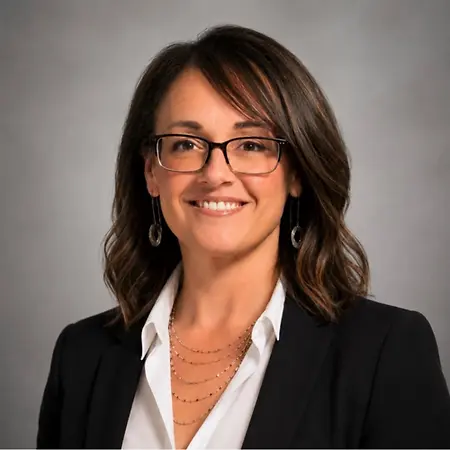
Her Story
About Debby
At my core, I am a wife, mother, leader, and woman of faith who believes that success is measured not only by professional accomplishments but by the impact we have on the people around us.
My husband and I have been married for 24 years, and together we have raised three wonderful children. Family has always been my foundation, teaching me the values of commitment, resilience, compassion, and service that I carry into every aspect of my life and career. Whether at home or in the workplace, I believe strong relationships are built on trust, communication, and a genuine desire to help others succeed.
Outside of my professional responsibilities, I have a passion for exploring the world through travel and hiking. I love experiencing new places, cultures, and perspectives, and I find that some of my greatest moments of reflection happen while enjoying the beauty of nature. Traveling has taught me to appreciate different viewpoints and embrace lifelong learning—qualities that have also shaped my leadership approach.
I also enjoy cooking and reading, two activities that allow me to slow down, be creative, and continue growing personally. Whether I'm trying a new recipe for my family or diving into a good book, I value opportunities to learn, connect, and create meaningful experiences.
My faith serves as the cornerstone of my life. It guides my decisions, strengthens me through challenges, and reminds me to lead with integrity, humility, and purpose. I strive to approach both life and leadership with gratitude, recognizing the many blessings and opportunities I have been given.
While my career in emergency communications has been incredibly rewarding, the roles I cherish most are those of wife, mother, mentor, and servant leader. I am grateful for the journey that has brought me here and remain committed to serving my community, supporting others, and making a positive difference wherever I can.
Her Interview
Ten minutes with Debby
01What do you attribute your success to?
Without question, I attribute my success first and foremost to my Lord and Savior, Jesus Christ. Throughout my life and career, I have come to recognize that any accomplishments, opportunities, or positions I have achieved are not solely the result of my own efforts, but of God's grace, provision, and faithfulness.
There is a quote by C.S. Lewis that has always resonated with me: "You may forget that you are at every moment totally dependent on God." That truth has served as a constant reminder that while hard work, perseverance, and dedication are important, it is ultimately God who opens doors, provides wisdom, and sustains us through life's challenges.
I have been blessed with opportunities to grow, lead, and serve in ways I never could have imagined when I first entered the 911 profession. Along the way, there have been obstacles, disappointments, and moments of uncertainty, but I have learned to trust God's plan even when I could not see the path ahead. It is only because of His grace, compassion, and unwavering faithfulness that I am where I am today.
I am also deeply grateful for the support of my husband, children, mentors, colleagues, and the many people who have encouraged me throughout my journey. Success is never achieved alone. The relationships God has placed in my life have strengthened me, challenged me, and helped shape me into the leader I am today.
If there is one lesson I have learned, it is that leadership is not about personal achievement; it is about stewardship. I strive to use the gifts, opportunities, and responsibilities I have been given to serve others with humility, integrity, and purpose. My faith reminds me daily that true success is not measured by titles or accomplishments, but by faithfulness, service, and the positive impact we have on the lives of others.
02What’s the best career advice you’ve ever received?
The best career advice I've ever received can be summed up in two simple words: Lean In.
Throughout my career, I've learned that growth rarely happens in comfortable places. The greatest opportunities for learning, leadership, and personal development are often found in the challenges we would rather avoid. Instead of stepping back from difficult situations, I've learned to lean into them.
I lean into conflict rather than avoiding it because meaningful progress often requires difficult conversations. When approached with respect and a willingness to listen, conflict can lead to stronger relationships, better solutions, and greater understanding.
I lean into adversity because challenges build resilience. Every obstacle I've faced has taught me something valuable about perseverance, adaptability, and leadership. The difficult seasons are often the ones that prepare us most for future success.
I lean into technological change because innovation is essential to growth. In emergency communications, technology evolves rapidly, and staying on the cutting edge requires a willingness to embrace new ideas, learn continuously, and remain open to change. What may seem disruptive today often becomes the foundation for better service tomorrow.
Most importantly, I've learned to lean into the hard things. Whether it's leading organizational change, making tough decisions, navigating uncertainty, or taking on responsibilities that feel bigger than your experience, growth happens when we are willing to step forward despite our discomfort.
Too often, people wait until they feel completely ready before pursuing an opportunity. My experience has taught me that confidence is usually built after taking the leap, not before. Every meaningful advancement in my career came from saying "yes" to challenges that stretched me beyond what I thought I was capable of accomplishing.
Leaning in has taught me resilience, strengthened my leadership, and expanded my perspective. It remains one of the most valuable lessons I've ever learned, and one that continues to guide me both professionally and personally.
03What advice would you give to young women entering your industry?
One of the most important pieces of advice I would give to young women entering the public safety profession is to never place limits on your own potential. Too often, people decide what they are capable of before they've had the opportunity to fully develop their skills, gain experience, and discover their strengths. Be willing to pursue opportunities that challenge you, even when they seem outside your comfort zone.
I would also encourage women to cultivate discernment rather than cynicism. Public safety is a demanding profession, and leadership can present difficult situations that test your perspective and resilience. Discernment allows you to evaluate circumstances objectively, make sound decisions, and maintain healthy professional relationships, while cynicism can become a barrier to growth, collaboration, and innovation.
As a woman who has spent her career in a male-dominated field, I have never approached leadership through the lens of gender. Instead, I have focused on expertise, mutual respect, and shared purpose. My philosophy has always been that each person brings unique knowledge and experience to the table. Whether working with law enforcement, fire service, EMS, elected officials, or fellow communications professionals, success comes from understanding one another's roles, respecting each other's expertise, and collaborating toward a common goal.
When you focus on competence, integrity, and building strong relationships, you earn credibility and trust. Those qualities will open more doors than any title ever could. Stay committed to continuous learning, remain confident in your abilities, and never allow anyone—including yourself—to define the limits of what you can achieve.
04What are the biggest challenges or opportunities in your field right now?
One of the biggest challenges—and at the same time one of the greatest opportunities—in the emergency communications industry is the rapid advancement of technology. We are witnessing transformative developments in artificial intelligence, data integration, automation, and next-generation communications tools that have the potential to significantly enhance how we serve both first responders and the public.
As public safety leaders, our challenge is not simply adopting new technology, but understanding how to leverage it responsibly and effectively. The marketplace is evolving quickly, and vendors are continually introducing innovative solutions that promise greater efficiency, improved decision-making, and enhanced service delivery. Staying at the forefront of these advancements requires a significant investment of time, research, and evaluation to determine which technologies truly provide value and align with the unique needs of our organization and community.
In the 911 industry, there is a common saying: "If you've seen one PSAP, you've seen one PSAP." Every Public Safety Answering Point operates differently based on its geography, call volume, staffing model, and community needs. Because of that, there is no one-size-fits-all solution. Our responsibility is to thoughtfully evaluate emerging technologies and identify those that will improve outcomes for the residents of Porter County while supporting our telecommunicators and first responders.
Another significant challenge facing our profession is workforce recruitment and retention. Across the country, 911 centers continue to experience staffing shortages, high turnover rates, and difficulties attracting qualified candidates. One of the most important developments on the horizon is the ongoing effort to secure federal recognition of 911 telecommunicators as first responders rather than clerical or administrative personnel. This classification more accurately reflects the critical role telecommunicators play in emergency response and acknowledges the life-saving decisions they make every day.
Achieving first responder classification has the potential to create meaningful improvements in benefits, particularly retirement eligibility and other employment protections. More importantly, it would help elevate awareness of the profession, attract new talent, and improve long-term retention by providing telecommunicators with the recognition and support they deserve. As someone who has spent my career in this industry, I believe this change represents both an opportunity to strengthen our workforce and a critical step toward ensuring the sustainability of emergency communications for future generations.
Ultimately, the future of 911 will be defined by our ability to balance innovation with people. Technology will continue to evolve, but our success will depend on how effectively we equip, support, and retain the professionals who answer the call when our communities need help most.
05What values are most important to you in your work and personal life?
The values that are most important to me, both personally and professionally, are faith, integrity, humility, honesty, empathy, and discernment. Together, these principles form the foundation of who I am and how I strive to lead, serve, and interact with others.
My faith is at the center of everything. It provides purpose, perspective, and guidance in both the successes and challenges of life. It reminds me that leadership is ultimately about stewardship—using the gifts, opportunities, and responsibilities I've been given to serve others with excellence and compassion.
Integrity and honesty are essential because trust is the foundation of every meaningful relationship. Whether I am working with employees, public safety partners, elected officials, or members of the community, I believe people deserve transparency, consistency, and authenticity. I strive to make decisions that align with my values, even when those decisions are difficult.
Humility is equally important. Throughout my career, I have learned that leadership is not about having all the answers. It is about being willing to listen, continue learning, admit mistakes, and recognize the contributions of others. Some of the most effective leaders I have encountered are those who lead with confidence while remaining humble enough to learn from those around them.
Empathy is especially important in the field of emergency communications. Every day, we interact with people who may be experiencing the worst moments of their lives. Whether serving the public, supporting employees, or collaborating with community partners, I believe it is important to approach people with compassion, understanding, and respect.
Finally, I place a high value on discernment. In both life and leadership, we are constantly faced with decisions, competing priorities, and complex challenges. Discernment allows us to separate emotion from wisdom, react thoughtfully rather than impulsively, and make decisions that serve the greater good. It helps us remain objective without becoming cynical and principled without becoming rigid.
These values influence every aspect of my life—from my role as a wife and mother to my responsibilities as a leader in public safety. They have shaped my character, guided my decisions, and ultimately become the standard by which I measure success.
Join Influential Women and start making an impact. Register now.