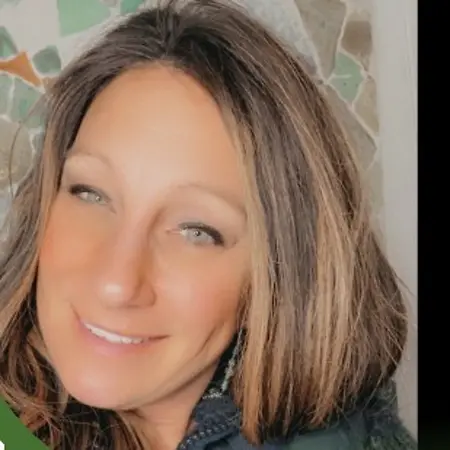
Her Story
About Dena-Marie
As a special education teacher and case manager in a New Hampshire school district, I work with elementary students in grades 1–5 with significant cognitive, developmental, behavioral, and communication needs. I recently stepped into a new position where I am leading the rebuilding of a specialized program from the ground up — work that aligns deeply with both my professional expertise and personal passion. My students are primarily nonverbal or minimally speaking and require highly individualized, one-to-one support throughout their school day.
My work centers on designing and implementing specially designed instruction that allows students to meaningfully engage in grade-level learning opportunities at their individual cognitive and developmental levels. I collaborate closely with multidisciplinary teams — including general education teachers, speech and language pathologists, occupational therapists, behavioral specialists, paraprofessionals, administrators, and families — to ensure students are supported, successful, and included alongside their peers in both academic and social environments.
Supporting my students extends far beyond academics alone. I help students build functional communication, emotional and behavioral regulation, social-emotional skills, independence, and socially appropriate replacement behaviors that allow them to safely and successfully navigate the world around them. Through evidence-based practices, relationship-building, consistency, and compassion, we help students move through what can often be a difficult and uneven road while recognizing and celebrating every step of growth along the way. Building programs like this is something that comes naturally to me — and work that I genuinely love.
In addition to my work within the school setting, I was also part of a collaborative team at Maker’s Mill where I helped launch an adapted arts and inclusion program designed for young adults ages 18–22 transitioning out of the educational system. Serving as an inclusion specialist, I helped create a space where individuals of all abilities could participate in meaningful creative experiences in an environment centered on accessibility, dignity, community, and belonging. The program operates on a low-cost sliding fee scale to ensure accessibility for families, with no participant turned away. Each week introduces a different artistic medium, blending structure, creativity, exploration, and what we affectionately describe as “controlled chaos” — creating opportunities for connection, expression, confidence, and joy.
Her Interview
Ten minutes with Dena-Marie
01What do you attribute your success to?
I think my success comes from the fact that I truly care — about the students, the families, the staff I work with, and the work itself. This has never been “just a job” to me. I genuinely love building programs, creating supportive environments, and figuring out how to help students succeed in ways that maybe others didn’t think were possible yet.
I’ve always naturally been someone who can walk into chaos, see what’s needed, and start building structure, systems, and connection. I’m not afraid of hard situations, and I don’t shy away from students with significant needs or behaviors. If anything, that’s where I feel most driven because those students deserve people who believe in them fully and are willing to keep showing up for them.
A huge part of my success also comes from collaboration. None of this work happens alone. I’ve been fortunate to work alongside incredible teams — teachers, therapists, paraprofessionals, administrators, and families — and I think one of my strengths is being able to bring people together around a shared goal of helping students feel successful, included, safe, and valued.
I also think I’m successful because I lead with both compassion and consistency. I can be calm, creative, flexible, and relationship-focused while also maintaining structure and high expectations for growth. Some of the biggest wins in this field are the moments that most people would never even notice — a student communicating a need for the first time, regulating their body independently, participating with peers, or simply feeling safe enough to trust. Those moments matter deeply to me.
At the end of the day, I think my success comes from loving the work enough to keep learning, keep adapting, and keep believing in the people I support, even on the hardest days.
02What’s the best career advice you’ve ever received?
The best career advice I’ve ever received was to never underestimate the impact of simply showing up consistently, authentically, and with genuine care for people. Skills, knowledge, and experience absolutely matter, but people remember how you made them feel — especially in education and human-centered work.
I’ve also learned that some of the most meaningful opportunities come from being willing to step into spaces that don’t already have a clear blueprint. A lot of the work I’m most proud of involved building programs, solving problems, and creating systems that didn’t fully exist yet. That advice taught me not to wait until something feels perfectly organized or comfortable before taking initiative.
Another piece of advice that has stayed with me is that progress is not always loud or immediate. Especially in special education, growth can look very different from what people expect. Sometimes the biggest successes are the smallest moments — a student communicating for the first time, participating alongside peers, regulating independently, or simply feeling safe and understood. Learning to value and celebrate those moments has shaped not only the way I work, but also the way I define success.
03What advice would you give to young women entering your industry?
Trust yourself more than you think you should. Your voice, your instincts, your compassion, and your ideas matter — even when you’re the youngest person in the room or still figuring things out. Some of the strongest women I know in education and human services are not the loudest people in the room; they’re the ones who consistently show up, adapt, problem-solve, and keep advocating for others even when the work is hard.
04What are the biggest challenges or opportunities in your field right now?
One of the biggest challenges in education right now is that student needs are becoming increasingly complex while schools are facing staffing shortages, burnout, and limited resources. At the same time, I believe teacher preparation programs are doing a disservice to many new educators because they are not adequately preparing teachers to support the wide range of academic, behavioral, communication, and social-emotional needs present in today’s classrooms. Teachers are entering the field without enough real-world experience, training, or support in how to meaningfully include and teach all learners.
At the same time, I also see tremendous opportunity. Education is beginning to shift toward a more inclusive, collaborative, and whole-child approach where communication, emotional regulation, accessibility, and individualized support are becoming part of the conversation instead of an afterthought. I think there is real potential to build stronger systems that better support both students and educators moving forward.
05What values are most important to you in your work and personal life?
The values that are most important to me in both my work and personal life are compassion, authenticity, integrity, and connection. I believe people want — and deserve — to feel seen, heard, valued, and safe, whether they are students, families, coworkers, or the people closest to us in our personal lives.
I also deeply value inclusion and dignity. A large part of my work centers around helping individuals who may communicate differently, learn differently, or experience the world differently still have meaningful opportunities to participate, belong, and be respected for who they are.
Join Influential Women and start making an impact. Register now.