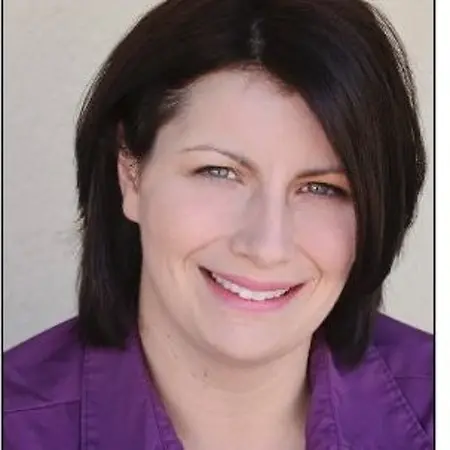
Her Story
About Heather
My journey as a Huntington's disease advocate began on April 15th, 2016, when my husband Nathan was diagnosed with this terminal neurodegenerative brain disease. Huntington's is like having ALS, Parkinson's, and Alzheimer's all at the same time, and there's no cure and no treatment. When we got Nathan's diagnosis, we felt so alone because we didn't know anyone like us. So we decided to share our story on social media to help others newly diagnosed not feel isolated the way we did. I've been advocating and speaking with our federal leaders to help pass legislation for the Huntington's community. I've spoken in front of the FDA in 2024 about our life with Huntington's, where Nathan was a panelist but I had to read his speech. We've also been ambassadors for Teva, the drug company that makes Nathan's movement medication called Austedo. I'm known in the community as the 'gadget queen' because I share helpful devices I find for Nathan's care on social media. I don't want to gatekeep, so if something helps my husband, I figure it might help someone else too. One example is the Burger Buddy, which after I presented it at a speaking engagement, Help for HD bought hundreds of them and sent them out to people in the Huntington's community. My stepdaughter tested positive for Huntington's two years ago when she was 18, and our son together is at risk. Nathan is now in latter middle stage of the disease. My husband and I are dealing with this disease in a way that makes his mark in helping others, so we're not going through this for nothing. While I've been in radio for over 30 years, and at one point was attempting to have an acting career, Huntington's has become my focus. I feel like all my training in radio and acting has helped me be able to speak publicly about Huntington's disease and relate to people to help them understand it.
Her Interview
Ten minutes with Heather
01What advice would you give to young women entering your industry?
I would say mainly just get your voice heard. I started with my Facebook page. If you've got a willingness to help others in the Huntington's community, just know that there's no community like the Huntington's community. Our doctor told us that when Nathan first got diagnosed, and he was right. Very seldom do I see people being ugly towards each other. Everyone's just uplifting and trying to help each other. If one of us is just having a bad day, then someone else will step up and be their cheerleader. It may not be something that's financially lucrative, or if it is, I haven't found that part of it yet, but I just mainly want to share my voice and influence. In the Huntington's community, we need all the help we can get. We could use all the voices and all the help we can get with awareness, with trying to encourage our federal leaders to pass laws that would help not just the Huntington's community, but other rare diseases as well.
02What are the biggest challenges or opportunities in your field right now?
The biggest challenge is that so many people wouldn't talk about this disease. It's getting better, more people are willing to discuss it and talk about it, but it's still a struggle. Lately we've gotten a little bit of traction because of the announcement of Unicure's AMT130, which had a 75% slowing of the progression of Huntington's disease in clinical trials. However, the FDA decided they were not going to give it a fair review as they had promised. Certain people within the FDA are saying it doesn't work when they've not actually given it a fair review. Someone with Health and Human Services even called the Huntington's community 'the swamp' because we were asking for a fair review, which has caused a political uproar. It's been a fight getting the awareness and trying to get the FDA to give a fair review. On the opportunity side, there's always opportunity and openness for someone to advocate. We in the Huntington community could use all the voices and all the help we can get with awareness and trying to encourage our federal leaders to pass laws that would help not just the Huntington's community, but other rare diseases as well. Things that would help Huntington's could help those in the ALS community, the Parkinson's community, and the Alzheimer's community. Where we want to help our loved ones with Huntington's, we're not closed off to trying to help other diseases and other rare diseases as well.
03What values are most important to you in your work and personal life?
One of the most important values to me is trying to help others. I don't want anyone to go through what my husband and I are going through. If I can help one person lighten the load on their path, then that's something I would consider a win. Helping get legislation passed to help people like my husband, and helping to get fair reviews of potential treatments that would help people like my husband and my children, is incredibly important to me. At the end of the day, I have to know that I've done everything in my power humanly possible to help my husband and my kids, and doing that helps our community as well. My husband and I are dealing with this disease in a way that we've made his mark in helping others, so we're not going through this disease for nothing. We're helping others along the way, so my husband's life in Huntington's disease hasn't been totally in vain.
Join Influential Women and start making an impact. Register now.