Her Story
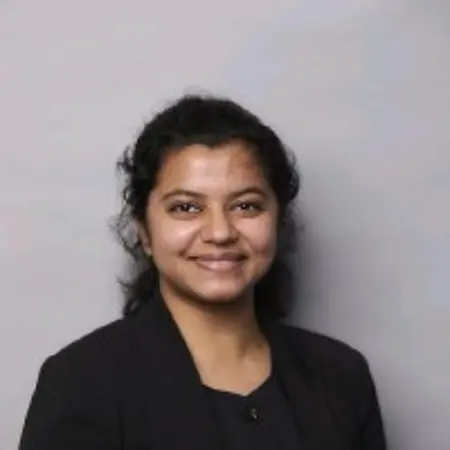
About Ishwarya
I've been working in the pharmaceutical field for about two and a half years, currently as an Associate Scientist III at Alexion Pharmaceuticals. I was promoted to this position in 2025 from Associate Scientist II. My work focuses on process intensification teams under upstream product development, where I work with bioreactors in the early stage development of medicines for rare disease biologics. I have three main areas of focus: working with bioreactors for process intensification, developing process automation to digitally enable reactors so scientists don't have to do manual sampling every week, and implementing process analytical technologies like biocapacitance probes and Raman spectroscopy that allow for automated sampling and feeding based on real-time data. I'm also directly involved in tech transfer and manufacturing scale operations. My most significant professional achievements include getting the perfusion technology started at Alexion, expanding our capabilities from just 5 bioreactors when I joined to around 20 bioreactors that can support perfusion, and implementing process automation using Lucullus software to automate our perfusion step chain. My passion for this work comes from a deeply personal place - I lost both of my grandmothers to cancer in the same month a couple of years ago, and one of my main interests in working in the pharmaceutical industry is to do something for patients who are struggling without proper therapy. I want to help diagnose diseases earlier so we can increase the lifespan of fellow human beings.
Her Interview
Ten minutes with Ishwarya
01What do you attribute your success to?
I attribute my success to my family, especially my dad. I've seen my dad struggle a lot because he had his own company when I was doing my schooling, and I've seen him work day and night for our family. The support I have, I'm here because of the support of my dad. More than anyone in my family, without him, I wouldn't have got that independency to come here, move to a different country, and do my master's. The passion that I have comes from my grandmother - she's one of the strongest women I've ever known. Unfortunately, both of my grandmothers passed away in the same month a couple of years back, and one had lung cancer. It was a great loss for our family, but it has made me even more stronger. We struggled and went through it, and one of the main interests in working in a pharmaceutical industry is to do something for those patients who are really struggling out there without a proper therapy. There were a lot of enhancements in AI, immunotherapy, gene therapy, but it didn't save my grandmothers, and it's not saving a lot of patients out there because of the availability of the drugs, because of cost of goods, because of several factors. I'm looking forward to dedicating my knowledge to this field and trying to diagnose those diseases way earlier so that we can increase the lifespan of fellow human beings.
02What’s the best career advice you’ve ever received?
Last week, I had a town hall in my company, and my director told me this sentence: If you do not adapt to the world, you would be a setback. That's something that motivated me. You have to keep evolving every single day, or learn things and adapt to the world at the pace at which it's growing. That's the only way that we can survive - the survival of the fittest concept comes into play. So that's the best career advice I've ever heard from someone: get adapted to the world.
03What advice would you give to young women entering your industry?
I want women to come up to this field and be more courageous, or just take out the question of if I would be fit for this field. I want everyone to learn science and try different things. I want more women to come into research and development and do something that someone has never done before.
04What are the biggest challenges or opportunities in your field right now?
The biggest opportunity I would say is being in the pharmaceutical field itself - that's the biggest opportunity you can get. The biggest struggle is how you can leverage current progress in automation and bridge the gap between doing certain lab works manually and having AI. Some scientists, including me, do not know certain times where I can apply AI for making my process faster. So that's something that we have to solve in our field. There are a lot of thriving courses that AstraZeneca and Alexion has brought up for our fellow scientists to learn. Learning should be a very good opportunity for us to bridge that gap. That's one of the biggest setbacks of our current industry, or challenges that I could say.
05What values are most important to you in your work and personal life?
I would say being very disciplined. Discipline and smart work is more important. Instead of procrastinating about anything, being disciplined is the first way to move forward, and having that every single morning when you wake up makes your day and your next day, and it makes you to achieve your goals as fast as possible.
Join Influential Women and start making an impact. Register now.